 Skip to content
Memory and the Human Lifespan
Original price was: $29.99.$6.99Current price is: $6.99.
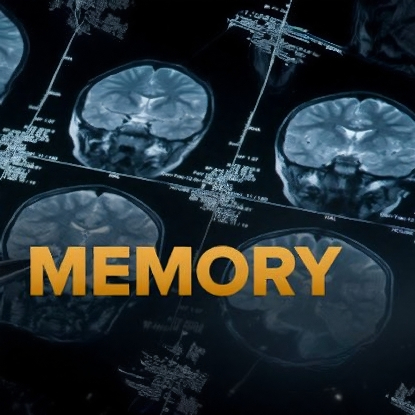
Embark on a startling voyage into the human mind to discover how the various aspects of your memory operate. An award-winning professor explains the different systems that make memory possible and how these systems work together. What if your memory suddenly vanished, so that you could no longer summon recollections of anything at all? What if you couldn’t even remember yourself—not your name, your school, where you worked, or even the face of the total stranger staring back at you from the mirror?
Course Overview
Embark on a startling voyage into the human mind to discover how the various aspects of your memory operate. An award-winning professor explains the different systems that make memory possible and how these systems work together. What if your memory suddenly vanished, so that you could no longer summon recollections of anything at all? What if you couldn’t even remember yourself—not your name, your school, where you worked, or even the face of the total stranger staring back at you from the mirror?
If all of your memories were gone, would “self” even have a meaning? The truth is that while you may think of human memory as a capacity—a way to call up important facts or episodes from your past—it is much, much more: a collection of systems that provide the continuity of consciousness that allows the concept of “you” to make sense, creating the ongoing narrative that makes your life truly yours.
This intriguing series of 24 lectures by an honored researcher and teacher explains not only how the various aspects of your memory operate, but the impact memory has on your daily experience of life. By understanding how the brain organizes and encodes information, you can better harness its extraordinary powers to fine-tune how it works for you and use this information to help reshape your very experience of being alive.
The lectures explore topics like:
- The different kinds of systems that make memory possible.
- How those systems work together to build and access memories of specific events, solve problems, learn basic tasks like brushing your teeth, or acquire the skills to play a musical instrument.
- The kinds of memory deficits that result when various parts of the brain are damaged or deteriorate.
- How memory shapes not only your experience of the past but also of the present, as well as your expectations of the future.
- How your memory systems develop throughout your life.
Course Lectures
01: Your Amazing Prehistoric Memory
Discover how remarkable your memory ability can be and get an introduction to some of the fascinating ways you can transform your average memory into an excellent one. After a quick memory test to set the stage, Professor Vishton introduces you to one of the most basic ways your memory can encode information: the Major System.
Duration: 34 min
02: Encoding Information with Images
Focus on one of the simplest tricks for memorizing information: the Method of Loci. Like the Major System, this strategy encodes information into a format your brain is especially good at using; in this case, it ties information to a physical location. Gain familiarity with this method through several engaging exercises.
Duration: 33 min
03: Maximizing Short- and Long-Term Memory
In this insightful lecture, Professor Vishton walks you through the three steps of successful memory: a perception to short-term memory, encoding short-term memory to your long-term memory, and retrieving information from your long-term memory.
Duration: 30 min
04: Why and When We Forget
Forgetting happens to the best of us—but it can be mitigated through the use of several key techniques. Among the topics you’ll investigate are the “Ebbinghaus forgetting function,” which offers insights into the relationship between time, amount of studying, and the likelihood of memory recall.
Duration: 30 min
05: Keeping Your Whole Brain in Peak Condition
To have a good memory that functions at the peak of its powers, you need to keep your entire brain healthy. Professor Vishton shows you how to do just that.
Duration: 29 min
06: Human Memory Is Reconstruction, Not Replay
Why should you bother enhancing your memory when there are computers that can do it for you? In what ways is information stored on a computer different from information stored in the recesses of your brain?
Duration: 31 min
07: The Visual Process
One of the more scientific sides of experimental psychology is revealed in this look at the discipline’s most studied and best-known system—a true miracle of organization and function.
Duration: 30 min
08: The Auditory System
Like seeing, hearing is a construction of the brain. This lecture discusses how the ear converts pressure waves in the air into electrical signals that travel to the auditory areas of the brain, where they are interpreted as sound.
Duration: 30 min
09: The Somatosensory System
The somatosensory system gives us information not only about the immediate external world but also about our own bodies.
Duration: 32 min
10: Agnosias
Agnosia (“without knowledge”) is the inability of individuals to recognize some aspect of their sensory experience because of lesions in the brain.
Duration: 32 min
11: The Motor System-Voluntary Movement
Not only do we experience the world, we move around in it. This lecture covers the pathways and brain areas that allow us to make voluntary movements of the body.
Duration: 31 min
12: Language
The ability to communicate symbolically through language is thought to be unique to our species.
Duration: 31 min
13: The Limbic System-Anatomy
The limbic system represents a large number of interconnected nuclei that together allow for learning, memory, emotion, and executive function.
Duration: 31 min
14: Depression
Depression is a scourge of modern societies. This lecture focuses on unipolar depression, a central nervous system disorder that has known anatomical and biochemical correlates.
Duration: 31 min
15: The Reward System-Anatomy
All humans seek experiences that are rewarding or pleasurable. This lecture covers the brain structures and neurotransmitters involved in reward.
Duration: 31 min
16: Brain Plasticity
Far from being static structures, synapses are highly dynamic and can be modified by experience.
Duration: 31 min
17: Emotion and Executive Function
Truly rational behavior is not possible without emotion.
Duration: 31 min
18: Processing of Negative Emotions-Fear
Fear is often considered a negative emotion, but it is critical for survival.
Duration: 31 min
19: Music and the Brain
The ability to write, read, and perform music requires the coordinated activity of the sensory, motor, language, and limbic systems of the brain.
Duration: 29 min
20: Sleep and Dreaming
Why do we sleep? What, if anything, do dreams mean?
Duration: 31 min
21: Consciousness and the Self
Why does consciousness appear to be something that is happening to a “me”?
Duration: 32 min
22: Alzheimer’s Disease
This lecture uses the number one neurological disorder in the United States—Alzheimer’s disease—as a clinical example.
Duration: 30 min
23: Risk Factors for Alzheimer’s Disease
We look at what has been learned about factors that appear to increase or decrease the risk of contracting Alzheimer’s disease.
Duration: 30 min
24: Neuroscience-Looking Back and Looking Ahead
We summarize the course, survey present research challenges, and address the question: What does our remarkable understanding of the brain tell us about ourselves?
Duration: 32 min
Related products



By Area


