Skip to content
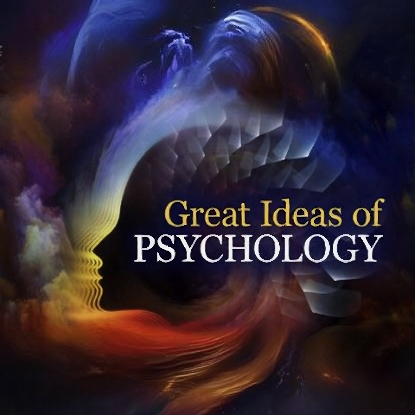
The Great Ideas of Psychology
Original price was: $89.99.$25.99Current price is: $25.99.
Get a complete overview of the exciting field of psychology in this comprehensive course that explains the fascinating debates over the continuing mysteries of the mind. If you’ve ever wanted to delve more deeply into the mysteries of human emotion, perception, and cognition, and of why we do what we do, these 48 lectures offer a superb place to start.
Course Overview
Get a complete overview of the exciting field of psychology in this comprehensive course that explains the fascinating debates over the continuing mysteries of the mind. If you’ve ever wanted to delve more deeply into the mysteries of human emotion, perception, and cognition, and of why we do what we do, these 48 lectures offer a superb place to start.
With them, you’ll see the entire history of psychology unfold. In the hands of Professor Robinson, these lectures encompass ideas, speculations, and point-blank moral questions that might just dismantle and rebuild everything you once thought you knew about psychology. In fact, you’ll not only learn what psychology is, but even if it is, as Professor Robinson discusses the constantly shifting debate over the nature of psychology itself.
Lecture by lecture, Professor Robinson navigates from one subject to the next, and you’ll follow along as he recreates a Platonic dialogue; explains brain physiology; or explores the intricacies of middle ear construction, the psychological underpinnings of the Salem witch trials, and the history of the insanity defense. Among other things, you’ll learn:
- How a brilliant young scientist’s temporary blindness led to pioneering research in sensory psychology.
- How the once-prestigious, now-derided, “sciences” of phrenology and mesmerism contributed to psychological knowledge.
- What happened when a Stanford psychologist and his students decided to study “being sane in insane places” by getting themselves committed to a mental institution.
- How the brain is able to “rewire” itself to compensate for particular traumas at an early age.
- If high heritability determines how much the environment influences the value of a trait, and more.
Course Lectures
01: Defining the Subject
Is psychology really science at all? A look at the controversy that has engulfed psychology for centuries.
Duration: 30 min
02: Ancient Foundations-Greek Philosophers and Physicians
The ancient philosophers—in wrestling with the problems of knowledge, good and evil, governance, and how mankind should live—lay the foundations for the discipline of psychology.
Duration: 29 min
03: Minds Possessed-Witchery and the Search for Explanations
A look at how abnormal conduct—whether considered insanity or the act of a “witch”—has attracted society’s special attention, sometimes with horrifying consequences.
Duration: 28 min
04: The Emergence of Modern Science-Locke’s “Newtonian” Theory of Mind
A new emphasis on experimental investigation produces great achievements in natural science and technology, as well as insistent questions about whether the same methods can explain the workings of the mind and society.
Duration: 29 min
05: Three Enduring “Isms” -Empiricism, Rationalism, Materialism
An examination of the great debate over how knowledge and belief come to be and what this means for the definition of psychology.
Duration: 30 min
06: Sensation and Perception
An introduction to the methods by which sensation and perception are investigated and measured, including an introduction to the science and psychophysics.
Duration: 30 min
07: The Visual Process
One of the more scientific sides of experimental psychology is revealed in this look at the discipline’s most studied and best-known system—a true miracle of organization and function.
Duration: 30 min
08: Hearing
A look at another of the body’s most acute senses—and the threats posed to this complex and delicate system by the constant auditory assault of 20th-century industrial and urban life.
Duration: 30 min
09: Signal-Detection Theory
The more difficult a discrimination or detection task is, the harder it is to measure. A look at how signal-detection theory is providing answers, especially in the particularly difficult area of measuring perception.
Duration: 30 min
10: Perceptual Constancies and Illusions
Can we really trust our senses? A surprising look at how knowledge and perception work together.
Duration: 30 min
11: Learning and Memory: Associationism-Aristotle to Ebbinghaus
A first look at the fascinating area of memory and how it works, including an introduction to the use of “mnemonics.”
Duration: 30 min
12: Pavlov and the Conditioned Reflex
The famous “salivating dog” experiments were a harbinger of the behaviorist era to come but went well beyond what we learned about in school.
Duration: 30 min
13: Watson and American Behaviorism
An impatient crusader casts his vote for a pragmatic and scientific psychology confined to observable behavior.
Duration: 30 min
14: B.F. Skinner and Modern Behaviorism
A first look at one of the most influential and controversial psychologists of our time and his theory of conditioning human response.
Duration: 30 min
15: B.F. Skinner and the Engineering of Society
Skinner’s theories as the model for completely changing child-rearing, education, behavior, and ultimately, society itself.
Duration: 30 min
16: Language
Skinner publishes his theory of language and the resulting critique, led by the then-unknown Noam Chomsky, points the way toward a more “cognitive” interpretation of psychology.
Duration: 30 min
17: The Integration of Experience
For most developed species, survival requires more than passive absorption of disconnected stimuli. An examination of how experience is organized to help creatures actually live.
Duration: 29 min
18: Perception and Attention
If perception weren’t selective, we would drown in an unending flood of stimuli. A look at how we filter the input from the outside world down to what is important.
Duration: 30 min
19: Cognitive “Maps,” “Insight,” and Animal Minds
Is man the only animal that can think? A fascinating glimpse of both sides of the argument over anthropomorphic explanations suggests a surprising answer.
Duration: 30 min
20: Memory Revisited-Mnemonics and Context
A return to the subject of memory for a deeper discussion of how we process, store, and recover experience, including the problem of “eyewitness” testimony and reconstructed memories.
Duration: 30 min
21: Piaget’s Stage Theory of Cognitive Development
A search for an explanation of how our mental powers are formed leads to the influential work of Jean Piaget and his theories of cognitive development in children.
Duration: 31 min
22: The Development of Moral Reasoning
Is moral development different from cognitive development as a whole? An examination of what we know about how moral reasoning evolves.
Duration: 31 min
23: Knowledge, Thinking, and Understanding
How we solve problems—how we actually function in our daily lives—including the essential psychological short-cut that makes the process possible.
Duration: 31 min
24: Comprehending the World of Experience-Cognition Summarized
A summary of the findings that laid the foundation for the “cognitive revolution’s” alternative to the empiricistic psychologies favored by the behaviorist school.
Duration: 30 min
25: Psychobiology-Nineteenth-Century Foundations
What is the relationship between physical and mental processes? A look at how researchers have answered the question, including the strange system of phrenology and its role in the foundation of modern “brain science.”
Duration: 30 min
26: Language and the Brain
Injuries to the brain—and resulting functional deficits—have taught us a great deal about brain function and organization, especially regarding the way language is processed.
Duration: 31 min
27: Rationality, Problem-Solving, and Brain Function
A continuing examination of the workings of the brain, including the organ’s remarkable ability to compensate for damage early in development.
Duration: 32 min
28: The “Emotional” Brain-The Limbic System
Pleasure. Pain. Motivation. Rage. Fear. What we know about the fascinating part of the brain associated with these and other emotional states.
Duration: 30 min
29: Violence and the Brain
Is criminality really a pathology better understood in scientific than in moral terms? Is insanity truly a defense?
Duration: 30 min
30: Psychopathology-The Medical Model
Is all psychopathology, all “mental” illness, ultimately the consequence of a medical or biological disturbance? A look at this viewpoint and the criticisms it has faced.
Duration: 30 min
31: Artificial Intelligence and the Neurocognitive Revolution
Yes, computer programs can now contend with world-class chess players—to a point. But can computers be made to actually think? A beginning discussion of the pros and cons, along with the staggering ethical implications.
Duration: 30 min
32: Is Artificial Intelligence “Intelligent”?
Do the proponents of artificial intelligence understand what “intelligence” really is? Many say no.
Duration: 32 min
33: What Makes an Event “Social”?
Why a purely scientific examination of events involving people is impossible—and how researchers have developed the kind of model necessary to interpret the meaning of these social events.
Duration: 30 min
34: Socialization-Darwin and the “Natural History” Method
How we examine a species within its own natural context, accounting for its defining features by matching these with the conditions faced by members of the species.
Duration: 30 min
35: Freud’s Debt to Darwin
Darwin’s works are among the most “well-worked-over” in Freud’s restored London library. This lecture explores the influence of the world’s most famous naturalist on its most famous psychiatrist.
Duration: 30 min
36: Freud, Breuer, and the Theory of Repression
Hysterical symptoms are unlike those produced by genuine neurological disorders. This lecture discusses the discovery of the “talking cure” and how it led to Freud and Breuer’s theory of repression.
Duration: 30 min
37: Freud’s Theory of Psychosexual Development
Freud’s explanation of psychosexual development as the individual’s progression from infantile stages of sexual gratification—such as thumb-sucking—to adult heterosexual activity.
Duration: 30 min
38: Critiques of Freudian Theory
Freud believed that psychodynamic processes are universal and largely independent of culture and society, but his biological interpretation has been rejected in favor of socially and culturally oriented theories.
Duration: 30 min
39: What Is “Personality”?
The question has still not been answered definitively and has furnished the grist for many since-refuted theories. This lecture examines the debate.
Duration: 30 min
40: Obedience and Conformity
Several classic experiments have shown the powerful influence of social context on conduct and have offered a strong challenge to both the dominant theories of personality.
Duration: 30 min
41: Altruism
Why do some people act heroically? Once again, social context proves critical in determining human behavior, though a highly developed self-perception can help a person rise above the common in unlikely circumstances.
Duration: 30 min
42: Prejudice and Self-Deception
Acts of prejudice call for a reinterpretation of context and even a reinterpretation of self to justify the action. An exploration of the darker side of human behavior.
Duration: 30 min
43: On Being Sane in Insane Places
What is sanity? What is insanity? As a chilling study demonstrates, the answers often depend on who is controlling the labels.
Duration: 31 min
44: Intelligence
The history of I.Q. and other so-called “intelligence” tests offer valuable lessons in what is and is not “predictable.”
Duration: 30 min
45: Personality Traits and the Problem of Assessment
Is there really a test that can reveal the “underlying personality” of an individual? A look at the fundamental problem of devising such a measuring stick.
Duration: 30 min
46: Genetic Psychology and “The Bell Curve”
The issue of whether a given trait is rooted in genetics or the environment—long a controversial issue in the public arena—is when predicting the potential of an individual.
Duration: 30 min
47: Psychological and Biological Determinism
An exploration of the notion of determinism reveals it to be both counterintuitive and, in some respects, self-refuting.
Duration: 30 min
48: Civic Development-Psychology, the Person, and the Polis
In many ways, the fullest and most systematic theories of psychology are still those provided by Aristotle. An exploration of how rational creatures can flourish when the biological, social, and political are truly integrated.
Duration: 32 min
Related products




By Area