Skip to content
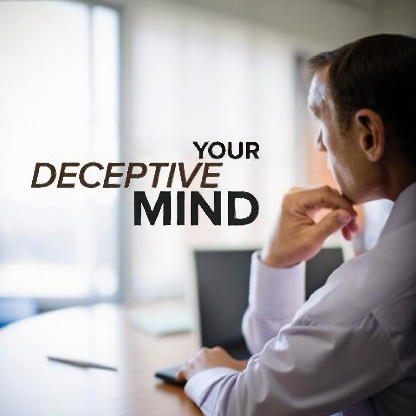
Your Deceptive Mind: A Scientific Guide to Critical Thinking Skills
Original price was: $29.99.$6.99Current price is: $6.99.
Discover the science of cognitive biases and critical thinking and become a savvier, sharper critical thinker in your professional and personal life.
Overview
Discover the science of cognitive biases and critical thinking and become a savvier, sharper critical thinker in your professional and personal life.
No skill is more important in today’s world than being able to think about, understand, and act on information in an effective and responsible way. At no point in human history have we had access to so much information, with such relative ease, as we do in the 21st century. But because misinformation has increased as well, critical thinking is more important than ever.
These 24 rewarding lectures equip you with the knowledge and techniques you need to become a savvier, sharper critical thinker. By immersing yourself in the science of cognitive biases and critical thinking, and by learning how to think about thinking (a practice known as metacognition), you’ll gain concrete lessons for doing so more critically, intelligently, and successfully.
Professor Novella tackles these issues and more, exploring how the often unfamiliar ways in which our brains are hardwired can distract and prevent us from getting to the truth of a particular matter. Along the way, he provides you with a critical toolbox that you can use to better assess the quality of information.
Course Outline
01: The Necessity of Thinking about Thinking
Learn how to distinguish good science from bad science and the steps involved in the critical thinking process.
Duration: 33 min
02: The Neuroscience of Belief
Explore the neuroscience that drives our desire to believe and how it affects our critical thinking skills.
Duration: 35 min
03: Errors of Perception
Examine how our brains acquire and process information and the ways we can be deceived by our perceptions.
Duration: 33 min
04: Flaws and Fabrications of Memory
Understand the vital role of memory in critical thinking and how inaccurate memories can influence our decisions.
Duration: 33 min
05: Pattern Recognition—Seeing What’s Not There
Discover how hyperactive pattern recognition can lead to misconceptions and how to sort out what’s real.
Duration: 33 min
06: Our Constructed Reality
Explore how different parts of your brain work together to construct your consciousness and the illusion of a single reality.
Duration: 34 min
07: The Structure and Purpose of Argument
Learn what makes a true argument, how to build effective arguments, and the difference between inductive and deductive logic.
Duration: 33 min
08: Logic and Logical Fallacies
Delve into common logical fallacies and their implications, using vivid examples to illustrate each fallacy’s impact.
Duration: 32 min
09: Heuristics and Cognitive Biases
Master common cognitive biases and how they affect our thinking, focusing on mental shortcuts that can lead to errors.
Duration: 34 min
10: Poor at Probability—Our Innate Innumeracy
Examine how our brains struggle with probability and the cognitive biases that arise from this flaw.
Duration: 31 min
11: Toward Better Estimates of What’s Probable
Engage with probability puzzles to discover how lacking our intuition is when it comes to numbers.
Duration: 30 min
12: Culture and Mass Delusions
Understand how culture influences our fears and beliefs, using historical examples of mass delusion and hysteria.
Duration: 32 min
13: Philosophy and Presuppositions of Science
Explore the philosophical interpretations of science and the limits of scientific reasoning.
Duration: 30 min
14: Science and the Supernatural
Approach supernatural claims from a critical thinking perspective and examine the relationship between science and belief.
Duration: 30 min
15: Varieties and Quality of Scientific Evidence
Learn how to assess the quality of scientific studies and what questions to ask when presented with evidence.
Duration: 32 min
16: Great Scientific Blunders
Survey significant scientific blunders that resulted from a lack of critical thinking and the importance of skepticism.
Duration: 31 min
17: Science versus Pseudoscience
Identify the characteristics of pseudoscience and how to differentiate it from legitimate scientific claims.
Duration: 33 min
18: The Many Kinds of Pseudoscience
Deconstruct specific examples of pseudoscience to understand how its features work and its implications.
Duration: 34 min
19: The Trap of Grand Conspiracy Thinking
Examine the cognitive traps of grand conspiracy theories and how critical thinking can help discern truth from fiction.
Duration: 30 min
20: Denialism—Rejecting Science and History
Explore denialism as a subset of pseudoscience and how critical thinking helps sidestep subtle forms of denialism.
Duration: 30 min
21: Marketing, Scams, and Urban Legends
Gain tips for using critical thinking to filter information in chain emails, scams, and other outlets that exploit psychology.
Duration: 31 min
22: Science, Media, and Democracy
Investigate the strengths and weaknesses of science reporting in the media and its implications for public understanding.
Duration: 29 min
23: Experts and Scientific Consensus
Learn about the nature of scientific consensus and when to defer to experts on important questions.
Duration: 29 min
24: Critical Thinking and Science in Your Life
Conclude with final thoughts on thinking critically in everyday life and the importance of humility and awareness.
Duration: 32 min
Related products




By Area