Skip to content
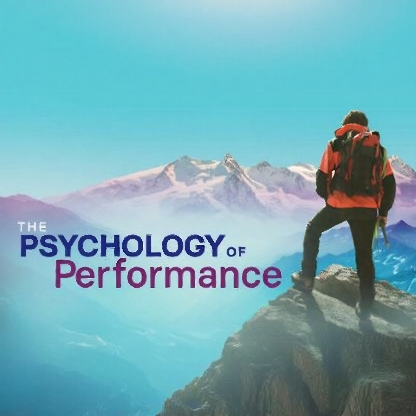
The Psychology of Performance: How to Be Your Best in Life
Original price was: $29.99.$5.99Current price is: $5.99.
Tackle life’s challenges and carry those dreams to the goal line—all with a little help from the science of performance psychology.
Overview
Tackle life’s challenges and carry those dreams to the goal line—all with a little help from the science of performance psychology.
“How do you get to Carnegie Hall?” “Practice. Practice. Practice.” Today, the relatively new science of performance psychology tells us that old answer is incomplete at best. In The Psychology of Performance: How to Be Your Best in Life, clinical sport psychologist Eddie O’Connor, Ph.D., shares the best ways for you to reach your personal Carnegie Hall based on the latest scientific research—whether your performance environment is music, dance, business, or sport.
These often surprising research results will make you rethink your own performance strategies, offering approaches you might never have considered and busting myths you might have taken as truth. As Dr. O’Connor explains, the work of a sport psychologist is not defined by sport, but by the science of performance psychology, the mental aspects of superior performance in settings where excellence is central—usually sports, the performing arts, business, and high-risk professions such as the military.
In this course, you will learn how mental training can modify the structure and function of our brains, resulting in increased neurological ability to perform a particular skill. Purposeful practice gets you there. Learn why it’s the only thing that can.
Course Outline
01: Sport and Performance Psychology
Explore the science behind the most appropriate cognitive and physical practices leading to top performance.
Duration: 32 min
02: Deliberate Practice: Essential for Experts
Discover the benefits of focusing on deliberate, purposeful practice with well-defined goals to achieve expertise.
Duration: 30 min
03: How Values and Goals Drive Performance
Identify what you want your performance life to be about and how it will guide you through challenges.
Duration: 27 min
04: The Benefits of Mindfulness in Performance
Learn about the application of mindfulness meditation to sports performance and its short- and long-term benefits.
Duration: 33 min
05: When Positive Thinking Doesn’t Work
Examine the role of cognitive defusion in helping you choose which thoughts to follow and which to ignore.
Duration: 29 min
06: Acceptance and the Willingness to Feel
Understand the full range of human emotions and how acceptance can free up energy to focus on performance goals.
Duration: 34 min
07: Commitment Means “No Matter What”
Learn the importance of commitment to behaviors that lead to success and how that choice affects your performance.
Duration: 30 min
08: Finding Internal Motivation
Explore self-determination theory and the inherent needs that drive motivation in elite performers.
Duration: 28 min
09: Using Imagery to Prepare for Action
Discover how visualization impacts the brain and nervous system, enhancing performance through mental rehearsal.
Duration: 30 min
10: Confidence and Self-Talk
Learn about the sources of self-efficacy and how self-talk can work in your favor during training.
Duration: 30 min
11: Developing Focused Attention
Understand the importance of focused attention and the principles of effective concentration for all performers.
Duration: 29 min
12: Superstitions, Rituals, and Routines
Differentiate between legitimate pre-performance rituals and superstitions, and their impact on performance.
Duration: 29 min
13: Peak Performance: Getting in the Zone
Learn how to prepare mentally and physically to increase your chances of entering the optimal performance state known as flow.
Duration: 33 min
14: Performance Anxiety and Choking
Explore how anxiety affects performance and the techniques that can help draw attention away from anxiety.
Duration: 33 min
15: Being the Perfect Perfectionist
Understand the paradox of perfectionism and how to use its positive attributes while avoiding negative feelings.
Duration: 32 min
16: Self-Compassion for Self-Improvement
Discover how acknowledging and processing feelings can improve performance and increase self-compassion.
Duration: 31 min
17: Burnout and the Need for Recovery
Examine the causes of burnout and strategies to avoid and treat this condition, especially in youth sports.
Duration: 32 min
18: Pain Tolerance and Injury Rehabilitation
Learn how pain exists within a unique bio-psycho-social context and the strategies for moving forward after injury.
Duration: 30 min
19: The Dangerous Pursuit of the Ideal Body
Explore the pressures athletes face regarding body image and the health risks associated with disordered eating.
Duration: 32 min
20: Fan Psychology, Identification, and Violence
Investigate the emotional health of fans and the risks associated with passionate fandom.
Duration: 30 min
21: Four Qualities of a Successful Team
Learn about the correlates of teamwork and how to lead by example to better your team and yourself.
Duration: 31 min
22: Talent: A Developmental Process
Understand the developmental model of sports participation and its benefits for all children involved in youth sports.
Duration: 30 min
23: How to Be a Great Sport Parent
Discover how to support your child’s goals in sports and avoid common mistakes made by sports parents.
Duration: 30 min
24: Aging Athletes: Competing and Retiring
Learn how older athletes can maintain performance levels and prepare for retirement from their sport.
Duration: 33 min
Related products