 Skip to content
The Remarkable Science of Ancient Astronomy
Original price was: $29.99.$7.99Current price is: $7.99.
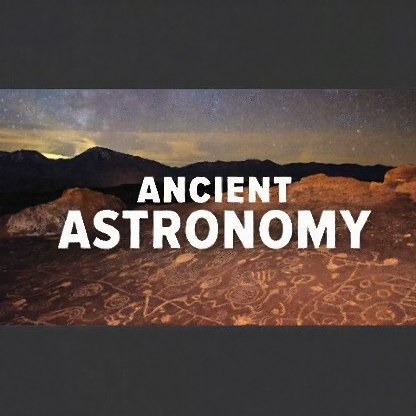
In a world without artificial lights, the night sky is ablaze with stars, whose patterns tell stories you have heard since childhood. The Sun, Moon, and stars are crucial to your daily existence, since they tell the time, direction, and when to plant and harvest. The perfect regularity of the heavens is the only guaranteed part of life and inspires deep religious and philosophical ideas, while unexpected events such as eclipses and comets incite fear. Experience this ancient outlook with noted astrophysicist and historian of astronomy Professor Bradley Schaefer of Louisiana State University. An award-winning teacher, Dr. Schaefer takes you around the world, exploring the close relationship that people thousands of years ago had with the sky.
Overview
In a world without artificial lights, the night sky is ablaze with stars, whose patterns tell stories you have heard since childhood. The Sun, Moon, and stars are crucial to your daily existence, since they tell the time, direction, and when to plant and harvest. The perfect regularity of the heavens is the only guaranteed part of life and inspires deep religious and philosophical ideas, while unexpected events such as eclipses and comets incite fear. Experience this ancient outlook with noted astrophysicist and historian of astronomy Professor Bradley Schaefer of Louisiana State University. An award-winning teacher, Dr. Schaefer takes you around the world, exploring the close relationship that people thousands of years ago had with the sky.
The Remarkable Science of Ancient Astronomy covers notable sites and phenomena such as Stonehenge, the Great Pyramid, the Star of Bethlehem, the origin of constellations, Polynesian sky navigation, ancient calendars, and more. Chart the precise alignment of prehistoric monuments with the Sun and stars, learn how to use a medieval astrolabe, and decipher the workings of an astonishing ancient Greek computer called the Antikythera mechanism, which was centuries ahead of its time. Using only their eyes, ancient astronomers got many things right, and their meticulous records have proved invaluable to modern astronomers, helping them calculate the slowing of Earth’s rotation and the expanding stellar cataclysms called supernovae. Ancient astronomers truly laid the foundation for modern science.
Course Video Lessons
01: Stonehenge and Archaeoastronomy
- Duration: 31 min
- Explore the significance of the Sun, Moon, and stars to ancient people and investigate key astronomical directions noticed by all cultures.
02: The Real Stonehenge
- Duration: 30 min
- Address the evidence surrounding Stonehenge’s function and survey the archaeological record.
03: Alignments at Maes Howe and Newgrange
- Duration: 29 min
- Discover Neolithic tombs and monuments across Europe, focusing on their alignments toward astronomical events.
04: Astronomy of Egypt’s Great Pyramid
- Duration: 29 min
- Study the Great Pyramid’s astronomical significance and its builders’ remarkable accuracy.
05: Chaco Canyon and Anasazi Astronomy
- Duration: 28 min
- Investigate the astronomical knowledge of the Anasazi culture and their sky-centered rituals.
06: Ancient Cosmologies and Worldviews
- Duration: 29 min
- Explore the astronomy-based worldviews of different ancient cultures and their answers to fundamental questions.
07: Meteorite Worship and Start of the Iron Age
- Duration: 30 min
- Travel to places where meteorites were worshiped and used as a source of iron.
08: Eclipses, Comets, and Omens
- Duration: 29 min
- Understand how ancient peoples perceived celestial events as divine omens.
09: The Star of Bethlehem
- Duration: 29 min
- Examine recent theories regarding the Star of Bethlehem and its significance.
10: Origins of Western Constellations
- Duration: 32 min
- Trace the birth of Western constellations, many of which originated in ancient Mesopotamia.
11: Chinese and Other Non-Western Constellations
- Duration: 30 min
- Study the constellation patterns of ancient China and their influence on other cultures.
12: Origins and Influence of Astrology
- Duration: 31 min
- Focus on the astrological traditions in various cultures and the spread of astrology through the Mediterranean.
13: Tracking Planet Positions and Conjunctions
- Duration: 31 min
- Learn about the precision of ancient astronomers in tracking celestial bodies.
14: Ancient Timekeeping and Calendars
- Duration: 31 min
- Discover how different cultures kept track of time using astronomical observations.
15: The Lunar Crescent and the Islamic Calendar
- Duration: 29 min
- Delve into the complexities of determining the start of a lunar month.
16: Ancient Navigation: Polynesian to Viking
- Duration: 29 min
- Learn how ancient cultures navigated using celestial knowledge.
17: Breakthroughs of Early Greek Astronomy
- Duration: 31 min
- Examine the revolutionary advancements made by Greek astronomers.
18: The Genius of Hipparchus
- Duration: 31 min
- Discover the contributions of Hipparchus, the greatest astronomer of the ancient world.
19: Revealing the Antikythera Mechanism
- Duration: 29 min
- Analyze the discovery and significance of the Antikythera mechanism.
20: How the Antikythera Mechanism Worked
- Duration: 28 min
- Learn to operate the Antikythera mechanism and its historical impact.
21: Achievements and Legacy of Ptolemy
- Duration: 30 min
- Evaluate Ptolemy’s contributions and his influence on later astronomers.
22: Star Catalogs from around the World
- Duration: 30 min
- Compare Greek star catalogs with those from China and the Arab world.
23: How Ancient Astronomy Ended
- Duration: 30 min
- Review the state of astronomy in 1500 and the revolution sparked by Copernicus.
24: Ancient Astronomy and Modern Astrophysics
- Duration: 32 min
- Conclude the course by understanding how ancient records have refined modern astrophysics.
Related products







By Area