Skip to content
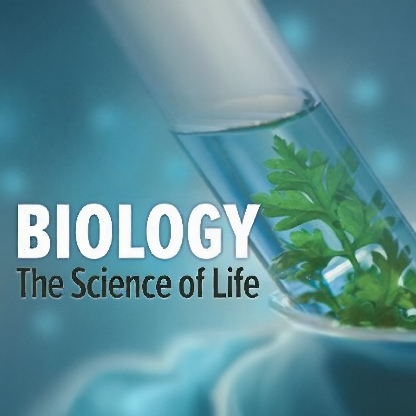
Biology: The Science of Life
Original price was: $99.99.$34.99Current price is: $34.99.
Get the complete background and professional guidance to explore the fundamental principles of how living things work, taught by an award-winning Duke University professor.
Biology: The Science of Life
Course Overview
Get the complete background and professional guidance to explore the fundamental principles of how living things work, taught by an award-winning Duke University professor.
Course No. 1500
This comprehensive 72-lecture course covers living systems at all levels – from molecules to global ecosystems – revealing how modern biology is transforming medicine, agriculture and technology. Professor Nowicki presents biology conceptually, helping you:
- Understand headlines about scientific breakthroughs
- Appreciate nature’s complexity
- Make informed decisions as a voter and consumer
- Grasp unifying principles of all life
Key Topics Covered:
- DNA structure and genetic engineering
- Evolution and natural selection
- Cellular respiration and photosynthesis
- Immune system function
- Ecological systems and biodiversity
- Human population growth impacts
Video Lectures
01: The Scope of “Life” (31 min)
Introduction to biology’s big questions and course structure.
02: More on the Origin of Life (30 min)
Examining how early life met evolutionary challenges.
03: The Organism and the Cell (30 min)
Hierarchy of biological systems from cells to organisms.
04: Proteins—How Things Get Done in the Cell (30 min)
Four major biomolecules and protein functions.
05: Which Molecule Holds the Code? (31 min)
Key experiments proving DNA carries genetic information.
06: The Double Helix (30 min)
Watson and Crick’s discovery of DNA structure.
07: The Nuts and Bolts of Replicating DNA (31 min)
DNA replication process and its significance.
08: The Central Dogma (31 min)
Genetic information flow from DNA to RNA to proteins.
09: The Genetic Code (30 min)
How protein structure is encoded in DNA.
10: From DNA to RNA (29 min)
Transcription process creating messenger RNA.
11: From RNA to Protein (30 min)
Translation process synthesizing proteins.
12: When Mistakes Happen (30 min)
DNA copying errors and repair mechanisms.
13: Dividing DNA Between Dividing Cells (30 min)
How offspring inherit parental DNA.
14: Mendel and His Pea Plants (30 min)
Foundational genetics experiments anticipating modern concepts.
15: How Sex Leads to Variation (29 min)
Mendel’s studies of multiple trait inheritance.
16: Genes and Chromosomes (31 min)
Post-Mendel understanding of genetic basis.
17: Charles Darwin and “The Origin of Species” (30 min)
Theory of natural selection and species change.
18: Natural Selection in Action (30 min)
Field and lab examples demonstrating evolution.
19: Reconciling Darwin and Mendel (30 min)
Modern synthesis modeling gene frequency changes.
20: Mechanisms of Evolutionary Change (30 min)
Factors beyond natural selection affecting gene pools.
21: What Are Species and How Do New Ones Arise? (30 min)
Biological species concept and allopatric speciation.
22: More on the Origin of New Species (30 min)
Sympatric speciation without physical separation.
23: Reconstructing Evolution (31 min)
Organizing life’s diversity through phylogenetics.
24: The History of Life, Revisited (31 min)
Primordial life to modern biodiversity.
25: From Cells to Organisms (30 min)
Introduction to multicellular development.
26: Control of Gene Expression I (30 min)
Jacques Monod’s gene regulation experiments.
27: Control of Gene Expression II (30 min)
Mechanisms turning genes on/off.
28: Getting Proteins to the Right Place (31 min)
Protein targeting within and outside cells.
29: Genetic Engineering and Biotechnology (30 min)
Gene modification and sequencing techniques.
30: How Cells Talk—Signals and Receptors (30 min)
Extracellular signal transmission.
31: How Cells Talk—Ways That Cells Respond (30 min)
Molecular mechanisms changing cell function.
32: From One Cell to Many in an Organism (30 min)
Single cell to complex organism development.
33: Patterns of Early Development (30 min)
Fertilization, cleavage, gastrulation, organogenesis.
34: Determination and Differentiation (31 min)
Cytoplasmic segregation in cell specialization.
35: Induction and Pattern Formation (30 min)
Cell stimulation driving differentiation.
36: Genes and Development (30 min)
Fruit fly gene influence on development.
37: Homeostasis (31 min)
Maintaining constant internal environments.
38: Hormones in Animals (30 min)
Endocrine system chemical communication.
39: What is Special about Neurons? (30 min)
Nervous system information transmission.
40: Action Potentials and Synapses (30 min)
Neural impulse propagation mechanisms.
41: Synaptic Integration and Memory (30 min)
Neural input processing and storage.
42: Sensory Function (31 min)
Obtaining environmental information.
43: How Muscles Work (31 min)
Molecular basis of muscle contraction.
44: The Innate Immune System (30 min)
Nonspecific defense mechanisms.
45: The Acquired Immune System (30 min)
Targeted immune responses to infection.
46: Form and Function in Plants I (30 min)
Plant structure and physiology basics.
47: Form and Function in Plants II (31 min)
Plant homeostasis and environmental responses.
48: Behavior as an Adaptive Trait (30 min)
Evolutionary significance of organism responses.
49: Energy and Resources in Living Systems (30 min)
Transition to ecosystem-level energy concepts.
50: How Energy is Harnessed by Cells (31 min)
ATP as cellular energy currency.
51: Enzymes – Making Chemistry Work in Cells (30 min)
Catalysts lowering reaction activation energy.
52: Cellular Currencies of Energy (30 min)
ATP production from glucose and organics.
53: Making ATP – Glycolysis (31 min)
First stage of cellular energy production.
54: Making ATP – Cellular Respiration (30 min)
Krebs cycle and electron transport chain.
55: Making ATP – The Chemiosmotic Theory (31 min)
Solving the ATP production mystery.
56: Capturing Energy from Sunlight (30 min)
Photosynthesis converting light to chemical energy.
57: The Reactions of Photosynthesis (31 min)
Calvin cycle and plant mass increase.
58: Resources and Life Histories (29 min)
Population growth constraints.
59: The Structure of Populations (30 min)
Ecological population characteristics.
60: Population Growth (30 min)
Exponential vs. logistic growth models.
61: What Limits Population Growth? (31 min)
Real-world population regulation factors.
62: Costs and Benefits of Behavior (30 min)
Evolutionary behavior optimization.
63: Altruism and Mate Selection (31 min)
Evolutionary explanations for altruism.
64: Ecological Interactions Among Species (31 min)
Predator-prey relationships and principles.
65: Predators and Competitors (30 min)
Species competition dynamics.
66: Competition and the Ecological Niche (30 min)
Niche concept from competition studies.
67: Energy in Ecosystems (30 min)
Energy flow through ecological systems.
68: Nutrients in Ecosystems (30 min)
Carbon, nitrogen and phosphorus cycles.
69: How Predictable Are Ecological Communities? (30 min)
Disturbance patterns vs. ideal communities.
70: Biogeography (31 min)
Global species distribution patterns.
71: Human Population Growth (31 min)
Resource use redefinition enabling expansion.
72: The Human Asteroid (32 min)
Biodiversity loss and conservation hope.
Related products