Skip to content
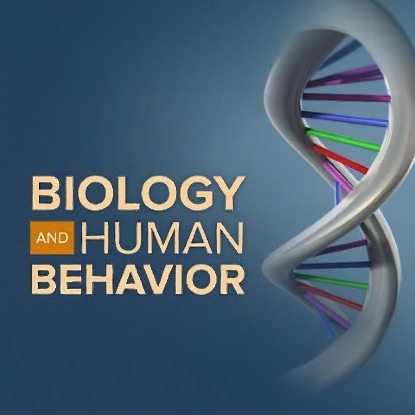
Biology and Human Behavior: The Neurological Origins of Individuality, 2nd Edition
Original price was: $29.99.$7.99Current price is: $7.99.
Investigate how the human brain is sculpted by evolution, genes, experience, hormones, and other influences to produce a wide range of behaviors, led by a prominent neurobiologist, zoologist, and MacArthur “genius” grant recipient.
Biology and Human Behavior: The Neurological Origins of Individuality, 2nd Edition
Course Overview
Investigate how the human brain is sculpted by evolution, genes, experience, hormones, and other influences to produce a wide range of behaviors, led by a prominent neurobiologist, zoologist, and MacArthur “genius” grant recipient.
Course No. 1597
When are we responsible for our own actions, and when are we in the grip of biological forces beyond our control? How do our brains make us the individuals that we are? In these 24 lectures, you’ll explore how the human brain is shaped by evolution, genetics, early experience, hormones, and more—revealing the complex interplay that defines behavior.
Key topics include:
- Brain and behavior regulation
- Genetic and molecular influences on brain function
- Neurobiology of aggression, decision-making, and emotion
- The role of the frontal cortex in behavior
Video Lectures
Module 1: Neurobiology of Behavior
- Biology and Behavior: An Introduction (31 min)
Professor Robert Sapolsky outlines the interdisciplinary approach to understanding neurobiology. - The Basic Cells of the Nervous System (29 min)
Examines neuron function, resting potential, and action potential. - How Two Neurons Communicate (30 min)
Explores neurotransmitters and drug effects on brain function. - Learning and Synaptic Plasticity (31 min)
Covers long-term potentiation in the hippocampus and amygdala. - The Dynamics of Interacting Neurons (31 min)
Discusses neural networks and their role in memory and creativity.
Module 2: Brain Systems and Hormones
- The Limbic System (31 min)
Focuses on emotion and emotional behavior. - The Autonomic Nervous System (ANS) (30 min)
Explores sympathetic and parasympathetic regulation. - The Regulation of Hormones by the Brain (31 min)
Reviews hormonal release and basic mechanisms. - The Regulation of the Brain by Hormones (30 min)
Analyzes how hormones alter brain structure and function.
Module 3: Evolution and Behavior
- The Evolution of Behavior (31 min)
Mechanisms of evolution and gene propagation. - The Evolution of Behavior: Some Examples (30 min)
Social behavior across species, including aggression and mating. - Cooperation, Competition, and Neuroeconomics (31 min)
Introduces game theory in evolutionary context.
Module 4: Genetics and Environment
- What Do Genes Do? Microevolution of Genes (30 min)
Debates nature vs. nurture in gene function. - What Do Genes Do? Macroevolution of Genes (30 min)
Examines mutations and behavioral effects. - Behavior Genetics (29 min)
Genetic components of traits like intelligence. - Behavior Genetics and Prenatal Environment (31 min)
Gene-environment interactions in fetal development.
Module 5: Ethology and Aggression
- An Introduction to Ethology (30 min)
Studies animals in natural habitats. - Neuroethology (30 min)
Neural mechanisms in species-specific behavior. - The Neurobiology of Aggression I (31 min)
Neurochemistry and anatomy of aggression. - The Neurobiology of Aggression II (31 min)
Environmental triggers and hormonal modulation. - Hormones and Aggression (31 min)
Birth hormone exposure and genetic influences. - Early Experience and Aggression (30 min)
Role of reward, punishment, and social learning.
Module 6: Synthesis
- Evolution, Aggression, and Cooperation (30 min)
Evolutionary factors in aggressive behavior. - A Summary (32 min)
Implications of neurobiology for individuality.
Related products