Skip to content
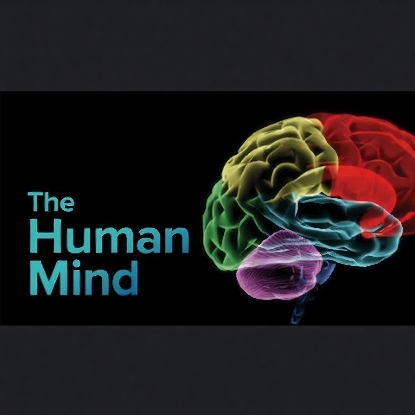
Origins of the Human Mind
Original price was: $29.99.$7.99Current price is: $7.99.
For thousands of years, the human mind has been shrouded in mystery. But with advancements in neuroscience and technology, we now better understand its evolution, the interplay of genes and environment, and the roots of mental disorders like depression, ADHD, and autism. This 24-lecture series, taught by an award-winning clinical psychologist, explores the science of the mind—from infancy to adulthood, instinct to culture—revealing how it shapes who we are
Origins of the Human Mind
Overview
Course No. 1663
For thousands of years, the human mind has been shrouded in mystery. But with advancements in neuroscience and technology, we now better understand its evolution, the interplay of genes and environment, and the roots of mental disorders like depression, ADHD, and autism. This 24-lecture series, taught by an award-winning clinical psychologist, explores the science of the mind—from infancy to adulthood, instinct to culture—revealing how it shapes who we are.
Video Lectures
01: Brains and Minds, Evolution and Development (32 min)
Introduction to the course’s three perspectives on the mind: spirit-based, naturalistic, and humanistic.
02: How the Human Brain Works (33 min)
Explore neurons, brain regions, psychopharmacology, and cutting-edge brain-imaging tech.
03: Development of the Human Brain (29 min)
Brain plasticity examined through Romanian orphans’ case studies—highlighting limits of adaptation.
04: Evolution and the Brain (30 min)
How natural selection shaped the human mind over millions of years.
05: Psychological Views of the Mind (32 min)
Psychodynamic theory vs. social learning theory—plus the enigma of consciousness.
06: Instinct, Learning, and Emotion (30 min)
The roles of instinct in language, emotions in communication, and how we regulate them.
07: Microevolution, Culture, and the Brain (31 min)
Subtle evolutionary changes, primate-human brain differences, and cultural influences.
08: Infancy—Temperament and Attachment (29 min)
How early temperament and attachment shape personality and mental development.
09: Childhood—Stages and Widening Contexts (30 min)
Family, peers, and culture’s role in molding the mind beyond biological foundations.
10: Adolescence—Rebellion, Identity, and Self (32 min)
Mind changes during adolescence: identity formation, sleep deprivation, and self-perception.
11: Adulthood—Aging, Horizons, and Wisdom (30 min)
Does aging mean decline? New insights on wisdom and cognitive resilience.
12: Influences of Sex and Gender (30 min)
How sex and gender impact evolution, diversity, and social relationships.
13: Parallels Between Development and Evolution (33 min)
Biology and environment’s interplay in individual and species-wide mind development.
14: Myths and Realities of Heritability (30 min)
Separating fact from fiction: how genes shape emotions, behaviors, and traits.
15: Genes and Environments Together (31 min)
Why “nature vs. nurture” is outdated—genes and environment constantly interact.
16: The Abnormal Mind—What Goes Wrong? (32 min)
Seven perspectives on mental disorders like depression, OCD, and bipolar disorder.
17: Rationality, Psychosis, and Schizophrenia (33 min)
Roots of psychosis, schizophrenia’s risk factors, and treatment breakthroughs.
18: Emotion Regulation and Mood Disorders (32 min)
The science behind depression and bipolar disorder—beyond everyday mood swings.
19: Attention, Impulse Control, and ADHD (30 min)
Four types of attention, inhibitory control, and ADHD’s causes/treatments.
20: Empathy, Social Connections, and Autism (32 min)
Autism’s challenges in emotional connection and its rising prevalence.
21: Evolution and the Paradox of Mental Illness (30 min)
Why haven’t maladaptive disorders been bred out? Gene-environment answers.
22: Roots of Religion, Aggression, and Prejudice (31 min)
Evolutionary insights into human religiosity, aggression, and stigmatization.
23: Bringing in Personal Narratives (30 min)
A professor’s father’s bipolar struggle—blending science with lived experience.
24: The Future of the Human Mind (33 min)
Frontiers of AI, unconscious potential, and ethical dilemmas in mind engineering.
Related products