Skip to content
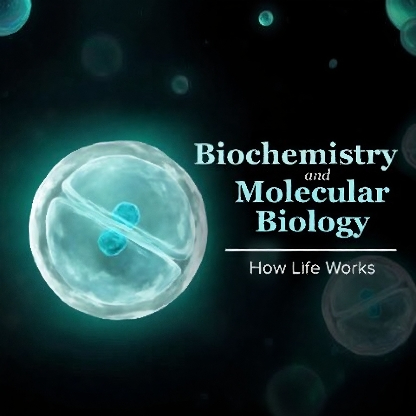
Biochemistry and Molecular Biology: How Life Works
Original price was: $69.99.$22.99Current price is: $22.99.
This 36-lecture course provides an accessible introduction to biochemistry and molecular biology – the fundamental sciences of life. Through engaging explanations and real-world examples, you’ll explore how biological molecules interact to create the complexity of living organisms.
Biochemistry and Molecular Biology: How Life Works
Course Overview
This 36-lecture course provides an accessible introduction to biochemistry and molecular biology – the fundamental sciences of life. Through engaging explanations and real-world examples, you’ll explore how biological molecules interact to create the complexity of living organisms.
Key Topics:
- Structure and function of proteins, lipids, and carbohydrates
- Cellular metabolism and energy production
- DNA replication and gene expression
- Molecular basis of diseases and aging
- Cutting-edge biotechnologies like CRISPR
Video Lectures
01: Biochemistry Is the Science of Us (31 min)
Discover how biochemistry explains life through molecular interactions and the major types of living cells.
02: Why Water Is Essential for Life (31 min)
Explore water’s unique properties that make it indispensable for biological processes.
03: Amino Acids: 20 Building Blocks of Life (29 min)
Learn about the 20 amino acids that combine to form all proteins in living organisms.
04: From Peptide Bonds to Protein Structure (30 min)
Understand how amino acids link together to create proteins with complex 3D structures.
05: Protein Folding, Misfolding, and Disorder (32 min)
Examine how proteins achieve their functional shapes and the consequences when this process fails.
06: Hemoglobin Function Follows Structure (29 min)
See how hemoglobin’s structure enables its crucial oxygen transport function.
07: Enzymes’ Amazing Speed and Specificity (31 min)
Discover how enzymes accelerate biochemical reactions with incredible precision.
08: Enzyme Regulation in Cells (31 min)
Learn how cells control enzyme activity to maintain metabolic balance.
09: Fatty Acids, Fats, and Other Lipids (32 min)
Explore the diverse world of lipids and their essential roles in cells.
10: Sugars: Glucose and the Carbohydrates (31 min)
Understand carbohydrates’ vital functions beyond just providing energy.
11: ATP and Energy Transformations in Cells (32 min)
Investigate ATP, the universal energy currency of cells.
12: Breaking Down Sugars and Fatty Acids (32 min)
Follow the metabolic pathways that extract energy from food molecules.
13: Metabolism Meets at the Citric Acid Cycle (32 min)
Examine the central hub of cellular metabolism and its implications for cancer.
14: Energy Harvesting in Animals and Plants (33 min)
Compare how different organisms capture and store energy.
15: How Animals Make Carbs and Fats (31 min)
Learn about biosynthetic pathways that create essential biomolecules.
16: Cholesterol, Membranes, Lipoproteins (35 min)
Separate fact from fiction about cholesterol’s roles in the body.
17: Metabolic Control during Exercise and Rest (31 min)
See how metabolism adapts to different activity levels.
18: How Plants Make Carbs and Other Metabolites (30 min)
Discover photosynthesis and the Calvin cycle in plant biochemistry.
19: Recycling Nitrogen: Amino Acids, Nucleotides (30 min)
Explore nitrogen’s crucial role in biomolecules and its environmental cycling.
20: Eating, Antioxidants, and the Microbiome (30 min)
Learn how diet affects cellular biochemistry and gut health.
21: Hormones, Stress, and Cell Division (32 min)
Understand biochemical signaling in stress responses and cell growth.
22: Neurotransmitters, the Brain, and Addiction (30 min)
Examine the molecular basis of nerve signaling and addictive behaviors.
23: The Biochemistry of Our Senses (29 min)
Discover how molecular interactions create our experience of the world.
24: From Biochemistry to Molecular Biology (29 min)
Transition to molecular biology by examining caffeine metabolism and aging.
25: DNA and RNA: Information in Structure (30 min)
Learn how nucleic acids store and transmit genetic information.
26: DNA Replication in Bacteria; PCR in the Lab (28 min)
Explore DNA copying mechanisms and revolutionary PCR technology.
27: Chromosome Replication, Telomeres, Aging (29 min)
Understand chromosome maintenance and its links to aging and cancer.
28: DNA Mismatch and Excision Repair (31 min)
See how cells fix DNA damage and implications for cancer treatment.
29: DNA Recombination, Gene Editing, CRISPR (29 min)
Learn about genetic recombination and revolutionary CRISPR gene editing.
30: Transcribing DNA to RNA (29 min)
Follow the first step of gene expression from DNA to messenger RNA.
31: Translating RNA into Proteins (31 min)
Discover how cells decode RNA messages to build proteins.
32: Protein-Synthesis Controls and Epigenetics (29 min)
Examine gene regulation mechanisms including epigenetic changes.
33: Human Genetic Disease and Gene Therapy (29 min)
Explore molecular bases of genetic disorders and treatment approaches.
34: Cancer Mechanisms and Treatments (30 min)
Learn how molecular changes lead to cancer and current therapies.
35: Biotechnology, Stem Cells, Synthetic Biology (28 min)
Survey cutting-edge technologies manipulating biological systems.
36: Omics: Genomics, Proteomics, Transcriptomics (41 min)
Explore the new frontiers of large-scale molecular biology research.
Related products

By Area