 Skip to content
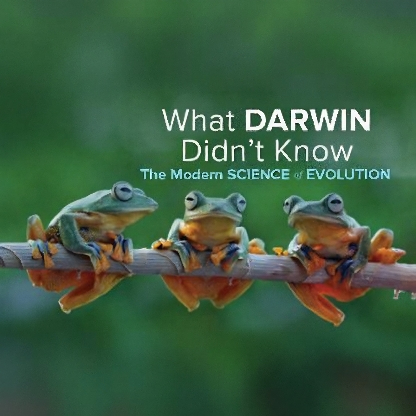
What Darwin Didn’t Know: The Modern Science of Evolution
Original price was: $49.99.$9.99Current price is: $9.99.
This course explores how modern biology has expanded and transformed Darwin’s original theory of evolution. Through 24 lectures, you’ll discover how genetics, microbiology, and other scientific advances have revolutionized our understanding of life’s diversity.
What Darwin Didn’t Know: The Modern Science of Evolution
Course Overview
This course explores how modern biology has expanded and transformed Darwin’s original theory of evolution. Through 24 lectures, you’ll discover how genetics, microbiology, and other scientific advances have revolutionized our understanding of life’s diversity.
Key Topics:
- Modern genetics and DNA’s role in evolution
- Rapid evolutionary changes in real-time
- Human origins and our relationship to Neanderthals
- Extreme life forms and imperfect adaptations
- Future of human evolution and gene editing
Video Lectures
01: What Darwin Knew and Why It Still Matters (32 min)
Examine Darwin’s path to evolutionary theory and how modern evidence has deepened his ideas.
02: Inheritance: Darwin’s Missing Link (33 min)
Explore Mendel’s genetics and the “modern synthesis” that completed Darwin’s theory.
03: Genome Mutations: Evolution’s Raw Material (33 min)
Discover how DNA mutations provide the variations driving natural selection.
04: Gene Flow versus Natural Selection (31 min)
Study how population movement affects evolution through Galapagos finch case studies.
05: Geology and Genes: The Geography of Life (31 min)
Learn how plate tectonics explains species distribution patterns Darwin observed.
06: Genetic Drift: When Evolution Is Random (32 min)
Understand how random genetic changes shape evolution, especially in small populations.
07: Rapid Evolution within Species (29 min)
See real-time evolution in finches, guppies, and foxes adapting to environmental changes.
08: Evolution in the Lab (31 min)
Analyze laboratory experiments testing whether evolution is predictable or random.
09: The Many Origins of Species (32 min)
Investigate modern definitions of species and the reproductive barriers creating them.
10: Cambrian Explosion to Dinosaur Extinction (32 min)
Explore mass extinctions and evolutionary explosions that puzzled Darwin.
11: Reconstructing the Tree of Life with DNA (31 min)
Use genetic sequencing to map evolutionary relationships across all life forms.
12: Human Evolution in All Directions (32 min)
Trace our complex ancestry through fossils and DNA, including Neanderthal interbreeding.
13: Evolution Doesn’t Repeat, but It Rhymes (30 min)
Debate whether evolution follows predictable patterns through convergent evolution examples.
14: The Evolution of Extreme Life (32 min)
Study organisms thriving in Earth’s harshest environments, from deep oceans to hot springs.
15: Imperfect Nature: Ad Hoc Body Designs (31 min)
Examine evolutionary compromises in panda thumbs, flounder faces, and human anatomy.
16: The Sterile Worker Paradox (33 min)
Solve Darwin’s ant dilemma: why sterile castes evolve despite not reproducing.
17: Coevolution: Peace Accords and Arms Races (32 min)
Track species relationships from mutualistic yucca moths to predator-prey speed races.
18: Microbiomes: Evolution with Small Partners (33 min)
Discover how bacteria shaped evolution and continue influencing all life forms.
19: The Evolution of Brains and Behavior (31 min)
Analyze brain development across species and what makes human cognition unique.
20: The Evolution of Sex and Parenting (32 min)
Explore why sexual reproduction exists and how mating strategies evolve.
21: The Evolution of Aging and Death (32 min)
Understand why natural selection hasn’t eliminated aging despite its costs.
22: Evolutionary Medicine (32 min)
Apply evolutionary principles to combat rapidly-evolving diseases like malaria and cancer.
23: Gene Editing and Directed Evolution (32 min)
Examine CRISPR technology’s potential to control evolution for medicine and agriculture.
24: The Future of Human Evolution (38 min)
Speculate how space travel and technology might shape humanity’s next evolutionary steps.
Related products



By Area