 Skip to content
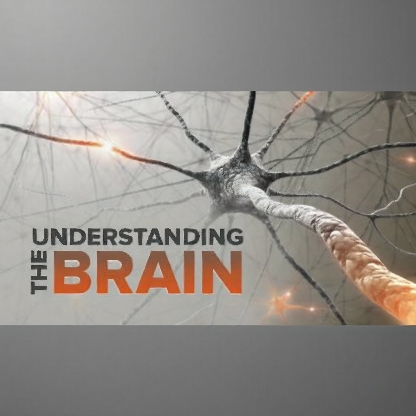
Understanding the Brain
Original price was: $69.99.$22.99Current price is: $22.99.
Go inside the most astonishingly complex organ that has ever existed and learn how it works in this engrossing and surprising course on the human brain.
Understanding the Brain
Course Overview
Course No. 1580
Go inside the most astonishingly complex organ that has ever existed and learn how it works in this engrossing and surprising course on the human brain.
Award-winning Professor Jeanette Norden of Vanderbilt University takes you on a journey through neurology, biology, and psychology to explore how the brain shapes perception, movement, memory, emotions, and identity. From its cellular structure to its role in consciousness, this 36-lecture course reveals the brain’s incredible capabilities—and the mysteries that remain.
Video Lectures
01: Historical Underpinnings of Neuroscience (33 min)
Trace the evolution of brain science from antiquity to modern neurology, featuring pioneers like Leonardo da Vinci and Thomas Willis.
02: Central Nervous System—Gross Organization (32 min)
Explore the brain’s major regions and spinal cord, from rostral (front) to caudal (back).
03: Central Nervous System—Internal Organization (32 min)
Discover how neurons and glial cells form gray and white matter, the building blocks of brain structure.
04: Central Nervous System—Subdivisions (31 min)
Learn how nuclei and pathways specialize in functions like sensation, memory, and motor control.
05: Cortex—Lobes and Areas (30 min)
The cerebral cortex’s four lobes and their roles in cognition, language, and higher-order thinking.
06: Cortex—Sensory, Motor, and Association Areas (31 min)
How modern neuroscience redefined “association” cortex, revealing hidden sensory functions.
07: Central Nervous System—Development (32 min)
From a few cells to a complex organ: the stages of brain development and its staggering potential.
08: Central Nervous System—Cellular Organization (31 min)
Neurons vs. glial cells: their structures, functions, and the surprising roles of “brain glue.”
09: Pathways and Synapses (30 min)
How neurons transmit information through ion signaling and synaptic connections.
10: Neurotransmitters (30 min)
Chemical messengers like dopamine and endorphins, and their impact on pain, reward, and addiction.
11: Stroke (31 min)
Predicting functional loss by mapping stroke damage to the brain’s blood supply and regions.
12: The Visual System—The Eye (30 min)
Why the eye doesn’t “take pictures”—and how the brain constructs vision from edges and contrast.
13: The Visual System—The Cortex (30 min)
From retina to cortex: how face recognition, color perception, and other visual magic unfold.
14: The Auditory System (30 min)
How pressure waves become sound—and why hearing, like seeing, is a brain-made illusion.
15: The Somatosensory System (32 min)
Touch, pain, and proprioception: the parallel pathways that map your body’s sensations.
16: Agnosias (32 min)
When brain lesions disrupt sensory knowledge: cases of face blindness and motion agnosia.
17: The Motor System—Voluntary Movement (31 min)
Pyramidal, extrapyramidal, and cerebellar subsystems: the trio behind every motion you make.
18: The Motor System—Coordinated Movement (33 min)
The cerebellum’s role in timing, precision, and why you can’t dance without it.
19: Parkinson’s Disease (33 min)
How neuron loss in the substantia nigra disrupts movement—and current treatments.
20: Language (31 min)
The brain’s specialized areas for symbolic communication, from speech to written words.
21: The Limbic System—Anatomy (31 min)
Emotion, memory, and the case of Phineas Gage: how injury reshaped a personality.
22: The Limbic System—Biochemistry (31 min)
Neurotransmitter imbalances and their link to disorders like depression.
23: Depression (31 min)
Anatomy, biochemistry, and the development of antidepressants like Prozac.
24: The Reward System—Anatomy (31 min)
Brain structures that turn thirst-quenching and sunsets into joyful experiences.
25: The Reward System—Drugs (31 min)
How cocaine and marijuana hijack neural pathways—and cause addiction.
26: Brain Plasticity (31 min)
Synaptic changes behind learning, memory, and why recollections shift over time.
27: Emotion and Executive Function (31 min)
Why rationality requires emotion—and how both guide decision-making.
28: Processing of Negative Emotions—Fear (31 min)
The amygdala’s role in threat detection and disorders like PTSD.
29: Music and the Brain (31 min)
Composition, rhythm, and appreciation: the neural symphony behind music.
30: Sexual Dimorphism of the Brain (33 min)
How male and female brain patterns influence behavior and perception.
31: Sleep and Dreaming (32 min)
The active neuroscience of sleep stages—and what dreams may (or may not) mean.
32: Consciousness and the Self (32 min)
The “me” in consciousness: probing agnosias, blindness, and the nature of identity.
33: Alzheimer’s Disease (30 min)
How affected brain regions explain the symptoms of this devastating disorder.
34: Risk Factors for Alzheimer’s Disease (30 min)
Lifestyle lessons from nuns: reducing risk through cognitive and social engagement.
35: Wellness and the Brain—Effects of Stress (30 min)
Chronic stress vs. fight-or-flight: the toll on modern brains and health.
36: Neuroscience—Looking Back and Looking Ahead (32 min)
Ethical questions, research frontiers, and what brain science reveals about humanity.
Related products


By Area


