Skip to content
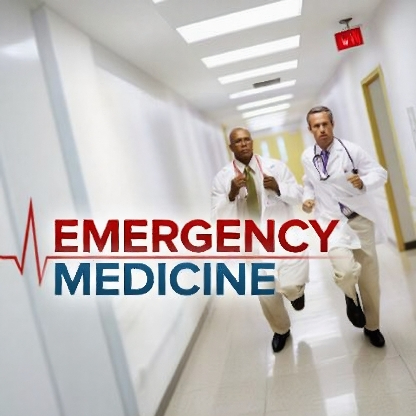
Medical School for Everyone: Emergency Medicine
Original price was: $29.99.$7.99Current price is: $7.99.
Experience for yourself the high-stakes drama, scientific detective work, and medical insights of life in an everyday emergency department.
Course Overview
Experience for yourself the high-stakes drama, scientific detective work, and medical insights of life in an everyday emergency department.
Course No. 1991
You’re a doctor 11 hours into your shift, and you’ve just walked into a waiting area packed with patients. There’s an elderly man complaining of chest pain, a teenage girl whose arms are swollen with bee stings, and an ambulance bringing in two unresponsive kids from a car crash. What do you do next?
In Dr. Benaroch’s 24 lectures, experience the high-stakes drama and medical insights of life in an everyday emergency department: the most intense department in any hospital, and home to the kind of split-second decision making, troubleshooting, and detective work that can make the difference between a patient’s life and death.
Every lecture brings you up close and personal with the common and uncommon medical crises that emergency doctors encounter throughout their careers. As you shadow Dr. Benaroch on his shifts, and sometimes even venture off-site, you’ll encounter patients coming in with a variety of symptoms and complaints — some of which are easily diagnosed and treated, and some of which are more life-threatening than they first appear. At the heart of each case are powerful examples of:
- How emergency doctors think on their feet
- How emergency doctors determine what’s really wrong with a patient
- How emergency doctors rule in, or out, certain diagnoses
- How emergency doctors counsel patients and families on improving health
This is your opportunity to explore the adventure, mystery, and fascination of emergency medicine — and to discover why it’s one of the most exciting and rewarding branches of medicine to work in.
Video Lectures
01: Triage in Emergency Medicine
Start the course learning about the first critical step of emergency care: triage. When faced with a waiting room full of patients, how does a capable emergency department doctor decide whom to treat first? What happens when a patient’s condition changes? Or when more patients show up?
Duration: 30 min
02: Emergency Medicine Means Thinking Fast
Dr. Benaroch takes you along with an ambulance crew to give you a three-dimensional understanding of emergency care as experienced by first responders. Topics covered in this lecture include the ABCs of a rapid scan, appropriate bystander response, and the “rule of 9” for estimating burn size.
Duration: 31 min
03: Emergency Medicine Means Thinking Again
Welcome to the night shift at an emergency department, where anything can happen. Through the patient cases in this lecture, you’ll get a deeper understanding of how emergency doctors think twice about a young man having a heart attack, a college student who is vomiting, and an elderly man who is having trouble walking.
Duration: 32 min
04: The Story Is the Diagnosis
Discover how emergency doctors use OLD CAAAR: a simple mnemonic to accurately and quickly pinpoint the location and characteristics of a patient’s pains. Also, learn what happens when a doctor has to think fast and doesn’t have the to ask each of the OLD CAAAR questions.
Duration: 31 min
05: Hidden Clues in the Emergency Department
Take a closer look at three emergency department cases—a urinary tract infection, a broken leg, and a bellyache—with a twist. How were these diagnoses determined? Not through expensive tests or advanced imaging, but through paying attention to the story, even when it isn’t truthful.
Duration: 31 min
06: Treat the Patient, Treat the Family
According to Dr. Benaroch, to best treat a patient, you sometimes have to treat the patient’s family. See this principle in action through a 16-year-old complaining of chronic bronchitis and a 60-year-old found unresponsive with low blood sugar—both of whom have families to help support a doctor’s efforts to diagnose and heal.
Duration: 30 min
07: Chest Pain
This lecture focuses on patients with chest pain, which might be either a sign of a mild illness or an actual heart attack. Why is it so difficult to identify every serious cause of chest pain? What questions should doctors—and patients—ask? What’s the difference between myocarditis, pneumothorax, and other medically serious cases?
Duration: 31 min
08: Treat the Cause, Not the Symptom
Definitive emergency care requires, first and foremost, a diagnosis. Visit a community emergency department that shares space with an urgent care center, and learn how patients like a 2-year-old with a persistent cough and a 49-year-old with a stuffy nose illustrate the importance of treating the cause—not the symptoms.
Duration: 30 min
09: Who Needs the Emergency Department?
Not all emergency department patients need to be there. In this lecture, meet several pairs of patients—each with the same symptoms, but only one of whom would be best served in the emergency department. Then, get some general tips for you to consider the next time you’re contemplating going to the emergency department.
Duration: 30 min
10: Altered Mental Status
How do you handle patients in altered mental states, suffering from unusual thoughts and behaviors? How do you figure out their story and make an accurate diagnosis? Discover how, in cases like these, doctors rely more than ever on signs and clues from a patient’s family and friends.
Duration: 30 min
11: Simple Symptoms, Serious Illness
Discover why sometimes a quick patient history isn’t enough to help diagnose a problem. In addition to walking you through patient cases, Dr. Benaroch offers insights into fascinating tools that help doctors uncover serious illnesses hidden behind basic symptoms, including complete blood count tests and air contrast enemas.
Duration: 29 min
12: In an Emergency, Protect Yourself First
Doctors are commanded to do no harm to their patients. What’s equally important is protecting themselves in those rare instances where a patient may do them harm. Get an inside look at how emergency doctors handle dangerous situations, including a patient acting violently and a patient suffering from a highly infectious disease.
Duration: 28 min
13: Treating Insect and Animal Bites
Meet several emergency patients who’ve been bitten by various creatures, from snakes and spiders to ticks and raccoons. Along the way, you’ll learn how doctors treat allergic reactions to bites, how they treat wounds without accidentally injecting more venom into the body, and more.
Duration: 30 min
14: The Missing Piece in an Emergency Diagnosis
Emergency department patients often aren’t ready to trust the doctors attending them, since they have just met. In this lecture, learn how doctors work with patients who aren’t completely forthcoming to build trust and coax out embarrassing—or seemingly irrelevant—details to arrive at the right diagnosis and get them the treatment they need.
Duration: 30 min
15: Healthy Paranoia in Emergency Medicine
Emergency department doctors should always assume every patient has a life-threatening illness—even though only 10% to 20% actually do. How do doctors manage this healthy “paranoia”? And how do they prepare themselves and their patients for the worst outcome while planning for the best?
Duration: 29 min
16: Fever: Friend or Foe
Are fevers your friend or your foe? In this lecture, learn the best clues to help distinguish between fevers that are signs of a viral infection and those that herald something much more serious. Then, learn some of the common triggers of fevers, as well as doctor-recommended treatments.
Duration: 29 min
17: Always Treat Pain
Pain is a frequent chief complaint in emergency departments. This lecture brings you up close with patients suffering from acute and chronic pain, including the common complaint of back pain. These cases help you better understand everything from pain medications—and the dangers of overuse—to how pain affects the way the brain works.
Duration: 30 min
18: An Ounce of Prevention
No one wants to go to an emergency department. While you can never protect yourself 100%, there are ways to help avoid having to make a trip there. Here, learn about the importance of cancer screenings, vaccinations, and taking medication. A little prevention, it turns out, makes a big difference.
Duration: 30 min
19: The Big Picture in Emergency Medicine
A fever that’s actually a sign of a very dramatic, potentially deadly disease. Abdominal pain that’s not caused by illness or injury. Dr. Benaroch uses these and other eye-opening cases as a window into how doctors arrive at the big picture when a patient’s complaints fail to reveal the truth.
Duration: 28 min
20: Is Exercise Good for Your Health?
This lecture’s cases illustrate how sports-related injuries are treated in emergency departments. You’ll encounter a softball player suffering from a concussion, a young boy’s dangerous eye injury from a haphazard game of lawn darts, a teen rescued from a near-drowning event, and a golfer’s stubborn poison ivy rash.
Duration: 30 min
21: Stay Safe in the Emergency Department
Gain insights into tips and practices that emergency department doctors and patients should know to ensure their safety. Topics include the risks of conscious sedation (which is less safe than general anesthesia), the importance of knowing your allergies, and the dangers involved in handing off a patient to another provider.
Duration: 29 min
22: Emergency Medicine for Travelers
Emergency department doctors have to stay especially vigilant when dealing with patients who have traveled abroad—especially in the developing world. Find out how they handle uncommon diseases and infections transmitted by mosquitoes, sexual activity, and more. Then, visit a ski clinic for a peek at some other travel-related emergencies.
Duration: 30 min
23: Emergency Medicine Lessons from the Past
What was emergency medicine like in the 1800s? Go back in time to the American Civil War for a glimpse at how military doctors and surgeons treated wounds and combatted infection. Compare these injuries and treatments to those of the Boston Marathon bombing. Also, contrast the medical treatment given to President Garfield after he was shot with the treatment Reagan received after his attempted assassination.
Duration: 32 min
24: Lessons from the Emergency Department
It’s time for your last shift in the emergency department. In this closing lecture, Dr. Benaroch uses several case studies to help you review the big-picture lessons of good emergency care you’ve learned throughout the course—lessons that have opened your eyes to the excitement and challenges of emergency medicine and that can help you take better care of yourself and your loved ones.
Duration: 32 min
Related products



By Area