Skip to content
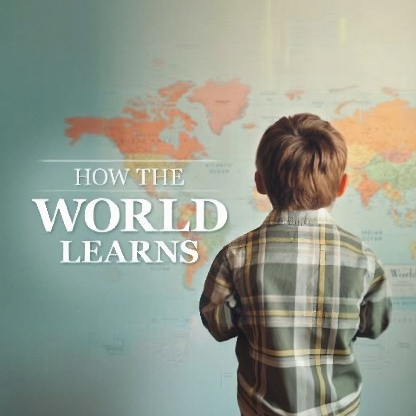
How the World Learns: Comparative Educational Systems
Original price was: $49.99.$9.99Current price is: $9.99.
Discover the unique ways some countries foster student achievement—and the circumstances that cause others to fall short.
How the World Learns: Comparative Educational Systems
Overview
Discover the unique ways some countries foster student achievement—and the circumstances that cause others to fall short. Understanding how education looks in other countries helps us grasp how different systems create success. In these 24 thought-provoking lectures, you’ll engage in a detailed comparison of teaching methods and student achievement in both primary and secondary schools.
From the focus on STEM instruction and the intent of morals education to the role of preschool and the importance of creativity, you’ll explore why Finland and South Korea consistently rank as the two best educational systems despite having diametrically opposed approaches. With Professor Wiseman’s guidance, you’ll use internationally comparative data to identify strengths and weaknesses and see how this information is used—and sometimes misused—to enact policies that shape classroom experiences.
Course Content
01: The Global Challenge to Educate
Understand why borrowing or benchmarking one national education system against another is not necessarily a remedy for educational reform. (34 min)
02: Sputnik Launches the Science-Math Race
Learn about the history of “crisis” in U.S. education and how America’s educational system compares with schools in other countries, focusing on TIMSS. (33 min)
03: Education Is Life
Address questions about the importance of knowledge versus skills, standardized testing, and the purpose of school in American views on education. (31 min)
04: Evidence-Based Policy Making in Education
Explore why evidence-based educational policymaking has become a global phenomenon and how data shapes classroom practices. (30 min)
05: What Should We Compare about Education?
Analyze common criticisms of national education systems and the recurring phenomena of achievement envy, accountability expectation, and access entitlement. (34 min)
06: The World Learns from Horace Mann
Trace the emergence of mass education ideologies in the U.S. and their influence on global education, while considering the U.S.’s international ranking. (30 min)
07: When Culture Invades the Classroom
Investigate how non-school factors, such as culture and economics, are among the strongest predictors of learning, using South Africa and China as case studies. (29 min)
08: Germany and Japan’s Shattered Expectations
Examine why Finland ranks at the top of educational systems and the reforms implemented by countries like Indonesia and Japan in response to their results. (31 min)
09: Borrowing Foreign School Cultures
Critically assess the popularity of educational comparisons and whether reform should be driven by economic competition, focusing on the UAE’s strategy. (30 min)
10: The Value in Linking School to Jobs
Investigate the connection between formal education and the skills needed in the workforce, exploring global efforts in vocational training. (30 min)
11: Why Blame the Teacher?
Consider whether low student performance is the fault of teachers by studying characteristics of students, teachers, and curriculum in various educational systems. (30 min)
12: Gender Pipeline Lifts Equality Dream
Explore how adjustments in policies, curricula, and pedagogy can contribute to equity in education, focusing on gender-based equity. (32 min)
13: Gulf Schools: The Non-National Advantage
Examine how education in Saudi Arabia bridges political citizenship, academic performance, and economic productivity. (29 min)
14: Who Is Accountable for Education?
Compare accountability cultures in different educational systems, focusing on access, achievement, and standards in the U.S. and Finland. (30 min)
15: How Parents Shape Student Outcomes
Explore the influence of parental involvement on student achievement and the role of early childhood education in various cultures. (33 min)
16: Reading, Writing, and Religion
Investigate how educators decide what to teach and how this is influenced by national curricula, commonalities, and key differences. (30 min)
17: International Test Scores: All and Nothing
Explore the four general goals of educational systems and the concerns surrounding standardized tests and their effectiveness. (32 min)
18: Turning a Good Teacher into a Great One
Look at what constitutes good teaching and how various factors influence teaching practices in different countries. (29 min)
19: The Foundations of Civil Society
Examine political socialization and its role in education worldwide, focusing on how students are politically socialized. (29 min)
20: From National Student to Global Citizen
Explore how education develops global citizens and the curricula designed to focus on global citizenry. (32 min)
21: The Problem with Teaching’s Best Practices
Discover why practices that work in one educational system may not lead to success in another, focusing on key factors influencing outcomes. (29 min)
22: A School inside Your Phone?
Consider how new technologies are being implemented as teaching tools and the sustainability of such innovations. (30 min)
23: The Rich-and-Poor Learning Cycle
Explore how academic success should be measured and the balance between school and non-school factors in education. (30 min)
24: How to Fix Education: Heart, Head, Hands
Analyze how larger forces can lead to educational change through examples from various countries, including innovative solutions to educational challenges. (35 min)
Related products


By Area

By Area