Skip to content
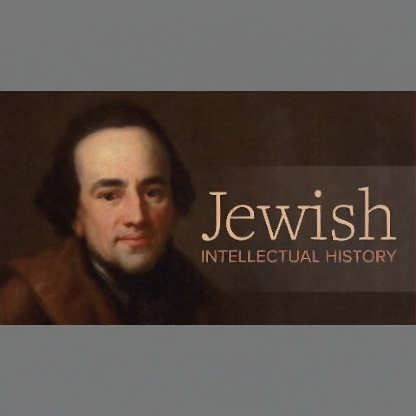
Jewish Intellectual History: 16th to 20th Century
Original price was: $39.99.$7.99Current price is: $7.99.
Observe the time-honored intellectual tradition through which Judaism analyzes, rethinks, and reformulates itself. God, Torah, Israel—these three concepts have been the focus of Jewish thought throughout history. However, the last four centuries have presented Jewish thinkers with numerous challenges. This course consists of 24 lectures that explore various ways a small group of thinkers has attempted to respond to these challenges.
Overview
Observe the time-honored intellectual tradition through which Judaism analyzes, rethinks, and reformulates itself. God, Torah, Israel—these three concepts have been the focus of Jewish thought throughout history. However, the last four centuries have presented Jewish thinkers with numerous challenges. This course consists of 24 lectures that explore various ways a small group of thinkers has attempted to respond to these challenges.
In a world characterized by immense suffering, especially for Jews, was the existence of an all-powerful and comforting God still tenable? What purpose and meaning do Jewish practices hold, especially for those who value their autonomy? Can Jews still justify the notion of a “chosen people” in a society where Jewish integration and full participation have become the norm?
Through these lectures, Professor Ruderman sheds light on historical theories and religious practices, providing a broad perspective on thinkers who offered original and thought-provoking ideas. Most Jewish intellectuals shared a common goal: to maintain faith, meaning, and identity for their fellow Jews.
Course Lectures
- On Studying Jewish History
Defining “Jewishness” has been a longstanding challenge. How do Jews share common history without a shared government or land?
Duration: 35 min
- Defining Modern Jewish History and Thought
Discusses major historians like Heinrich Graetz and how Jewish particularism led to three approaches: insider, outsider, and rejectionist.
Duration: 30 min
- Cultural Transformation in the Italian Ghetto
Explores how the ghetto system in late 16th and early 17th-century Italy changed Jewish-Christian relations and Jewish cultural life.
Duration: 30 min
- Seventeenth-Century Marranism and Messianism
Highlights the return of Iberian Christians to Jewish life and its philosophical implications, particularly in relation to Spinoza.
Duration: 31 min
- The Challenge of Baruch Spinoza
Analyzes how Spinoza shaped modern Jewish thought with his Theological-Political Treatise, challenging earlier Jewish rationalism.
Duration: 31 min
- Moses Mendelssohn and His Generation
Discusses Mendelssohn’s efforts to reconcile Judaism with Enlightenment thought and his eventual failure to preserve Judaism against Spinoza’s critiques.
Duration: 30 min
- The Science of Judaism
Covers the founding of the Society for the Culture and Science of the Jews in 1819 and its objective to study Judaism scientifically.
Duration: 30 min
- Heinrich Graetz—Jewish Historian
Examines Graetz’s History of the Jews and his defense of Judaism against Christian historians.
Duration: 30 min
- Abraham Geiger—The Shaping of Reform Judaism
Geiger’s work emphasized the significance of rabbinic Judaism in understanding religious origins amidst the challenges of modernity.
Duration: 31 min
- The Neo-Orthodoxy of Samson Raphael Hirsch
Discusses Hirsch as a prominent critic of the Reform movement and a leading proponent of Neo-Orthodox Judaism.
*Duration: 30 min*
- Zecharias Frankel and Conservative Judaism
Highlights Frankel's departure from the Reform movement due to concerns about radical changes in Judaism.
*Duration: 31 min*
- Samuel David Luzzatto—Judaism and Atticism
Analyzes Luzzatto's view of Western civilization as a clash between Judaism and Greek ideals of intellect and beauty.
*Duration: 30 min*
- Zionism’s Answer to the Jewish Problem
Discusses the emergence of Zionism as a response to diminishing optimism regarding Jewish integration and social emancipation.
*Duration: 31 min*
- Three Zionist Visions
Explores differing perspectives among Zionist leaders, such as Ahad Ha-Am, Jacob Klatzkin, and Louis Brandeis, on the future of Jewish identity.
*Duration: 30 min*
- The Jewish Adventure with Socialism
Examines the appeal of socialism to Jews in Europe as a means of addressing their socio-political status, alongside the eventual disillusionment.
*Duration: 30 min*
- Hermann Cohen’s Religion of Reason
Cohen's philosophy emphasizes ethical monotheism and its role in addressing identity challenges in the 20th century.
*Duration: 31 min*
- Leo Baeck’s Mystery and Commandment
Explores Baeck's focus on ethical monotheism and the role of religious consciousness in Judaism.
*Duration: 31 min*
- Martin Buber’s Religious Existentialism
Highlights Buber’s principles of dialogue and meaningful human engagement with both others and the divine.
*Duration: 31 min*
- Jewish Law—Martin Buber vs. Franz Rosenzweig
Discusses the differing views of Buber and Rosenzweig on Jewish ritual observance and its significance.
*Duration: 30 min*
- Mordecai Kaplan and American Judaism
Outlines Kaplan's "reconstruction" of Judaism to respond to the needs of American Jews and develop group cohesiveness.
*Duration: 31 min*
- Abraham Heschel—Mystic and Social Activist
Describes Heschel's contributions to understanding divine revelation within the context of American Judaism.
*Duration: 30 min*
- Theological Responses to the Nazi Holocaust
Analyzes responses to the Holocaust from Richard Rubenstein and Emil Fackenheim, focusing on God's presence in history.
*Duration: 30 min*
- Feminist Jewish Theology
Examines the emergence of feminist theology in the 1960s and 1970s and its impact on Jewish understanding and scholarship.
*Duration: 30 min*
- Current Trends in Jewish Thought
Discusses recent theological thinking and the relevance of God, Torah, and Israel to contemporary Jewish identity.
*Duration: 31 min*Related products





By Area