Skip to content
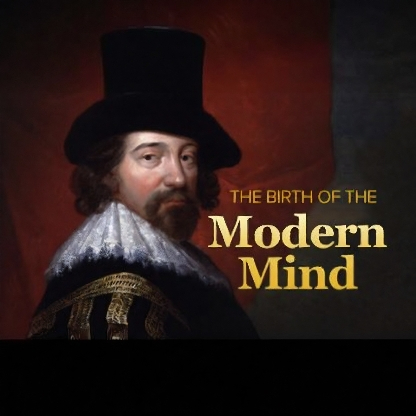
The Birth of the Modern Mind: The Intellectual History of the 17th and 18th Centuries
Original price was: $49.99.$9.99Current price is: $9.99.
Learn about the age of Newton, Descartes, Pascal, Locke, Rousseau, and more from one of the world’s leading intellectual historians. Modern science, representative democracy, and a wave of wars were caused by a revolution of the intellect that seized Europe between 1600 and 1800. Disrupting the minds of the continent like few things before or since, this revolution challenged previous ways of understanding reality and sparked a profound transformation of European life. The goal of these 24 lectures is to help you better understand the conceptual and cultural revolution of the Enlightenment. In them, you’ll see the birth of modern thought in the dilemmas, debates, and extraordinary works of 17th- and 18th-century minds.
Overview
Learn about the age of Newton, Descartes, Pascal, Locke, Rousseau, and more from one of the world’s leading intellectual historians. Modern science, representative democracy, and a wave of wars were caused by a revolution of the intellect that seized Europe between 1600 and 1800. Disrupting the minds of the continent like few things before or since, this revolution challenged previous ways of understanding reality and sparked a profound transformation of European life. The goal of these 24 lectures is to help you better understand the conceptual and cultural revolution of the Enlightenment. In them, you’ll see the birth of modern thought in the dilemmas, debates, and extraordinary works of 17th- and 18th-century minds.
Course Lectures
- Introduction—Intellectual History and Conceptual Change
Revolutions in thought—as opposed to those in politics or science—are influential and far-reaching, affecting our entire sense of legitimate authority.
Duration: 34 min
- The Dawn of the 17th Century—Aristotelian Scholasticism
The intellectual inheritance of the educated world in the 17th century was dominated by Aristotelian scholasticism, a fusion of philosophy and Christian theology.
Duration: 31 min
- The New Vision of Francis Bacon
Francis Bacon transformed the uses of knowledge into power over the forces of nature, criticizing Western intellectual inheritance.
Duration: 31 min
- The New Astronomy and Cosmology
A significant challenge to scholasticism began in astronomy, particularly through neo-Pythagorean thought.
Duration: 31 min
- Descartes’s Dream of Perfect Knowledge
Descartes created a coherent philosophical system that became the major challenge to scholasticism in the first half of the 17th century.
Duration: 31 min
- The Specter of Thomas Hobbes
Hobbes argued that the world and human experience operate according to fixed, mechanical laws with no freedom of the will.
Duration: 31 min
- Skepticism and Jansenism—Blaise Pascal
Pascal exemplified philosophical skepticism and the dependence on religious faith, leading a systematic assault on Aristotelian scholasticism.
Duration: 31 min
- Newton’s Discovery
By the mid-17th century, critics of Aristotelianism in England communicated via the Royal Society, which published Newton’s work.
Duration: 30 min
- The Newtonian Revolution
Newton’s Principia Mathematica was a pivotal event in Western culture, convinced readers of the world’s order and coherent nature.
Duration: 31 min
- John Locke—The Revolution in Knowledge
Locke’s Essay Concerning Human Understanding fundamentally changed cultural perceptions of human knowledge.
Duration: 32 min
- The Lockean Moment
Locke suggested the mind starts as a blank slate and that our knowledge of the world is merely probable.
Duration: 32 min
- Skepticism and Calvinism—Pierre Bayle
Bayle’s Historical and Critical Dictionary challenged the arrogance of reason and underscored the importance of simple, peaceful faith.
Duration: 32 min
- The Moderns—The Generation of 1680-1715
This generation increasingly rejected past authority, believing in induction from experience as the path to truth.
Duration: 32 min
- Introduction to Deism
Deism reflected belief in a God whose existence is evident in nature, while rejecting traditional religious revelation.
Duration: 33 min
- The Conflict Between Deism and Christianity
Deism challenged Judeo-Christian theology, leading to conflicts over knowledge of God and the grounds of religious belief.
Duration: 31 min
- Montesquieu and the Problem of Relativism
Montesquieu explored how knowledge and moral ideas are relative to individual experience and circumstances.
Duration: 30 min
- Voltaire—Bringing England To France
Voltaire’s Lettres Philosophiques significantly popularized the intellectual revolution of the 17th century in France.
Duration: 31 min
- Bishop Joseph Butler and God’s Providence
Bishop Butler argued that human happiness and virtue are interlinked, influencing many, including Thomas Jefferson.
Duration: 31 min
- The Skeptical Challenge to Optimism—David Hume
Hume critiqued the premise of natural religion and the existence of a benevolent God.
Duration: 32 min
- The Assault upon Philosophical Optimism—Voltaire
Candide reflects Voltaire’s rejection of the notion that the world is “the best of all possible worlds.”
Duration: 31 min
- The Philosophes—The Triumph of the French Enlightenment
The philosophes of 18th-century France critically re-examined knowledge and authority, shaping Enlightenment thought.
Duration: 31 min
- Beccaria and Enlightened Reform
Beccaria’s On Crimes and Punishments sought to rationalize and reform the criminal laws based on the pursuit of happiness.
Duration: 31 min
- Rousseau’s Dissent
Rousseau critiqued Enlightenment beliefs, arguing that progress leads to moral decay through artificial needs.
Duration: 32 min
- Materialism & Naturalism—The Boundaries of the Enlightenment
Diderot’s naturalistic worldview marks a significant turn away from Aristotelian scholasticism into modern thought.
Duration: 33 min
Related products