Skip to content
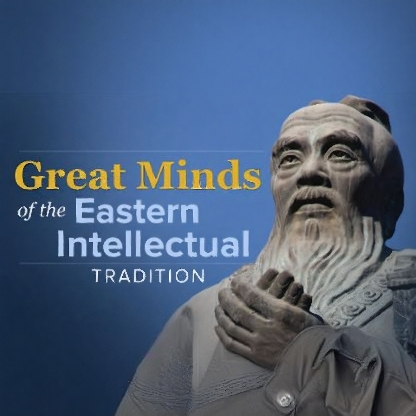
Great Minds of the Eastern Intellectual Tradition
Original price was: $54.99.$14.99Current price is: $14.99.
Introduce yourself to the great minds responsible for shaping Asian philosophy and various spiritual and ideological systems. Western philosophy represents only half the story; the Eastern intellectual tradition offers equally vital insights. This course explores how thinkers from Asia have addressed fundamental issues like the existence of God, the meaning of life, and the nature of reality.
Overview
Introduce yourself to the great minds responsible for shaping Asian philosophy and various spiritual and ideological systems. Western philosophy represents only half the story; the Eastern intellectual tradition offers equally vital insights. This course explores how thinkers from Asia have addressed fundamental issues like the existence of God, the meaning of life, and the nature of reality.
Through 36 extensive lectures led by Professor Hardy, you’ll meet influential figures, including The Buddha, Confucius, and Gandhi, and understand their contributions to philosophy and society. By examining the connections and differences between Eastern and Western thought, you’ll gain a broader perspective on cultures that increasingly influence our global society.
Video Lessons
01: Life’s Great Questions—Asian Perspectives
Begin the journey with an introduction to Eastern philosophy’s major themes.
Length: 31 min
02: The Vedas and Upanishads—The Beginning
Explore the origins of Eastern thought through foundational texts in Indian philosophy.
Length: 30 min
03:“`markdown
Mahavira and Jainism—Extreme Nonviolence
Delve into the teachings of Mahavira and the principles of Jainism, focusing on extreme nonviolence and moral philosophy.
Length: 30 min
04: The Buddha—The Middle Way
Examine the life and teachings of the Buddha, highlighting core principles of Buddhism such as the Four Noble Truths.
Length: 31 min
05: The Bhagavad Gita—The Way of Action
Investigate this crucial text in Hindu philosophy and its insights into action, duty, and the nature of reality.
Length: 31 min
06: Confucius—In Praise of Sage-Kings
Discover the teachings of Confucius and how his ideas shaped Chinese thought and the role of morality in leadership.
Length: 32 min
07: Laozi and Daoism—The Way of Nature
Explore Daoism’s philosophy through the teachings of Laozi, emphasizing harmony with nature and simplicity.
Length: 31 min
08: The Hundred Schools of Pre-imperial China
Learn about the diverse philosophical schools that emerged during China’s Warring States Era.
Length: 30 min
09: Mencius and Xunzi—Confucius’s Successors
Compare the views of Confucius’s followers, Mencius and Xunzi, on morality and human nature.
Length: 32 min
10: Sunzi and Han Feizi—Strategy and Legalism
Examine Sunzi’s strategic insights in “The Art of War” and Han Feizi’s legalist philosophy for governance.
Length: 32 min
11: Zarathustra and Mani—Dualistic Religion
Explore the dualistic beliefs of Zoroastrianism and Manichaeism as foundational ideas in Persian spirituality.
Length: 33 min
12: Kautilya and Ashoka—Buddhism and Empire
Investigate the political philosophies of Kautilya and Ashoka during the Mauryan Empire in India.
Length: 30 min
13: Ishvarakrishna and Patanjali—Yoga
Understand the philosophical underpinnings of yoga as taught by Ishvarakrishna and Patanjali.
Length: 31 min
14: Nagarjuna and Vasubandhu—Buddhist Theories
Dive into the philosophical thoughts of Nagarjuna and Vasubandhu within Mahayana Buddhism.
Length: 31 min
15: Sima Qian and Ban Zhao—History and Women
Explore the works of Sima Qian and Ban Zhao, focusing on their contributions to Chinese history and gender.
Length: 31 min
16: Dong Zhongshu and Ge Hong—Eclecticism
Examine the eclectic approaches of Dong Zhongshu and Ge Hong in the evolution of political thought.
Length: 32 min
17: Xuanzang and Chinese Buddhism
Follow Xuanzang’s journey and his significant role in spreading Buddhism throughout China.
Length: 32 min
18: Prince Shotoku, Lady Murasaki, Sei Shonagon
Shift to Japan, exploring the contributions of Prince Shotoku and two influential literary figures.
Length: 29 min
19: Saicho to Nichiren—Japanese Buddhism
Study the development of Buddhism in Japan through the teachings of Saicho and Nichiren.
Length: 31 min
20: Shankara, Ramanuja, Madhva—Hindu Vedanta
Investigate the foundational school of Vedanta and the differing views of its key thinkers.
Length: 32 min
21: Al-Biruni—Islam in India
Learn about the synthesis of Hindu and Islamic philosophies through the works of Al-Biruni.
Length: 31 min
22: Nanak and Sirhindi—Sikhism and Sufism
Explore the interaction between Sikhism and Sufism through the philosophies of Nanak and Sirhindi.
Length: 30 min
23: Han Yu to Zhu Xi—Neo-Confucianism
Trace the evolution of Neo-Confucianism and its implications for Chinese intellectual life.
Length: 30 min
24: Wang Yangming—The Study of Heart-Mind
Examine Wang Yangming’s teachings on morality and knowledge within the Neo-Confucian framework.
Length: 32 min
25: Dogen and Hakuin—Zen Buddhism
Delve into the principles of Zen Buddhism through the teachings of Dogen and Hakuin.
Length: 32 min
26: Zeami and Sen no Rikyu—Japanese Aesthetics
Discover how Noh drama and the tea ceremony reflect deep philosophical insights in Japanese aesthetics.
Length: 30 min
27: Wonhyo to King Sejong—Korean Philosophy
Explore the contributions of major Korean philosophers and their impact on cultural identity.
Length: 31 min
28: Padmasambhava to Tsongkhapa—Tibetan Ideas
Investigate the rich philosophical traditions of Tibet, including key figures in Vajrayana Buddhism.
Length: 31 min
29: Science and Technology in Premodern Asia
Examine the interplay of scientific thought and technological advances in premodern Asia.
Length: 31 min
30: Muhammad Iqbal and Rabindranath Tagore
Explore the responses of Iqbal and Tagore to Western influence and their philosophical contributions.
Length: 30 min
31: Mohandas Gandhi—Satyagraha, or Soul-Force
Delve into Gandhi’s principles of nonviolent resistance and their philosophical roots and implications.
Length: 31 min
32: Fukuzawa Yukichi and Han Yongun
Investigate the philosophies of Fukuzawa and Han, focused on modernity and tradition in their respective countries.
Length: 32 min
33: Kang Youwei and Hu Shi
Explore the contrasting views of Kang and Hu on the need for reform in Chinese culture and philosophy.
Length: 30 min
34: Sun Yat-sen and Mao Zedong
Examine the philosophies of two critical figures in Chinese history and their impacts on society.
Length: 31 min
35: Modern Legacies
Reflect on the lasting influences of Eastern philosophy on contemporary global thought.
Length: 31 min
36: East and West
Conclude the course with a discussion on the relevance of Eastern thought in the modern world.
Length: 34 min
Related products






By Area