 Skip to content
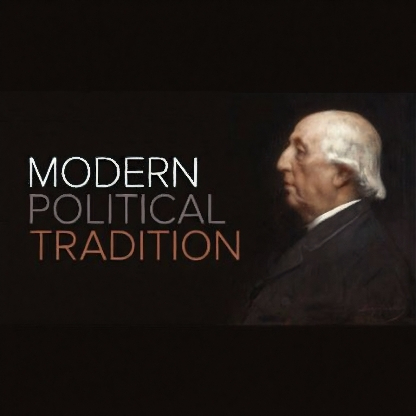
The Modern Political Tradition: Hobbes to Habermas
Original price was: $54.99.$14.99Current price is: $14.99.
Without even realizing it, we all use the fruits of political philosophy. From liberty to democracy to community, the terms and concepts originated by political philosophers are ingrained in our global consciousness. Yet many of us have an incomplete picture of how these ideas developed. This course sheds light on Western political and social theory, as well as its influence on modern history.
Overview
Without even realizing it, we all use the fruits of political philosophy. From liberty to democracy to community, the terms and concepts originated by political philosophers are ingrained in our global consciousness. Yet many of us have an incomplete picture of how these ideas developed. This course sheds light on Western political and social theory, as well as its influence on modern history.
Guided by an award-winning professor, these lectures reveal how political philosophers created virtual blueprints of action for leaders in response to societal challenges. You’ll gain tools to comprehend the language of politics and understand the evolution of political ideas, addressing democracy, freedom, and distributive justice. Encounter revolutionary figures from Niccolò Machiavelli to Ayn Rand and appreciate the context for various political ideas relevant today.
Video Lessons
01: Origins and Conflicts of Modern Politics
Kick off the course with a discussion of political philosophy’s influence and major concepts like democracy and republicanism.
Length: 35 min
02: Ancient Republics, Empires, Fiefdoms
Delve into the history of politics leading up to 16th-century Europe, focusing on Plato and Aristotle.
Length: 30 min
03: Machiavelli’s New Order
Explore Niccolò Machiavelli’s break from classical virtue politics and his establishment of a new political thought.
Length: 29 min
04: Hobbes, Natural Law, the Social Contract
Learn about Thomas Hobbes’ social contract theory based on moral relativism and a pessimistic state of nature.
Length: 32 min
05: Locke on Limited Government and Toleration
Examine John Locke’s view of the state of nature and the social contract’s impact on modern republicanism.
Length: 33 min
06: Rousseau’s Republican Community
Investigate Jean-Jacques Rousseau’s endorsement of the social contract and his vision for modern civil society.
Length: 32 min
07: Kant’s Ethics of Duty and Natural Rights
Explore Immanuel Kant’s deontological ethics and their significant influence on modern political theory.
Length: 31 min
08: Smith and the Market Revolution
Discover the thoughts of 18th-century thinkers like Voltaire and Adam Smith on commerce promoting liberty and peace.
Length: 32 min
09: Montesquieu and the American Founding
Examine the contributions of Montesquieu and others to the American Constitution and the notion of separation of powers.
Length: 31 min
10: Debating the French Revolution
Dive into the liberal, conservative, and proto-progressive arguments surrounding the philosophical impact of the French Revolution.
Length: 31 min
11: Legacies of the Revolution-Right to Left
Explore the origins of the political terms “right” and “left” and their implications following the French Revolution.
Length: 33 min
12: Nationalism and a People’s War
Understand the rise of nationalism and modern warfare through the philosophical work of Carl von Clausewitz.
Length: 29 min
13: Civil Society-Constant, Hegel, Tocqueville
Examine the contributions of Benjamin Constant, Hegel, and Tocqueville to political theory and republicanism.
Length: 33 min
14: Mill on Liberty and Utility
Investigate John Stuart Mill’s doctrine of individual liberty, his utilitarian views, and their impact on political theory.
Length: 30 min
15: Marx’s Critique of Capitalism
Explore Karl Marx’s vision of communism and its implications for capitalism from the 19th century onward.
Length: 31 min
16: Modern vs. Traditional Society
Learn about the shift from traditional to modern society through the perspectives of Weber, Freud, and Nietzsche.
Length: 32 min
17: Progressivism and New Liberalism
Understand the emergence of American progressivism and its critique of individualism and limited government.
Length: 30 min
18: Fleeing Liberalism-Varieties of Socialism
Examine the various forms of socialism that developed in response to capitalism and their philosophical roots.
Length: 31 min
19: Fleeing Liberalism-Fascism and Carl Schmitt
Investigate the rise of fascism and Carl Schmitt’s critiques of parliamentary democracy and liberal republicanism.
Length: 32 min
20: Totalitarianism and Total War
Explore the philosophical interpretations of totalitarianism in light of World War II and its political spectrum.
Length: 31 min
21: Conservative or Neoliberal-Oakeshott, Hayek
Discover the philosophical underpinnings of neoliberalism and conservatism in the post-WWII world.
Length: 30 min
22: Reviving the Public Realm-Hannah Arendt
Analyze Hannah Arendt’s critiques of modern economics and her call for a return to civic republicanism.
Length: 31 min
23: Philosophy vs. Politics-Strauss and Friends
Examine Leo Strauss’s significant influence on American neoconservatism and his critiques of modernity.
Length: 29 min
24: Marcuse and the New Left
Delve into Herbert Marcuse’s ideas and the emergence of the New Left and its critiques of capitalism.
Length: 31 min
25: Rawls’s A Theory of Justice
Explore John Rawls’ justification of welfare liberalism and questions surrounding distributive justice.
Length: 32 min
26: Ayn Rand, Robert Nozick, Libertarianism
Take a nuanced look at libertarianism and its critiques from figures like Ayn Rand and Robert Nozick.
Length: 32 min
27: What about Community?
Investigate the communitarian critiques of liberalism presented by emerging political theorists.
Length: 33 min
28: Walzer on Everything Money Shouldn’t Buy
Discover Michael Walzer’s alternative to traditional theories of distributive justice.
Length: 30 min
29: Identity Politics-Feminism
Examine the feminist challenge to liberal republican political theory and explore different feminist philosophies.
Length: 30 min
30: Identity Politics-Multiculturalism
Explore how recognizing cultural differences redefines liberal republicanism and the implications for equality.
Length: 30 min
31: The Politics of Nature-Environmentalism
Survey the arguments of the environmental movement and its relationship with liberal republican political theory.
Length: 31 min
32: Postmodernism, Truth, and Power
Explore the postmodern critique on politics, focusing on feminist and multiculturalist theories.
Length: 31 min
33: Habermas-Democracy as Communication
Investigate Jürgen Habermas’s defense of modern republicanism and arguments for liberal social democracy.
Length: 32 min
34: The End of History? Clash of Civilizations?
Assess the implications of global events on the future of liberal republicanism and its applicability worldwide.
Length: 30 min
35: Just Wars? The Problem of Dirty Hands
Revisit the ethics of war and examine Michael Walzer’s version of just war theory in contemporary conflicts.
Length: 32 min
36: Why Political Philosophy Matters
Conclude the course with an exploration of the future of government and the surprisingly common ground Americans share.
Length: 33 min
Related products




By Area

By Area

