Skip to content
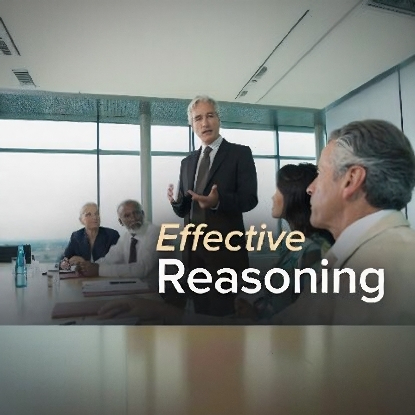
Argumentation: The Study of Effective Reasoning
Original price was: $39.99.$7.99Current price is: $7.99.
Learn the fundamentals of argumentation and build a foundation for communication and reasoning that will benefit you in every area of your life.
Argumentation: The Study of Effective Reasoning
Overview
Learn the fundamentals of argumentation and build a foundation for communication and reasoning that will benefit you in every area of your life.
Course No. 4294
What is effective reasoning? And how can it be done persuasively? These questions have been asked for thousands of years, yet some of the best thinking on reasoning and argumentation is recent and represents a break from the past.
These 24 engaging lectures teach you how to reason, persuade others that what you think is right, and judge and answer the arguments of others—understanding how they will judge yours. Professor Zarefsky makes argumentation accessible by breaking it into five easy-to-understand components.
Arguments can be divided into three parts: a claim, evidence, and an inference linking the evidence to the claim. All arguments fall into a handful of distinctive categories, and the same issues are at stake whenever one of these distinctive patterns occurs.
Three kinds of evidence can be advanced to prove an argument that something is true: objective data, social consensus, and personal credibility. There are six kinds of inference that link evidence to a claim: example, cause, sign, analogy, narrative, and form. The course explains how to use and challenge each. Along the way, you’ll examine numerous actual controversies that reveal the structure of disputes, allowing argument to become an exchange rather than just a flurry of words.
Video Lectures
- Introducing Argumentation and Rhetoric
32 min
Examine argumentation in its classical sense and relate it to the field of rhetoric, considering how it is ethical.
- Underlying Assumptions of Argumentation
30 min
Focus on five key assumptions that guide argumentation as a means of decision-making.
- Formal and Informal Argumentation
30 min
Review the defining features of deduction and induction and summarize three major forms of deductive reasoning.
- History of Argumentation Studies
30 min
Trace the study of informal argumentation from ancient Greece to modern day critiques of formal logic.
- Argument Analysis and Diagramming
30 min
Examine how controversies begin and analyze the structure of an argument: claim, evidence, inference, and warrant.
- Complex Structures of Argument
30 min
Discuss how most arguments are embedded in complex structures and the advantages of mapping and analyzing these.
- Case Construction-Requirements and Options
30 min
Understand the pattern of arguments used to support a claim and how to address all issues raised by that claim.
- Stasis-The Heart of the Controversy
30 min
Explore the focal point of dispute and how choices about stipulation and contestation determine it.
- Attack and Defense I
31 min
Learn the processes of refuting and rebuilding cases, including strategic choices for effective attack.
- Attack and Defense II
31 min
Continue the discussion of attacking arguments, focusing on the arrangement of attacks and strategies for defense.
- Language and Style in Argument
30 min
Address language and presentational style in arguments and their impact on the presentation itself.
- Evaluating Evidence
31 min
Focus on the evidence supporting an argument, categorizing it for meaningful discussion.
- Reasoning from Parts to Whole
30 min
Review inference patterns and common errors, beginning with inferences from examples.
- Reasoning with Comparisons
30 min
Describe types of analogies and tests for reasoning with comparisons, addressing strengths and weaknesses.
- Establishing Correlations
30 min
Focus on inferences from signs, their predictive quality, and pitfalls to avoid.
- Moving from Cause to Effect
31 min
Discuss causal inferences and methods to establish causal influence, along with potential undermining factors.
- Commonplaces and Arguments from Form
30 min
Consider inferences based on social knowledge, commonplaces, and terms involved in argumentation.
- Hybrid Patterns of Inference
31 min
Examine reasoning patterns involving rules, values, and dissociation.
- Validity and Fallacies I
30 min
Discuss what makes a good argument and errors specific to different inference patterns.
- Validity and Fallacies II
30 min
Continue exploring general errors, relevance, and the concept of fallacies.
- Arguments between Friends
31 min
Examine personal sphere arguments and propose ideals for critical discussion as resolution methods.
- Arguments among Experts
30 min
Explore field-specific patterns of inference and how argumentation is affected by the subject matter.
- Public Argument and Democratic Life
31 min
Discuss public arguments about matters of interest and the importance of a robust public sphere.
- The Ends of Argumentation
31 min
Consider the goals served by argumentation in society and its role in cultivating critical thinking skills.
Related products



Courses