Skip to content
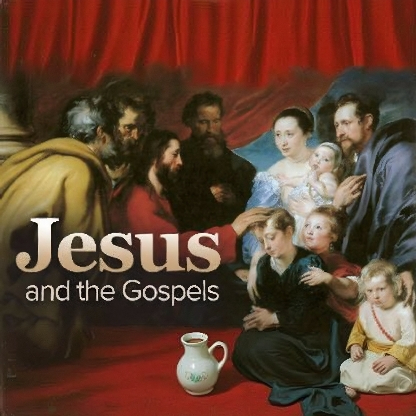
Jesus and the Gospels
Original price was: $54.99.$14.99Current price is: $14.99.
Encounter Jesus as we know him from the composite literary portrait drawn for us by canonical gospels and apocryphal narratives in this course by award-winning author and Professor Luke Timothy Johnson.
Jesus and the Gospels
Course Overview
Encounter Jesus as we know him from the composite literary portrait drawn for us by canonical gospels and apocryphal narratives in this course by award-winning author and Professor Luke Timothy Johnson.
For most of the last 2,000 years, questions about the figure of Jesus have begun with the Gospels, but the Gospels themselves raise puzzling questions about both Jesus and the religious movement within which these narratives were produced. Is it possible to shape a single picture from the various accounts of his life given us by these Gospels?
This far-ranging course examines not only the canonical Gospels of Matthew, Mark, Luke, and John familiar to us from the New Testament, but also the many other, apocryphal narratives and literary works that have contributed to our perceptions of Jesus, Mary, and Christianity—all of which are encompassed by the word “Gospel.” In these 36 engaging lectures, you’ll discover the human Jesus that underlies many portraits we have.
After introducing you to the era’s volatile mixture of Mediterranean culture, Greek ideals and realities, Roman governance, and the religion of Israel, Professor Johnson turns to the Gospels and provides close analyses of key lines of text, explanations of the significance of language and terminology, and overviews of important issues with which scholars have long grappled. You’ll learn about the different issues of faith each Gospel emphasizes, as well as the real-world logistics of spreading that faith during the early Christian era.
But it is the figure addressed by the Gospels who dominates these lectures, sometimes in ways less familiar than the portrayals of Jesus we most often encounter. Beyond the portrayal in the synoptic gospels, you’ll study what the apocryphal narratives have to say about the childhood of Jesus. Among other things, you’ll also learn about the source of Roman Catholicism’s doctrine of Mary and examine the 2nd century faith of Gnosticism.
Video Lecture List
- Why Not “The Historical Jesus”?
- 31 min
- This opening lecture shows how history is and is not helpful in learning about Jesus and why a comparative literary analysis of the Gospels is at once a more responsible and satisfying way to engage this fascinating yet illusive person.
- The Starting Point—The Resurrection Experience
- 30 min
- Virtually everything we know about Jesus comes from Christian sources. This lecture takes up the starting point for engaging Jesus: the distinctive Christian understanding of the resurrection.
- The Matrix—Symbolic World of Greek and Jew
- 30 min
- This lecture introduces the complex 1st-century mixture from which Jesus and the Gospels arose, including Mediterranean culture, Greek ideals and realities, Roman governance, and the religion of Israel.
- Parallels—Stories of Greek and Jewish Heroes
- 30 min
- This lecture provides a context for approaching the distinctive character of the Christian Gospels through a survey of stories told about other significant figures in Greco-Roman and Jewish cultures.
- The Context—Jesus in the Memory of the Church
- 30 min
- The Gospels are compositions from the communal memory of the earliest Christian movement. This lecture sketches the first stages of that movement and the social settings within which Jesus was remembered.
- Earliest Stages—Paul and the Oral Tradition
- 31 min
- Over a period of some 40 years, the memory of Jesus was shaped by the continuing experience of believers in communities. We consider the basic patterns of memory found in the oral tradition.
- Why Compose Gospels?
- 30 min
- The writings of Gospels represented a real shift in the understanding of “good news.” The answer to the question “Why compose Gospels?” leads to a consideration of the nature of the Gospels.
- The Synoptic Problem and Its Solutions
- 31 min
- Three of the canonical Gospels are alike and different in striking and puzzling ways. This lecture exposes what is known as the synoptic problem and offers solutions, including a discussion of the hypothetical source of sayings known as “Q.”
- Gospel of Mark—Apocalyptic and Irony
- 30 min
- This lecture deals with the literary aspects of Mark, particularly the creation of dramatic tension, the apocalyptic outlook of the Gospel, and the ironic way the evangelist turns apocalyptic.
- Gospel of Mark—Good News in Mystery
- 31 min
- This lecture examines the powerful and paradoxical Jesus created by Mark. For humans, it is a mystery that both attracts and repels.
(…Continued for all 36 lectures)
Related products