Skip to content
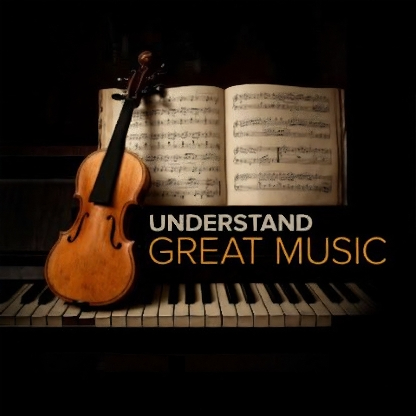
How to Listen to and Understand Great Music, 3rd Edition
Original price was: $79.99.$22.99Current price is: $22.99.
Forever change the way you listen to music with this outstanding course that explores the history, composition, and sublime accomplishments of Western concert music.
How to Listen to and Understand Great Music, 3rd Edition
Forever change the way you listen to music with this outstanding course that explores the history, composition, and sublime accomplishments of Western concert music.
Overview
Course No. 700
This 48-lecture masterpiece transforms how you experience classical music by revealing:
- The language of music – forms, techniques, and terms that make you fluent
- Historical evolution – from ancient chants to 20th-century modernism
- Composers’ genius – Bach, Mozart, Beethoven, Wagner, Stravinsky and more
- Practical listening skills – recognize structures and meanings in any piece
What You’ll Discover:
✓ How music reflects cultural and historical contexts
✓ The building blocks of musical composition
✓ Why great works move us emotionally
✓ How to appreciate music at deeper levels
Video Lectures
Section 1: Foundations (Lectures 1-6)
01: Music as a Mirror (47 min)
Introduction to musical language and concepts
02: Ancient World & Early Church (45 min)
Music’s role in Greek/Roman cultures
03-04: Middle Ages & Renaissance (44 min / 46 min)
Plainchant to polyphony evolution
05: Renaissance Mass (45 min)
Sacred music structures
06: The Madrigal (45 min)
Secular vocal music development
Section 2: Baroque Era (Lectures 7-16)
07-08: Baroque Introduction (45 min / 48 min)
Emotional extravagance meets intellectual control
09: National Styles (46 min)
Italian vs. German approaches
10: Fugue Mastery (46 min)
Bach and Handel’s contrapuntal genius
11-12: Baroque Opera (45 min / 48 min)
From Florentine Camerata to popular entertainment
13-14: Sacred Music (44 min / 47 min)
Oratorios and Bach’s cantatas
15-16: Instrumental Forms (45 min / 46 min)
Passacaglia and concerto structures
Section 3: Classical Era (Lectures 17-29)
17-18: Classical Transition (45 min / 46 min)
Enlightenment’s impact on musical style
19-25: Classical Forms (43-49 min)
Theme/variations, minuet, rondo, sonata
26-27: Symphony & Concerto (43 min each)
Haydn, Mozart, and Beethoven’s innovations
28-29: Opera Buffa (45 min / 44 min)
Mozart’s dramatic ensembles
Section 4: Romantic Era (Lectures 30-44)
30-32: Beethoven’s Revolution (44-46 min)
Symphony No. 5 analysis
33-36: Romantic Expansion (44-49 min)
Program music (Berlioz) and miniatures
37-40: Opera Masters (46-48 min)
Verdi’s drama vs. Wagner’s music dramas
41-44: Nationalism (44-46 min)
Tchaikovsky, Liszt, and Russian school
Section 5: Modernism (Lectures 45-48)
45-48: 20th Century Pioneers (44-46 min)
Debussy, Stravinsky, and Schönberg’s innovations
Related products



Courses