 Skip to content
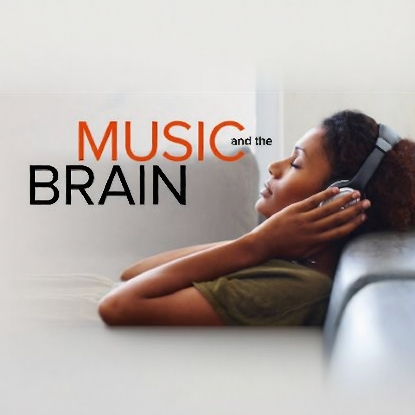
Music and the Brain
Original price was: $39.99.$7.99Current price is: $7.99.
Discover what happens when melody meets the mind in these entrancing lectures on the neuroscience of music.
Music and the Brain
Discover what happens when melody meets the mind in these entrancing lectures on the neuroscience of music.
Overview
Course No. 1181
Music is a universal human experience, present in every culture and affecting us from infancy through old age. This 18-lecture course explores the fascinating intersection of music and neuroscience, answering fundamental questions about:
- The origins of musical behavior in human evolution
- Why music triggers such powerful emotional responses
- How musical training changes brain structure and function
- Music’s therapeutic potential for neurological conditions
Key Features:
✓ Groundbreaking research from cognitive neuroscience
✓ Accessible to all – no prior music or science background needed
✓ Real-world applications in medicine and therapy
✓ Comparative studies with other musical species
Video Lectures
Section 1: Origins of Music
01: Music: Culture, Biology, or Both? (32 min)
Exploring our unique capacity for relative pitch perception
02: Seeking an Evolutionary Theory of Music (32 min)
Darwin’s theories and modern alternatives
03: Testing Theories of Music’s Origins (30 min)
Experiments with monkeys and children
Section 2: Emotional Power of Music
04: Music, Language, and Emotional Expression (32 min)
Why music conveys emotion beyond words
05: Brain Sources of Music’s Emotional Power (32 min)
Eight psychological mechanisms of musical emotion
Section 3: Musical Perception
06: Pitch and Timbre (31 min)
How the brain constructs musical sounds
07: Consonance, Dissonance, and Scales (31 min)
The science behind pleasing vs. clashing tones
08: Melody and Harmony (31 min)
Our brain’s expectations in musical grammar
09-10: Rhythm and Beat (32 min / 29 min)
Periodic patterns and why we move to music
Section 4: Music and the Developing Brain
11: Nature vs. Nurture in Musical Brains (31 min)
Neuroimaging studies of musicians
12: Cognitive Benefits of Training (30 min)
How music enhances language and reading skills
13: Development in Infants (29 min)
Music cognition from womb to childhood
Section 5: Clinical Perspectives
14: Disorders of Music Cognition (30 min)
Amusia and other musical impairments
15-16: Therapeutic Effects (30 min / 32 min)
Music’s impact on stroke, Parkinson’s, and autism
Section 6: Comparative Studies
17: Are We the Only Musical Species? (28 min)
Animal music-making from whales to songbirds
18: Neuroscientific Perspective (32 min)
Final synthesis: Is music biologically special?
Related products


Courses


Courses
