Skip to content
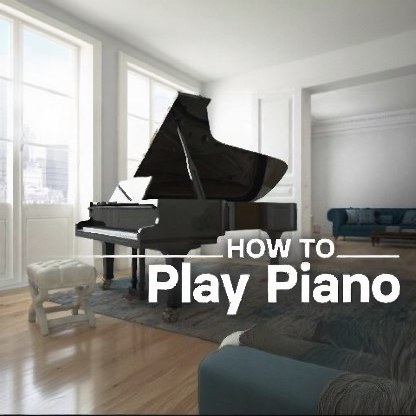
How to Play Piano
Original price was: $69.99.$25.99Current price is: $25.99.
Tickle the ivories and awaken your inner Beethoven with lessons from a master piano instructor—no appointment required! The piano is one of the most gratifying instruments to play, making it an excellent introduction to the theory and practice of music. From folk melodies to challenging classical forms, the piano is a versatile instrument that allows both melodic lead and harmonic accompaniment.
Overview
Course No. 7794
Tickle the ivories and awaken your inner Beethoven with lessons from a master piano instructor—no appointment required! The piano is one of the most gratifying instruments to play, making it an excellent introduction to the theory and practice of music. From folk melodies to challenging classical forms, the piano is a versatile instrument that allows both melodic lead and harmonic accompaniment.
How to Play Piano is your opportunity to develop this marvelous skill. Taught by acclaimed pianist Professor Pamela D. Pike of Louisiana State University, these 36 accessible lessons provide the building blocks needed to evolve from an interested novice to an expressive and talented player. Professor Pike combines music theory and history with hands-on examples, guiding you on a journey from learning how to sit at the piano to mastering chords, arpeggios, sight-reading, and more.
The course is entirely self-guided, offering assignments to work on between lessons and allowing you to progress at your own pace. By the end of the course, you’ll possess a substantial skill set and the confidence to continue your musical journey for years to come.
Video Lectures
01: Basic Piano Rhythm and Fingering
Begin playing music and familiarize yourself with the piano. Perform basic exercises and explore rhythm patterns, ending with Beethoven’s Ode to Joy.
Duration: 34 min
02: Pitch and Off-Staff Notation
Delve into pitch and meter concepts, find out about measures and different types of notes, and explore the C major five-finger pattern with your first étude.
Duration: 31 min
03: Tonic and Dominant Harmony
Explore the tonic and dominant notes of a scale and revisit Ode to Joy to understand these concepts in action.
Duration: 31 min
04: Intervals and Basic Notation
Continue working on harmony and melody while exploring intervals and basic notation in this foundational lesson.
Duration: 30 min
05: Major Chords and Simple Accompaniment
Familiarize yourself with landmark pitches and practice five-finger patterns, introducing the concept of chords that allow for richer accompaniment.
Duration: 30 min
06: Fourths, Accidentals, and Relaxation
Study the major five-finger patterns and accidentals while enjoying “When the Saints Go Marching In” and adding “Aura Lee” to your repertoire.
Duration: 31 min
07: Primary Chords
Delve into chords and examine the popular chord progression I-IV-V-I, an essential pattern in Western music.
Duration: 33 min
08: Transposition at the Piano
Learn transposition—moving melodies from one key to another—and practice with melodies such as “Woodland Jaunt.”
Duration: 29 min
09: Chord Inversions
Build a technical foundation by learning about inverted chords and recognize how they are notated on the staff.
Duration: 33 min
10: Chord Progressions and Arpeggios
Expand your knowledge of chord inversions and practice C major cross-hand arpeggios.
Duration: 31 min
11: Accompaniment Patterns and Sight-Reading
Discover the practice technique of “blocking” to aid in sight-reading and explore different types of accompaniment patterns.
Duration: 27 min
12: Harmonization and Damper Pedal
Learn about the final five-finger pattern—G flat—and how to harmonize melodies using the damper pedal.
Duration: 33 min
13: Minor Finger Patterns and Chords
Shift your focus to minor finger patterns and chords while continuing to practice sight-reading.
Duration: 29 min
14: Articulation: Legato and Staccato
Improve the artistry of your playing by exploring articulation techniques and practicing contemporary pieces.
Duration: 29 min
15: One-Octave Major Scales and Major Intervals
Practice full eight-note scales and add new pieces to your repertoire while mastering their patterns.
Duration: 33 min
16: Dotted Rhythms and Isolated Repetition
Hone your musical skills by reviewing earlier pieces and experimenting with new rhythm patterns.
Duration: 27 min
17: Secondary Chords and More Dotted Rhythms
Review your knowledge and expand your theory while assessing your progress in learning.
Duration: 31 min
18: Sixteenth Notes and More Secondary Chords
Deepen your understanding of secondary chords while practicing with Beethoven’s Minuet in G and the Harp Étude.
Duration: 28 min
19: Compound Meter and Technique
Explore new time signatures and review previous material while practicing rhythmic patterns.
Duration: 27 min
20: Parallel Major and Minor Keys
Reflect on parallel major and minor keys while practicing harmonization techniques.
Duration: 30 min
21: Three Forms of the Minor Scale and Syncopation
Deepen your knowledge of the minor scales and how they contribute to musical patterns.
Duration: 33 min
22: Artistic Expression and More Minor Keys
Explore expressive quality in music while applying your learned techniques.
Duration: 34 min
23: The Classical Period and Fortepianos
Examine the Classical period and the development of the piano as an instrument while practicing pieces by Mozart.
Duration: 29 min
24: Seventh Chords and Sonata Form
Study the sonata-allegro form and seventh chords while playing pieces by classical masters.
Duration: 33 min
25: Sight-Reading and Technique
Tackle sight-reading challenges with new pieces while refining skills on earlier compositions.
Duration: 34 min
26: The Romantic Period and Seventh-Chord Arpeggios
Shift focus to the Romantic era and build on arpeggio techniques while understanding their historical significance.
Duration: 35 min
27: More Romantic Repertoire
Refine your repertoire through pieces by Liszt and practice increasing musical expression along the way.
Duration: 29 min
28: Sonata Form Revisited
Engage in a musical tradition by revisiting the sonata form and practicing themes from classical pieces.
Duration: 35 min
29: The Baroque Era and Harpsichords
Learn about the Baroque era and its instruments while practicing pieces from this significant period.
Duration: 29 min
30: Baroque Repertoire
Study renowned Baroque pieces and refine your skills in harmonization through various compositions.
Duration: 30 min
31: Deliberate Practice and Learning Music
Integrate effective practice techniques to help you continue honing your skills.
Duration: 33 min
32: The 20th Century and Modern Music
Survey 20th and 21st-century music trends, including significant composers and innovations.
Duration: 33 min
33: Chorale-Style Repertoire
Explore chorale-style piano music, practicing pieces across different eras and composers.
Duration: 31 min
34: Impressionism and the Una Corda Pedal
Study impressionism and learn how to use the una corda pedal to create specific musical effects.
Duration: 28 min
35: Triplets and Continuing Piano Study
Conclude with the last rhythmic pattern—triplets—and discover how to continue your piano studies beyond the course.
Duration: 36 min
Related products


By Area