Skip to content
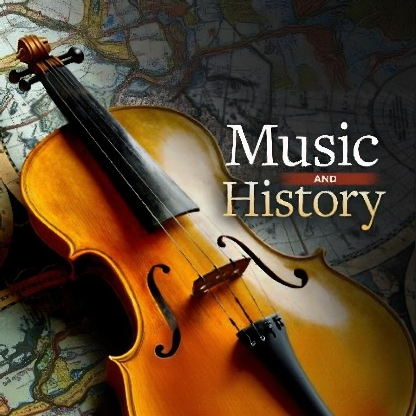
Music as a Mirror of History
Original price was: $69.99.$25.99Current price is: $25.99.
Discover the fascinating ways in which great works of music have interacted with historical events, in this eye-opening course taught by a celebrated composer and music historian. This course offers a comprehensive analysis that synthesizes history and musicology, revealing how the masterpieces of our musical tradition are direct products of their times. Explore how music expresses and reflects human experiences and emotions amid historical contexts through 24 distinct lectures.
Overview
Course No. 7340
Discover the fascinating ways in which great works of music have interacted with historical events, in this eye-opening course taught by a celebrated composer and music historian. This course offers a comprehensive analysis that synthesizes history and musicology, revealing how the masterpieces of our musical tradition are direct products of their times. Explore how music expresses and reflects human experiences and emotions amid historical contexts through 24 distinct lectures.
Video Lectures
- Music and History, Madrigals and Maps
- Investigate the connections between composers and historical events.
- Duration: 47 min
- Handel: Water Music (1714)
- Explore Handel’s relationship with George I and the creation of Water Music.
- Duration: 44 min
- Mozart: The Abduction from the Harem (1782)
- Analyze the cultural and political climate influencing Mozart’s operas.
- Duration: 44 min
- Haydn: Mass in the Time of War (1797)
- Discover the historical context behind Haydn’s Mass during turbulent times.
- Duration: 44 min
- Beethoven: The Farewell Sonata (1810)
- Examine Beethoven’s connections to Napoleon and the narrative of the Sonata.
- Duration: 45 min
- Beethoven: Wellington’s Victory (1813)
- Analyze the political sentiment in Beethoven’s composition following military conflicts.
- Duration: 46 min
- Berlioz/de L’Isle: “La Marseillaise” (1830)
- Understand the evolution of Paris and its impact on Berlioz’s musical context.
- Duration: 44 min
- Chopin: Etude in C Minor, Op. 10, No. 12 (1831)
- Study the effect of Polish political turmoil on Chopin’s music.
- Duration: 46 min
- Glinka: A Life for the Tsar (1836)
- Explore Glinka’s contributions to Russian opera and cultural identity.
- Duration: 43 min
- Strauss Sr.: Radetzky March (1848)
- Discover the significance of Strauss’s March in the context of Austrian history.
- Duration: 45 min
- Brahms: Piano Quartet in G Minor, Op. 25 (1861)
- Examine Brahms’s connection to Hungarian nationalism through this piece.
- Duration: 42 min
- Gottschalk: The Union (1862)
- Investigate Gottschalk’s influence on early American music during the Civil War.
- Duration: 47 min
- Verdi: Nabucco (1842)
- Study the political themes in Verdi’s opera that resonate with Italian unification.
- Duration: 45 min
- Wagner: The Ring (1876)
- Analyze Wagner’s critiques of 19th-century societal issues through his operatic cycle.
- Duration: 46 min
- Dvorak: From the New World Symphony (1893)
- Discover Dvorak’s reflections on American life and music in his Symphony.
- Duration: 47 min
- Balakirev: Symphony No. 1 (1898)
- Explore Balakirev’s quest for authentic Russian musical identity.
- Duration: 48 min
- Janacek: Piano Sonata I.X.1905 (1906)
- Investigate Janacek’s personal experiences linked to political conditions in Czechoslovakia.
- Duration: 47 min
- Rimsky-Korsakov: The Golden Cockerel (1907)
- Analyze the political commentary in Rimsky-Korsakov’s opera amidst revolution.
- Duration: 45 min
- Holst: Ode to Death (1919)
- Explore Holst’s response to World War I through his composition.
- Duration: 48 min
- Berg: Wozzeck (1922)
- Study how the aftermath of World War I influenced Berg’s modernist opera.
- Duration: 45 min
- Shostakovich: Symphony No. 13 (1962)
- Learn about Shostakovich’s response to Stalin’s regime through his powerful symphony.
- Duration: 47 min
- Copland: Symphony No. 3 (1946)
- Examine how Copland’s music reflects the American spirit post-World War II.
- Duration: 50 min
- Gorecki: Symphony No. 3 (1976)
- Analyze the impact of Polish history on Górecki’s haunting symphonic work.
- Duration: 49 min
- Crumb: Black Angels (1970)
- Reflect on Crumb’s avant-garde piece within the context of the Vietnam War.
- Duration: 51 min
Related products