Skip to content
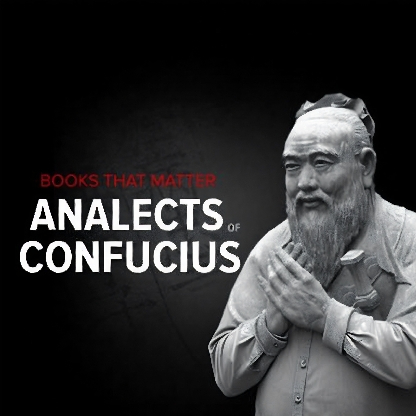
Books That Matter: The Analects of Confucius
Original price was: $39.99.$7.99Current price is: $7.99.
Compiled centuries before the birth of Jesus, The Analects of Confucius is anything but dry ancient philosophy. Many of its passages hold the same power as any great Socratic dialogue.
Books That Matter: The Analects of Confucius
Overview
Course No. 4642
Compiled centuries before the birth of Jesus, The Analects of Confucius is anything but dry ancient philosophy. Many of its passages hold the same power as any great Socratic dialogue. Join a renowned educator on an adventurous exploration of one of the world’s most important philosophical texts.
Filled with rich historical context, detailed close readings of key passages, expert interpretations of larger cultural trends, and stories of Confucius and his most notable students (and critics), these 24 accessible lectures are essential for anyone seeking a solid understanding of Eastern philosophy—and how a single book can cross cultures to inspire an entire world.
As you illuminate key passages in The Analects, you’ll also meet the scholars, philosophers, and statesmen who contributed to its millennia-long legacy—by recording, critiquing, expanding, or resurrecting Confucian thought for the modern age. Like all great philosophical works, The Analects offers intellectual richness that lingers long after the final page. These lectures will help you internalize Confucian teachings and apply them to your own life.
Video Lectures
01: The Hidden Teaching Dynamic of the Analects (30 min)
Explore Confucius’s teaching style and his mission to restore harmony to ancient China through performative philosophy.
02: The Analects: A Bird’s-Eye View (28 min)
Learn how to navigate The Analects’ structure of questions, answers, and observations as a guide to living in society.
03: The Man We Call Confucius (32 min)
Uncover the historical figure behind the legend, with insights from disciples like Mencius and Xunzi.
04: How the Analects Is Organized (30 min)
Decipher the text’s fragmented “analects” (sayings) and centuries of layered commentary.
05: The Provenance of the Analects (30 min)
Discover ancient bamboo fragments that reveal The Analects’ evolution and multiple versions.
06: The Analects in Miniature (29 min)
Decode Confucius’s worldview through the first five iconic passages on conduct and leadership.
07: Learning to Read the Analects (30 min)
Master strategies for interpreting the text’s complexities, from historical context to its gaps.
08: Confucius’s Students: Zai Wo and Yan Hui (29 min)
Meet the trickster Zai Wo and the exemplary Yan Hui, who embody Confucian ideals.
09: Confucius’s Students: Zilu and Zigong (31 min)
Examine the flawed but loyal Zilu and Zigong, whose journeys reveal Confucian growth.
10: Confucius on the Purpose of Learning (31 min)
Analyze how knowledge in The Analects is meant to transform both self and society.
11: Filial Devotion in the Analects (32 min)
Explore xiao (filial piety) as the foundation of orderly families and governance.
12: Confucius on the Value of Remonstrance (29 min)
Question the duty to “correct” elders—a radical idea in hierarchical societies.
13: The Exemplary Person in the Analects (30 min)
Define Confucian virtues: loyalty (zhong), sincerity (cheng), trust (xin), and moral power (de).
14: Confucius’s Ideal: Consummate Conduct (29 min)
Grapple with ren (humaneness), the pinnacle of Confucian ethics—and its life-or-death stakes.
15: Confucius on Cultivating the Social Self (29 min)
Break down ren into actionable social skills that bind families, communities, and states.
16: Ritual Conduct in the Analects (30 min)
Reimagine ritual (li) as cosmic harmony expressed through everyday actions.
17: Confucius on Embodied Ritual and Music (30 min)
Link ritual to physical performance and music as expressions of collective emotion.
18: The Analects on Effective Rule (28 min)
Learn Confucian governance: self-correction, virtuous advisors, and harmony with heaven.
19: Mencius: The Next Confucian Sage (30 min)
Study Mencius’s defense of Confucianism, arguing humans are inherently good.
20: Confucius’s Daoist and Legalist Critics (28 min)
Confront critiques from Xunzi, Zhuangzi, and Han Fei, who saw humans as flawed or chaotic.
21: State Confucianism and Buddhism (30 min)
Trace Confucianism’s rise under the Han dynasty and its synthesis with Buddhist thought.
22: Sima Guang and the Confucian Revival (31 min)
Discover how the historian Sima Guang adapted The Analects for the 11th century.
23: Neo-Confucianism and the Political Order (31 min)
Examine Zhu Xi’s “Four Books” curriculum and the grueling civil service exam system.
24: Confucius’s Comeback in a Global World (32 min)
Witness Confucianism’s fall under Mao and its 21st-century resurgence as China’s voice.
Related products


By Area