Skip to content
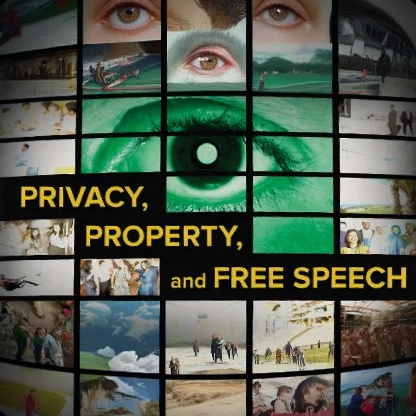
Privacy, Property, and Free Speech: Law and the Constitution
Original price was: $39.99.$7.99Current price is: $7.99.
Courts have struggled to balance the interests of individuals, businesses, and law enforcement. Educate yourself about the current state of the law and the risks posed by our own inventions with guidance from an award-winning legal scholar, Professor Rosen.
Course Description
Although the courts have struggled to balance the interests of individuals, businesses, and law enforcement, the proliferation of intrusive new technologies puts many of our presumed freedoms in legal limbo. For instance, it’s not hard to envision a day when websites such as Facebook or Google Maps introduce a feature that allows real-time tracking of anyone you want, based on face-recognition software and ubiquitous live video feeds.
Does this scenario sound like an unconstitutional invasion of privacy? These 24 eye-opening lectures immerse you in the Constitution, the courts, and the post-9/11 Internet era that the designers of our legal system could scarcely have imagined. Professor Rosen explains the most pressing legal issues of the modern day and asks how the framers of the U.S. Constitution and the Bill of Rights would have reacted to aspects of modern life such as full-body scans, cell phone surveillance, and privacy in cloud servers.
Called “the nation’s most widely read and influential legal commentator” by the Los Angeles Times, Professor Rosen is renowned for his ability to bring legal issues alive—to put real faces and human drama behind the technical issues that cloud many legal discussions. Here he asks how you would decide particular cases about liberty and privacy. You’ll come away with a more informed opinion about whether modern life gives even the most innocent among us reason to worry.
Video Lectures
01: Freedom and Technological Change
Consider three hypothetical cases that could confront the U.S. Supreme Court in the decades ahead: ubiquitous surveillance, designer embryos, and evidence from brain scans. Each has profound implications for privacy. Then survey the history of legal protections for privacy.
Duration: 34 min
02: Privacy and Virtual Surveillance
Examine areas where new technologies are challenging our existing ideas about constitutional protections for privacy in public places. Review reasons why the Constitution provides less protection against surveillance today than it did against the search of private diaries in the 18th century.
Duration: 28 min
03: Privacy at Home
Study the evolution of privacy in the home, which remains the place with more legal protection than anywhere else. But what does that mean in an age when our most private papers are stored not in locked desk drawers in the home but with third parties such as computer networks?
Duration: 30 min
04: Privacy on the Street
Today, police in the United States have the power to arrest and detain individuals for any crime, regardless of how minor. In this lecture, survey your rights on the street, where the degree of monitoring has spread to new technologies such as speed cameras and smart parking meters.
Duration: 29 min
05: The Privacy of Travelers
In 2009, the Transportation Security Administration began using body scans as a primary screening tool at airports. What are your rights when faced with this and other security measures? Learn how to assert those rights while traveling in the United States and abroad.
Duration: 31 min
Related products

By Area