Skip to content
Understanding Modern Electronics
Original price was: $49.99.$9.99Current price is: $9.99.
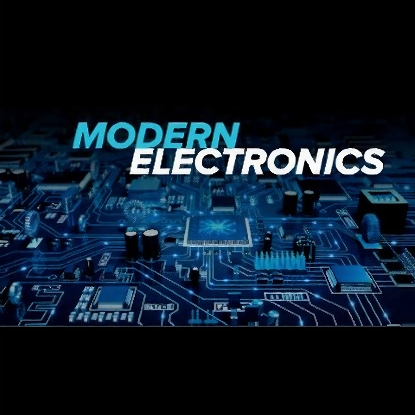
Electronic devices are integral to modern life, yet their inner workings remain a mystery to most. Understanding Modern Electronics demystifies these devices, offering clear explanations of principles governing circuits and components without delving into complex mathematics. Award-winning professor Richard Wolfson guides you through 24 lectures, exploring everything from basic circuit diagrams to the sophisticated world of semiconductors and transistors. Learn how to measure electric power, decipher circuit diagrams, and build your own devices using readily available components. Gain hands-on experience with example problems and projects.
Overview — Course No. 1162
Electronic devices are integral to modern life, yet their inner workings remain a mystery to most. Understanding Modern Electronics demystifies these devices, offering clear explanations of principles governing circuits and components without delving into complex mathematics. Award-winning professor Richard Wolfson guides you through 24 lectures, exploring everything from basic circuit diagrams to the sophisticated world of semiconductors and transistors. Learn how to measure electric power, decipher circuit diagrams, and build your own devices using readily available components. Gain hands-on experience with example problems and projects.
Video Lessons
01: Electricity and Electronics
Understand the distinction between electricity and electronics, and learn fundamental concepts like Ohm’s law and electric power measurement.
Duration: 35 min
02: Circuits and Symbols
Familiarize yourself with circuit diagrams, and learn how components like resistors and capacitors interact when arranged in series or parallel.
Duration: 30 min
03: Instruments and Measurement
Meet essential measuring instruments: voltmeters, ammeters, ohmmeters, multimeters, and oscilloscopes, and see how they interact with circuits.
Duration: 33 min
04: AC versus DC
Examine the differences between alternating current (AC) and direct current (DC), and understand how transformers and diodes play roles in modern electronics.
Duration: 28 min
05: Up the Treble, Down the Bass!
Learn about electronic filters and how capacitors help manage and regulate electronic noise in circuits.
Duration: 29 min
06: Semiconductors—The Miracle Material
Discover the atomic properties of semiconductors and how they form the basis of transistors and integrated circuits.
Duration: 29 min
07: Transistors and How They Work
Understand how transistors function as electronic switches and amplifiers, focusing on field effect transistors (FETs) and bipolar junction transistors (BJTs).
Duration: 29 min
08: Transistors as Amplifiers
Learn how to increase the voltage, current, or power of an electronic signal using transistors and negative feedback.
Duration: 29 min
09: Building an Audio Amplifier
Construct a complete audio amplifier, adding capacitors for gain, diodes for distortion prevention, and a volume control.
Duration: 31 min
10: The Ideal Amplifier
Define characteristics of the ideal amplifier and see how operational amplifiers (op-amps) achieve near-infinite gain.
Duration: 32 min
11: Feedback Magic
Harness the power of negative feedback in op-amp circuits for precise control and amplification.
Duration: 33 min
12: Electronic Feedback
Explore peak detectors, Schmitt triggers, and design an alarm circuit for a freezer.
Duration: 30 min
13: Using Op-Amps with Capacitors
Introduce capacitors to op-amp circuits for time-dependent behaviors and mathematical integration.
Duration: 30 min
14: Digital Versus Analog
Dive into the digital realm, understanding binary numbers, logic gates, and truth tables.
Duration: 37 min
15: Electronics Goes Digital
Combine logic gates and transistors to form complex circuits, including the foundation of computer logic.
Duration: 40 min
16: Flip-Flop Circuits
Learn about flip-flop circuits that remember states until triggered to change, forming the basis of memory circuits.
Duration: 34 min
17: Shift and Divide—Your USB and Your Watch
See how digital circuits send and receive information serially, and how T flip-flops function as frequency dividers in devices like quartz watches.
Duration: 31 min
18: Digital Memory
Compare different types of digital memory: random-access versus sequential, volatile versus non-volatile.
Duration: 30 min
19: Digital Counters
Explore flip-flop-based counting circuits and their applications in various electronic devices.
Duration: 29 min
20: Digital to Analog
Learn about digital-to-analog converters (DACs) and their role in translating digital signals into perceivable analog forms.
Duration: 30 min
21: Analog to Digital
Examine methods for converting analog signals to digital information, including flash, integrating, and feedback converters.
Duration: 31 min
22: Your Future in Electronics
Conclude with insights into microcontrollers and a demonstration of an advanced photovoltaic panel circuit.
Duration: 35 min
Related products