Skip to content
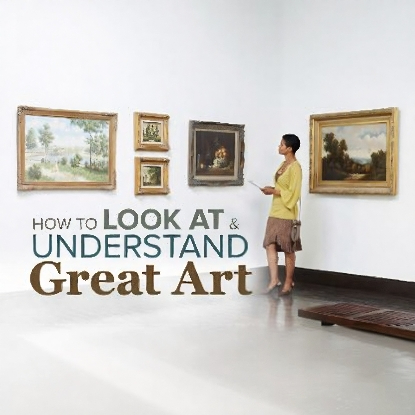
How to Look at and Understand Great Art
Original price was: $69.99.$22.99Current price is: $22.99.
What does it take to truly know what you’re seeing when you look at art? This course includes 36 lectures that explore the practical skill of viewing art through elements such as line, light, perspective, composition, and more. Award-winning professor and art scholar Dr. Sharon Hirsh provides the visual and interpretive knowledge necessary to approach great artworks, uncover their deeper meanings, and cultivate a greater appreciation.
Overview
Featuring masterpieces from 250+ of the world’s greatest artists, this in-depth guide to the practical skill of viewing art will help you reach new levels of appreciation. Course No. 7640.
What does it take to truly know what you’re seeing when you look at art? This course includes 36 lectures that explore the practical skill of viewing art through elements such as line, light, perspective, composition, and more. Award-winning professor and art scholar Dr. Sharon Hirsh provides the visual and interpretive knowledge necessary to approach great artworks, uncover their deeper meanings, and cultivate a greater appreciation.
The course begins with technical tools for understanding visual art, followed by specific applications to major works in each genre, including drawing, sculpture, and painting. Additional lectures delve into landscapes, portraits, self-portraits, and significant eras in Western art from the Renaissance to the present.
Course Structure
1. The Importance of First Impressions
Examine how contexts and environments affect our art viewing experiences, exploring genres and artists’ techniques.
- Duration: 34 min
2. Where Am I? Point of View and Focal Point
Explore the use of point of view and focal point in creating impact in paintings and sculptures.
- Duration: 30 min
3. Color—Description, Symbol, and More
Uncover core principles of color and how major artworks derive power and meaning through color.
- Duration: 29 min
4. Line—Description and Expression
Discover the properties of line in art and its role in conveying reality and emotion.
- Duration: 30 min
5. Space, Shape, Shade, and Shadow
Examine shapes in art and the interplay between figure and ground, including illusionistic shading.
- Duration: 30 min
6. Seeing the Big Picture—Composition
Define symmetry and asymmetry in art and their effects on viewer perception.
- Duration: 30 min
7. The Illusion—Getting the Right Perspective
Study the history of illusionism in Western art and the principles of perspective.
- Duration: 29 min
8. Art That Moves Us—Time and Motion
Explore how artists represent motion and time through various devices and styles.
- Duration: 29 min
9. Feeling with Our Eyes—Texture and Light
Consider how texture and light contribute meaning in both sculpture and painting.
- Duration: 29 min
10. Drawing—Dry, Liquid, and Modern Media
Define the various purposes and media of drawing, including masterworks focused on different techniques.
- Duration: 31 min
11. Printmaking—Relief and Intaglio
Study the techniques of relief and intaglio printmaking through studio demonstrations.
- Duration: 33 min
12. Modern Printmaking—Planographic
Explores planographic printmaking techniques with examples from famed artists.
- Duration: 29 min
13. Sculpture—Salt Cellars to Monuments
Investigate various types of sculptures and their viewing contexts, from monuments to assemblages.
- Duration: 31 min
14. Development of Painting—Tempera and Oils
Trace the history of painting techniques, including fresco and oil painting.
- Duration: 29 min
15. Modern Painting—Acrylics and Assemblages
Explore 20th-century developments in painting materials and techniques.
- Duration: 31 min
16. Subject Matters
Study three levels of iconography in art, focusing on significant works by master artists.
- Duration: 30 min
17. Signs—Symbols, Icons, and Indexes in Art
Understand the richness of signs in art and their changing meanings across history.
- Duration: 32 min
18. Portraits—How Artists See Others
Examine diverse functions of portraits and their influence on viewer perception.
- Duration: 32 min
19. Self-Portraits—How Artists See Themselves
Trace the evolution of self-portraits and their role in revealing the artist’s identity.
- Duration: 31 min
20. Landscapes—Art of the Great Outdoors
Investigate techniques employed by landscape painters from historical to modern movements.
- Duration: 32 min
21. Putting It All Together
Use the viewing tools you’ve developed to analyze four diverse masterpieces.
- Duration: 31 min
22. Early Renaissance—Humanism Emergent
Contemplate the classicism and humanism of 15th-century Italian art.
- Duration: 28 min
23. Northern Renaissance—Devil in the Details
Examine the stylistics of Northern Renaissance oil painting and its historical significance.
- Duration: 31 min
24. High Renaissance—Humanism Perfected
Delve into masterpieces by Raphael, Leonardo, and Michelangelo.
- Duration: 31 min
25. Mannerism and Baroque—Distortion and Drama
Explore the characteristics and impacts of Mannerism and Baroque movements.
- Duration: 31 min
26. Going Baroque—North versus South
Understand regional influences in Baroque art and key differences in styles.
- Duration: 31 min
27. 18th-Century Reality and Decorative Rococo
Examine the intimate themes and styles of Rococo art.
- Duration: 29 min
28. Revolutions—Neoclassicism and Romanticism
Discover the contrasting principles of Neoclassicism and Romanticism in early 19th-century art.
- Duration: 32 min
29. From Realism to Impressionism
Analyze Realist and Impressionist ideals through notable artworks.
- Duration: 32 min
30. Postimpressionism—Form and Content Re-Viewed
Learn about the innovative techniques used by Postimpressionist painters.
- Duration: 31 min
31. Expressionism—Empathy and Emotion
Explore the emotional through the lens of visual elements in Expressionist art.
- Duration: 32 min
32. Cubism—An Experiment in Form
Investigate the three phases of Cubism and its profound influence on modern art.
- Duration: 30 min
33. Abstraction/Modernism—New Visual Language
Understand the philosophical underpinnings of abstraction and nonrepresentational art.
- Duration: 31 min
34. Dada Found Objects/Surreal Doodles and Dreams
Contemplate Dadaism and Surrealism, exploring unconventional media and subconscious imagery.
- Duration: 31 min
35. Postmodernism—Focus on the Viewer
Recognize key postmodern movements that shift focus from the artist to the viewer.
- Duration: 29 min
36. Your Next Museum Visit—Do It Yourself!
Conclude with practical tips for enhancing your museum visits and enjoying great art.
- Duration: 34 min
Related products



By Area