Skip to content
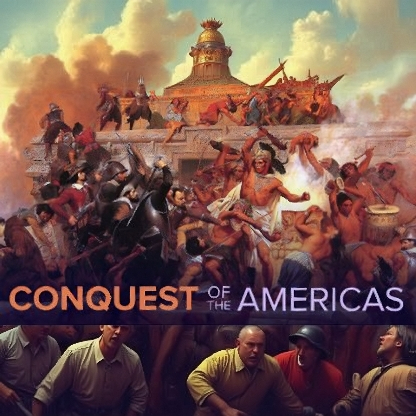
Conquest of the Americas
Original price was: $49.99.$9.99Current price is: $9.99.
Explore the collision of three distinct peoples and cultures—Europeans, Africans, and Native Americans—in this eye-opening and engrossing course.
Conquest of the Americas
Explore the collision of three distinct peoples and cultures—Europeans, Africans, and Native Americans—in this eye-opening and engrossing course.
Overview
Course No. 888
Professor Eakin presents a provocative case that Columbus’s 1492 voyage was the most important event in world history, creating a transformative collision between three cultures that shaped the modern Americas. This 24-lecture series examines:
- The sophisticated civilizations of Native Americans before European contact
- How European expansion combined Christianity, capitalism, and technology
- The devastating consequences for indigenous peoples and enslaved Africans
- The complex blending that created uniquely American societies
Beyond simple narratives of heroes and villains, this course reveals how the conquest produced new cultures that were neither European, African, nor Native American, but distinctly American.
Video Lectures
Part 1: The Colliding Worlds
- Three Peoples Collide (32 min)
Introduction to the transformative impact of European, African, and Native American encounters. - The Native Americans (30 min)
Pre-Columbian civilizations with sophisticated agriculture, religion, and social structures. - Mayas, Aztecs, and Incas (30 min)
The great empires of Mesoamerica and South America. - Europeans and Africans (30 min)
Medieval connections and the shift to Atlantic trade networks.
Part 2: Conquest and Its Mechanisms
5-7. European Expansion to Caribbean Conquest (30 min each)
Portugal’s rise, Columbus’s voyages, and Spanish Caribbean domination.
8-10. Cortés and the Aztecs / Pizarro and the Incas (30 min each)
Dramatic accounts of empire-toppling conquests.
11-12. Frontier Campaigns and Portuguese Brazil (30 min each)
Less successful expeditions and Brazil’s plantation economy.
Part 3: Systems and Consequences
13-15. Slave Trade to Silver Economy (30 min each)
The Middle Passage, labor systems, and Spanish mercantilism.
16-17. Religious Encounters (30 min each)
Missionary efforts and syncretic new faiths.
18-21. Northern European Arrivals (30 min each)
English and French colonies, dispossession ideologies, and Caribbean piracy.
Part 4: Legacy
22-24. Cultural Clashes to American Identities (30-31 min each)
Resistance, racial mixing, and the emergence of new societies.
Related products

By Area