Skip to content
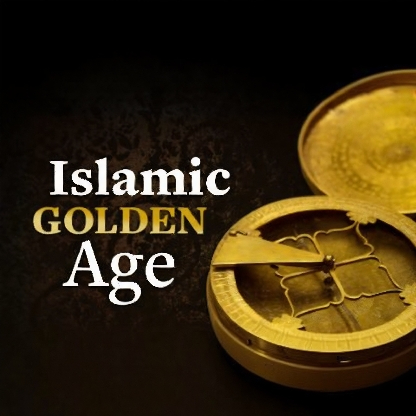
The History and Achievements of the Islamic Golden Age
Original price was: $49.99.$9.99Current price is: $9.99.
Discover how the Abbasid Empire (750-1258 AD) bridged ancient knowledge and the Renaissance through groundbreaking scientific and cultural advancements.
The History and Achievements of the Islamic Golden Age
Course Overview
Course No. 3863
Discover how the Abbasid Empire (750-1258 AD) bridged ancient knowledge and the Renaissance through groundbreaking scientific and cultural advancements.
This 24-lecture course explores:
- The House of Wisdom as the world’s premier research center
- Pioneers like al-Khwarizmi (algebra), Ibn Sina (medicine), and al-Haytham (optics)
- How Islamic scholarship preserved and expanded Greek, Indian, and Persian knowledge
- Architectural, artistic, and literary masterpieces of the era
- The empire’s multicultural exchange between Muslims, Jews, and Christians
Video Lectures
01: From Camels to Stars in the Middle East (32 min)
Introduce the Abbasid Empire’s role as bridge between antiquity and modernity.
02: Ibn Battuta’s Search for Knowledge (30 min)
Follow the 14th-century traveler’s journey across Islamic lands after the Mongol conquests.
03: Arabian Nights Caliph: Harun al-Rashid (32 min)
Profile the legendary caliph who made Baghdad a global center of learning.
04: The Arab World’s Greatest Writer: al-Jahiz (30 min)
Study the brilliant prose stylist who authored over 200 surviving works.
05: Algebra, Algorithms, and al-Khwarizmi (31 min)
Discover how Muslim mathematicians systematized algebra and symbolic algorithms.
06: Baghdad’s House of Wisdom (29 min)
Tour the world’s premier translation and research center of the 9th century.
07: Muhammad, the Hadith, and Imam Bukhari (29 min)
Examine Bukhari’s monumental work authenticating Muhammad’s sayings.
08: Interpreting and Defending the Quran (32 min)
Analyze al-Tabari’s exegesis and the controversial Satanic Verses episode.
09: The Arab Herodotus: al-Masudi (27 min)
Meet the great travel writer who documented geography, geology, and culture.
10: Cairo, al-Haytham, and the Book of Optics (30 min)
Explore why many consider al-Haytham the first true scientist.
11: Master Muslim Scholar: al-Biruni (31 min)
Appreciate this polymath’s contributions to physics, astronomy, and anthropology.
12: Astronomy in the Islamic Golden Age (30 min)
Trace Arabic-named stars to Muslim astronomers’ celestial breakthroughs.
13: Medieval Muslim Medicine and Hospitals (30 min)
Visit early teaching hospitals and study Ibn Sina’s medical encyclopedia.
14: Alchemistry and Chemistry in Early Baghdad (30 min)
Witness the origins of experimental science and the scientific method.
15: The Fertile Crescent, Water, and al-Jazari (29 min)
Understand irrigation systems and the politics of water management.
16: Jewish Scholar in Cairo: Moses Maimonides (31 min)
Explore interfaith relations through this Jewish philosopher’s work in Cordoba.
17: The Banu Musa’s Inventions and Automatons (30 min)
Marvel at self-playing instruments and al-Jazari’s “father of robotics” legacy.
18: Mosques, Architecture, and Gothic Revival (32 min)
See how Islamic designs influenced Europe’s Gothic cathedrals.
19: Arabic Verse, Love Poetry, and Wine Songs (30 min)
Enjoy the works of poets Abu Nuwas, Abu Tammam, and al-Mutanabbi.
20: Medieval Mastermind: Avicenna (Ibn Sina) (31 min)
Analyze this philosopher’s Aristotelian influences and cosmological theories.
21: Entertaining in the Time of the Abbasids (30 min)
Discover origins of three-course meals and medieval celebrity cookbooks.
22: Calligraphy, Carpets, and the Arabic Arts (32 min)
Admire geometric designs, vegetal patterns, and figurative representations.
23: When Did the Islamic Golden Age End? (31 min)
Re-examine 1258’s Mongol sack of Baghdad as more complex than simple endpoint.
24: Ibn Khaldun on the Rise and Fall of Empire (34 min)
Reflect on this historian’s theories about civilizational cycles and decline.
Related products



By Area