Skip to content
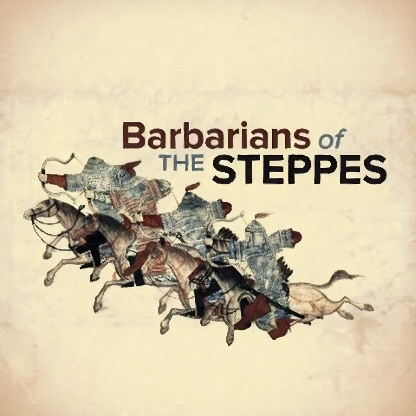
The Barbarian Empires of the Steppes
Original price was: $69.99.$14.99Current price is: $14.99.
Travel through 6,000 miles and 6,000 years of nomadic history to understand how steppe cultures shaped civilizations from Rome to China.
The Barbarian Empires of the Steppes
Course Overview
Course No. 3830
Travel through 6,000 miles and 6,000 years of nomadic history to understand how steppe cultures shaped civilizations from Rome to China.
This 36-lecture exploration reveals:
- The military and cultural impact of nomadic empires
- Key figures like Attila, Genghis Khan, and Tamerlane
- How steppe innovations (stirrups, gunpowder) changed warfare
- The crucial role of the Silk Road in global exchange
- Why these “barbarians” fundamentally transformed world history
Video Lectures
01: Steppes and Peoples (32 min)
Begin with the 1258 Mongol sack of Baghdad as a lens for understanding steppe-civilization clashes.
02: The Rise of the Steppe Nomads (29 min)
Discover how livestock, horse domestication, and chariots transformed Eurasian nomadism.
03: Early Nomads and China (31 min)
Examine Iranian/Tocharian nomad interactions with Chinese civilization.
04: The Han Emperors and Xiongnu at War (31 min)
Analyze China’s humiliating tribute system and military campaigns against the Xiongnu confederacy.
05: Scythians, Greeks, and Persians (30 min)
Study these Iranian-speaking warriors’ symbiotic trade with Greeks and resistance to Persian conquest.
06: The Parthians (31 min)
Learn how horseback rulers created the first nomadic Near Eastern empire that challenged Rome.
07: Kushans, Sacae, and the Silk Road (30 min)
Track displaced tribes who became Silk Road traders and Buddhist patrons in India.
08: Rome and the Sarmatians (30 min)
Explore wealthy mercenaries who influenced Roman tactics without unified leadership.
09: Trade across the Tarim Basin (30 min)
Map the 2nd-century BCE-2nd-century CE global economy along legendary trade routes.
10: Buddhism, Manichaeism, and Christianity (31 min)
Understand why nomadic caravans adopted these faiths across Central Asia.
11: Rome and the Huns (31 min)
Compare Eastern/Western Roman strategies against these Xiongnu-like invaders.
12: Attila the Hun – Scourge of God (31 min)
Profile the conqueror whose marriage proposal triggered Europe’s devastation.
13: Sassanid Shahs and the Hephthalites (29 min)
Contextualize “White Huns” and Gök Turks through Persian imperial rivalries.
14: The Turks – Transformation of the Steppes (31 min)
Chart Avar, Gök Turk, and Uighur confederations (5th-9th centuries CE).
15: Turkmen Khagans and Tang Emperors (31 min)
Examine Turk-Chinese relations through Sui/Tang unification periods.
16: Avars, Bulgars, and Constantinople (31 min)
Begin a trilogy on Byzantine-steppe relations starting with these nomadic groups.
17: Khazar Khagans (32 min)
Investigate why these steppe rulers converted to Judaism instead of Christianity.
18: Pechenegs, Magyars, and Cumans (31 min)
Conclude Byzantine interactions with Pontic-Caspian nomads and Viking Rus.
19: Islam and the Caliphate (31 min)
Establish context for Turkic encounters with Muhammad’s rapidly expanding faith.
20: The Clash between Turks and the Caliphate (30 min)
Analyze early Muslim-Turkic wars culminating in the pivotal 751 Battle of Talas.
21: Muslim Merchants and Mystics in Central Asia (30 min)
Discover how 8th-century Turkish traders converted to Sunni Islam.
22: The Rise of the Seljuk Turks (30 min)
Compare three Turkic states: Karakhanids, Ghaznavids, and the dominant Seljuks.
23: Turks in Anatolia and India (31 min)
Contrast Seljuk conquests against crusaders and Delhi sultanates.
24: The Sultans of Rum (29 min)
Study Konya’s Sufi mystics and architectural achievements in Islamified Anatolia.
25: The Sultans of Delhi (31 min)
Evaluate Turkic successes/limitations in establishing Muslim rule in India.
26: Manchurian Warlords and Song Emperors (30 min)
Set the Mongol stage with Khitan, Jurchen, and Xi Xia incursions into collapsed-wall China.
27: The Mongols (29 min)
Meet young Temujin before he became the world-conquering Genghis Khan.
28: Conquests of Genghis Khan (32 min)
Follow the great khan’s blitz from Xi Xia to Persia with Chinese siege engineers.
29: Western Mongol Expansion (30 min)
Witness Ögedei’s reforms and Batu’s Russia invasion thwarted by stone castles.
30: Mongol Invasion of the Islamic World (31 min)
Return to Hulagu’s sack of Baghdad and the battle ending Mongol Islamic dominance.
31: Conquest of Song China (30 min)
Appreciate Kublai Khan’s logistical genius in history’s greatest military campaign.
32: Pax Mongolica and Cultural Exchange (32 min)
Weigh Mongol destruction against unprecedented Silk Road prosperity.
33: Conversion and Assimilation (32 min)
Track four crumbling ulus domains after Kublai’s 1294 death.
34: Tamerlane, Prince of Destruction (31 min)
Chronicle the 1381-1405 campaigns of this Genghisid who crushed Mamluks and Ottomans.
35: Babur and Mughal India (30 min)
Meet the Timurid descendant who founded India’s last great pre-British empire.
36: Legacy of the Steppes (35 min)
Reflect on why nomadic dominance ended after six millennia of shaping civilizations.
Related products


By Area