Skip to content
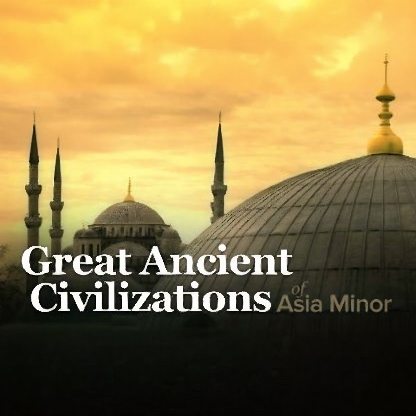
Great Ancient Civilizations of Asia Minor
Original price was: $49.99.$9.99Current price is: $9.99.
Embark on an unforgettable journey through 24 richly illustrated lectures that immerse you in the history of an often-overlooked yet pivotal region of the ancient world. Guided by Professor Kenneth W. Harl, you will explore the successive civilizations of Asia Minor—today’s Turkey—that forged the Western and Muslim traditions embraced by billions of modern inhabitants.
Course Description
Embark on an unforgettable journey through 24 richly illustrated lectures that immerse you in the history of an often-overlooked yet pivotal region of the ancient world. Guided by Professor Kenneth W. Harl, you will explore the successive civilizations of Asia Minor—today’s Turkey—that forged the Western and Muslim traditions embraced by billions of modern inhabitants. From the Neolithic farmers of 6000 B.C. to the rise of the Ottoman Empire, each lecture reveals how Anatolia’s conquerors and visionaries inherited, reshaped, and transmitted political, religious, and cultural institutions across millennia. You will witness the rise of the Hittite chariot empire, relive the legendary Trojan War, trace the birth of Western philosophy in Ionian cities, march with Alexander the Great, watch Christianity take root in Roman towns, and see Constantinople crowned “Queen of Cities.” Organized into five sweeping eras—Early Anatolia, Hellenized Anatolia, Roman Asia Minor, Byzantium, and Islamic Turkey—the course highlights both dramatic ruptures and enduring continuities, leaving you with a profound appreciation for how this crossroads of continents shaped global history.
Lecture-by-Lecture Outline
Early Anatolia (6000–500 B.C.)
- Introduction to Anatolia – 30 min
Geography as destiny: how the peninsula’s shores and interior pulled it toward both Europe and Asia.
- First Civilizations in Anatolia – 30 min
Neolithic farmers, Sumerian influence, and the birth of cities.
- The Hittite Empire – 30 min
Indo-European warriors on chariots challenge Egypt’s might.
- Hattušaš and Imperial Hittite Culture – 26 min
Rock-cut shrines, polytheism, and the mysterious fall of a capital.
- Origins of Greek Civilization – 30 min
Achaean warlords from Mycenae and Pylos trade and raid along Anatolian shores.
- The Legend of Troy – 30 min
Homer’s epics in the context of imperial collapse and Greek Dark Age migrations.
- Iron Age Kingdoms of Asia Minor – 30 min
Phrygians, Cimmerians, and the wealthy kingdom of Lydia under Croesus.
Hellenized Anatolia (750–31 B.C.)
- Emergence of the Polis – 31 min
Citizen rule, Athenian democracy, and the city-state model that changed the world.
- Ionia and Early Greek Civilization – 30 min
Archaic poets, philosophers, and sculptors on Asia Minor’s Aegean coast.
- The Persian Conquest – 30 min
Cyrus the Great absorbs Anatolia; Ionian revolt ignites the Persian Wars.
- Athenian Empire and Spartan Hegemony – 30 min
Classical Greek rivalries leave Persia once again dominant in Ionia.
- Alexander the Great and the Diadochoi – 30 min
In eight years Alexander topples Persia and seeds Hellenism across Asia Minor.
- The Hellenization of Asia Minor – 30 min
Pergamum becomes a beacon of Greek art and learning under Attalid kings.
Roman Asia Minor (200 B.C.–395 A.D.)
- Rome versus the Kings of the East – 30 min
Pompey’s settlement and the cities that financed Rome’s civil wars.
- Prosperity and Roman Patronage – 30 min
The pax Romana brings unprecedented wealth and civic ambition.
- Gods and Sanctuaries of Roman Asia Minor – 30 min
Native deities in Greek guise; public cults versus mystery religions.
- Jews and Early Christians – 30 min
Paul’s missions, thriving Christian communities, and the Council of Nicaea.
- From Rome to Byzantium – 30 min
Constantine’s imperial church transforms Anatolia into a Christian land.
Byzantium (395–1453)
- Constantinople, Queen of Cities – 30 min
New Rome rises on the Bosporus as the bastion of classical learning.
- The Byzantine Dark Age – 30 min
Islamic armies, fortress towns, and the martial reshaping of society.
- Byzantine Cultural Revival – 30 min
Macedonian renaissance in art and letters that foreshadows the Italian Renaissance.
- Crusaders and Seljuk Turks – 30 min
Crusades, Turkish migrations, and the slow birth of Muslim Anatolia.
Islamic Turkey (1071–Present)
- Muslim Transformation – 30 min
Seljuk sultans, Mongol shocks, and the rise of the Ottoman beylik.
- The Ottoman Empire – 30 min
From frontier principality to the last great Mediterranean empire centered on a reborn Constantinople.
Related products


Courses