Skip to content
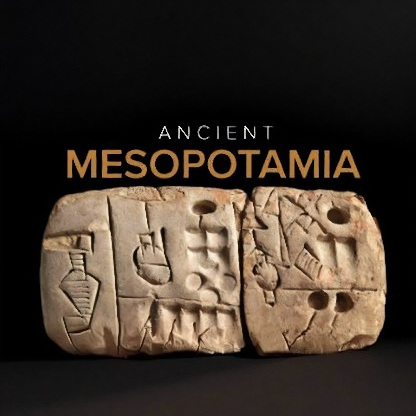
Ancient Mesopotamia: Life in the Cradle of Civilization
Original price was: $49.99.$9.99Current price is: $9.99.
Uncover the undeniable legacy that the Mesopotamians left the world. This 24‑lecture course traces the rise of urban society along the Tigris and Euphrates, the origins of writing and law, monumental architecture (ziggurats, palaces), imperial formations (Akkad, Assyria, Babylon), economic and administrative systems revealed in cuneiform archives, and the archaeological recovery that has reintroduced Mesopotamia as a foundational civilization in world history.
Ancient Mesopotamia: Life in the Cradle of Civilization
Course Overview
Uncover the undeniable legacy that the Mesopotamians left the world. This 24‑lecture course traces the rise of urban society along the Tigris and Euphrates, the origins of writing and law, monumental architecture (ziggurats, palaces), imperial formations (Akkad, Assyria, Babylon), economic and administrative systems revealed in cuneiform archives, and the archaeological recovery that has reintroduced Mesopotamia as a foundational civilization in world history.
Course Details
- Course No.: 3166
- Format: 24 lectures (approx. 26–32 minutes each)
- Focus: origins of settled life and urbanism, Neolithic and Ubaid developments, Uruk and early kingship, Akkadian and Neo‑Assyrian empires, Old Babylonian law and society, Late Bronze Age transitions, and the fall of Neo‑Babylon to Persia
- Methods: archaeological evidence, cuneiform texts, epigraphy, material culture, and comparative historical interpretation
Video Lectures (organized)
01: Uncovering Near Eastern Civilization — 29 min
Introduction to sources, methods, and why Mesopotamia—though long overlooked—provides more surviving written evidence than many ancient societies.
02: Natufian Villagers and Early Settlements — 28 min
Pre‑agricultural communities and the long, uneven transition from hunter‑gatherer life to village farming and social complexity.
03: Neolithic Farming, Trade, and Pottery — 27 min
Neolithic economic practices, long‑distance exchange (e.g., obsidian), craft specialization, and early pottery traditions.
04: Eridu and Other Towns in the Ubaid Period — 26 min
Ubaid monumental architecture, coordinated irrigation efforts, and the emergence of communal organization before writing.
05: Uruk, the World’s Biggest City — 27 min
Urbanism at Uruk: large‑scale settlement, administrative innovations, the invention of writing, and early evidence for organized warfare.
06: Mesopotamia’s First Kings and the Military — 27 min
Origins of kingship, ideology of royal rule, military roles, diplomacy, and the religious justification of monarchical authority.
07: Early Dynastic Workers and Worshipers — 28 min
Temple economies, labor mobilization, burial evidence for beliefs about the afterlife, and the scale of temple workforce.
08: Lugalzagesi of Umma and Sargon of Akkad — 29 min
From city‑state rivalry to Sargon’s imperial breakthrough—biography and statecraft at the dawn of empire.
09: Akkadian Empire Arts and Gods — 27 min
Akkadian artistic achievements, divine roles in society, and the earliest known authorial voice (a priestess’s hymn).
10: The Fall of Akkad and Gudea of Lagash — 28 min
Collapse theories for Akkad and the reformist/pious kingship exemplified by Gudea’s reign at Lagash.
11: Ur III Households, Accounts, and Ziggurats — 29 min
Administrative sophistication of Ur III: household records, taxation, temple economy, and ziggurat patronage.
12: Migrants and Old Assyrian Merchants — 28 min
Long‑distance trade networks, merchant colonies, migrant mobility, and private enterprise in the Old Assyrian period.
13: Royalty and Palace Intrigue at Mari — 29 min
Intimate letters from Mari’s palace reveal diplomacy, marriage alliances, informants, and palace politics in the mid‑2nd millennium BCE.
14: War and Society in Hammurabi’s Time — 30 min
Hammurabi’s military and legal reforms; family and household as lenses for broader social organization.
15: Justice in the Old Babylonian Period — 27 min
Court procedures, legal evidence, and everyday litigations that illuminate priorities in family and economic life.
16: The Hana Kingdom and Clues to a Dark Age — 28 min
The enigmatic “dark age” after the Late Bronze collapse and the fragmentary textual and archaeological traces that hint at continuity and disruption.
17: Princess Tadu‑Hepa, Diplomacy, and Marriage — 28 min
Diplomatic marriage and correspondence (e.g., Mittani–Egyptian archives) as tools of interstate relations and cultural exchange.
18: Land Grants and Royal Favor in Mittani — 28 min
Mechanisms of royal patronage, land grants, and how political visibility and legitimacy were maintained across distances.
19: The Late Bronze Age and the End of Peace — 30 min
Regional collapse dynamics: climatic stress, migration, Sea Peoples, and the fragmentation of international order.
20: Assyria Ascending — 29 min
Assyrian state formation, expansionary ideology, administrative capacities, and the material culture of imperial power.
21: Ashurbanipal’s Library and Gilgamesh — 28 min
Ashurbanipal’s library as a center of literate culture and the preservation of the Epic of Gilgamesh and omen texts.
22: Neo‑Assyrian Empire, Warfare, and Collapse — 30 min
Reorganization under Tiglath‑Pileser III, imperial control strategies, campaigns into Egypt, and eventual multi‑front collapse.
23: Babylon and the New Year’s Festival — 28 min
Babylonian mythology (Marduk vs. Tiamat), the Akitu festival, ritual kingship, and public religion in the Neo‑Babylonian era.
24: End of the Neo‑Babylonian Empire — 32 min
Cyrus the Great’s conquest, the absorption of Mesopotamia into the Persian Empire, religious shifts, and the long legacy of Mesopotamian civilization.
Related products