Skip to content
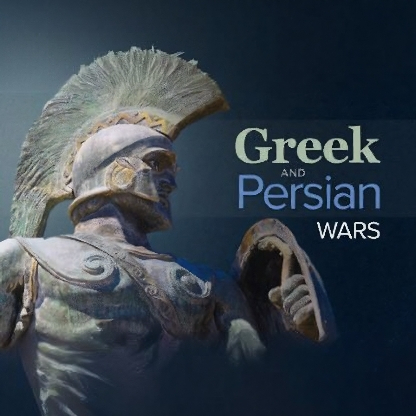
The Greek and Persian Wars
Original price was: $49.99.$9.99Current price is: $9.99.
Survey the two‑century conflict between Greek city‑states and the Persian Empire and its enduring impact on military practice, political institutions, art, literature, and world history. Combining battlefield analysis, archaeological insight, and cultural context, this 24‑lecture course follows major campaigns and leaders from Croesus and Cyrus through Xerxes, the Persian invasions, the Athenian ascendancy, the Peloponnesian struggles, and Alexander’s conquest of Persia.
The Greek and Persian Wars
Course Overview
Survey the two‑century conflict between Greek city‑states and the Persian Empire and its enduring impact on military practice, political institutions, art, literature, and world history. Combining battlefield analysis, archaeological insight, and cultural context, this 24‑lecture course follows major campaigns and leaders from Croesus and Cyrus through Xerxes, the Persian invasions, the Athenian ascendancy, the Peloponnesian struggles, and Alexander’s conquest of Persia.
Course Details
- Course No.: 3356
- Instructor: Professor Hale (expert on ancient warfare and archaeological fieldwork)
- Format: 24 recorded lectures (~30–33 minutes each)
- Focus: strategic/tactical reconstructions, leaders and institutions, naval and engineering feats, archaeological evidence, and cultural consequences
Video Lectures (organized)
01: The First Encounter — 32 min
Origins of the East‑West clash: Croesus of Lydia, Cyrus the Great’s rise, and the initial confrontations that set the long struggle in motion.
02: Empire Builders — The Persians — 30 min
A survey of Persian imperial organization, administration, logistics, and the military/engineering capacities that underpinned their expansion.
03: Intrepid Voyagers — The Greeks — 31 min
The Greek world that met Persia—seafaring colonists, their settlements in Asia Minor, and the cultural outlook that shaped Greek resistance.
04: The Ionian Revolt — 31 min
Ionian Greek rebellion against Persian rule, Athenian involvement, the burning of Sardis, and the revolt’s contribution to Darius’s desire for retaliation.
05: From Mount Athos to Marathon — 31 min
Persian expeditions into Greece, the naval disaster off Mount Athos, and the surprising Athenian victory at Marathon.
06: Xerxes Prepares for War — 30 min
Xerxes’ huge mobilization for a second invasion, engineering feats like the Hellespont bridges and canal, and the scale of Persian preparations.
07: The Athenians Build a Fleet — 30 min
Themistocles’ naval policy, Athenian shipbuilding, and the strategic decision to contest Persia at sea.
08: Heroes at the Pass — 31 min
Thermopylae and Leonidas: the Spartan stand, tactical motives, and the symbolic legacy of the “300.”
09: Battle in the Straits — 31 min
The naval engagement at Salamis—Greek tactical advantage in confined waters and why Persia’s numerical superiority failed to secure victory.
10: The Freedom Fighters — 31 min
Salamis’ aftermath, the land campaigns to liberate Ionian cities, and the culminating land victory at Plataea.
11: Commemorating the Great War — 31 min
Mycale and the end of Persian naval power; how Greeks commemorated and interpreted the conflict in drama, sculpture, and civic ritual.
12: Campaigns of the Delian League — 31 min
Formation of the Delian League, Athenian leadership and imperial practice, and early naval and expeditionary campaigns.
13: Launching a Golden Age — 32 min
How tribute, wealth, and maritime dominance fueled Athens’ Golden Age—art, drama, history, and increasing political tensions.
14: Herodotus Invents History — 30 min
Herodotus as historian: methods, narrative style, and his account as foundational testimony for the Greek–Persian wars.
15: Engineering the Fall of Athens — 30 min
The Peloponnesian War dynamics, Alcibiades’ role, and the strategic and political mistakes that led to Athens’ decline.
16: Cyrus, Xenophon, and the Ten Thousand — 30 min
The campaign of Cyrus the Younger, Xenophon’s leadership of the Ten Thousand, and the insights that march provides on Greek‑Persian interaction.
17: The March to the Sea — 33 min
Xenophon’s account of the retreat to the sea—operational challenges, leadership under stress, and the soldiers’ experience recorded by an eyewitness.
18: Strange Bedfellows — 31 min
Instances of shifting alliances—including Persian support to Athens against Sparta—and how realpolitik reshaped Greek‑Persian relations.
19: The Panhellenic Dream — 31 min
The King’s Peace (Peace of Antalkidas), its implications for Greek autonomy, and Athenian proposals for renewed pan‑Greek resistance.
20: The Rise of Macedon — 30 min
Philip II of Macedon’s consolidation of power, military reforms, and the Macedonian challenge to traditional Greek city‑state politics.
21: Father and Son — 31 min
Philip’s legacy and Alexander’s early career—how Macedonian statecraft and leadership prepared the ground for imperial conquest.
22: Liberating the Greeks of Asia — 30 min
Alexander’s initial campaigns in Asia Minor, the symbolic acts such as the Gordion Knot, and the movement from liberation rhetoric to empire building.
23: Who Is the Great King? — 31 min
Alexander’s battles with Darius III (Issus, Gaugamela), tactical genius on the field, and the disintegration of Persian central authority.
24: When East Met West — 31 min
Alexander’s attempt to fuse Greek and Persian elements politically and culturally; the short‑term collapse of his political program and the long‑term Hellenistic legacy.
Related products