Skip to content
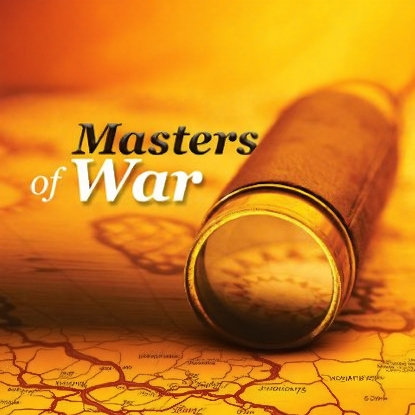
Masters of War: History’s Greatest Strategic Thinkers
Original price was: $49.99.$9.99Current price is: $9.99.
Take an inside look at the content and historical context of the world’s greatest war strategists, guided by a member of the U.S. Naval War College. Across 24 lectures you will study strategic theory from Thucydides and Sun Tzu to Clausewitz, Jomini, Mahan, and modern thinkers on insurgency, nuclear deterrence, air power, terrorism, and counterterrorism — learning how political aims are translated into military action and how strategy evolves with technology and politics.
Masters of War: History’s Greatest Strategic Thinkers
Course Overview
Take an inside look at the content and historical context of the world’s greatest war strategists, guided by a member of the U.S. Naval War College. Across 24 lectures you will study strategic theory from Thucydides and Sun Tzu to Clausewitz, Jomini, Mahan, and modern thinkers on insurgency, nuclear deterrence, air power, terrorism, and counterterrorism — learning how political aims are translated into military action and how strategy evolves with technology and politics.
Course Details
- Course No.: 9422
- Instructor: Professor (U.S. Naval War College) — Jason/Dr. Wilson (course author)
- Format: 24 lectures (~29–33 minutes each)
- Focus: classical and modern strategic thought, naval and air power, insurgency and counterinsurgency, nuclear strategy, just‑war theory, terrorism, and strategic adaptation
Video Lectures (organized)
01: Why Strategy Matters — 33 min
Introduces strategy as the means of translating political purpose into military action; Operation Torch as a case study.
02: Thucydides on Strategy — 32 min
Thucydides as an early strategic analyst: Peloponnesian War lessons on politics, leadership, and war’s social effects.
03: Thucydides as a Possession for All Time — 32 min
Debate over the Sicilian Expedition, the Melian Dialogue, and the relevance of Thucydidean realism today.
04: Sun Tzu’s The Art of War — 31 min
Historical context and core maxims: efficiency, avoiding protracted war, and the commander’s intellect.
05: Sun Tzu through Time — 33 min
Sun Tzu’s influence across China, Japan, and the modern West; deception in Operation Fortitude (D‑Day) as example.
06: Machiavelli’s The Art of War — 30 min
Machiavelli’s tactical prescriptions and advocacy for a citizen army modeled on Roman practice.
07: Machiavelli’s Discourses on Livy — 32 min
Machiavelli’s strategic philosophy (fortuna, virtu) and his prescriptions for republican military policy and command.
08: The Napoleonic Revolution in War — 31 min
How Napoleonic maneuver and operational art transformed war; battles of Jena and Auerstedt as turning points.
09: Baron Jomini as a Strategist — 30 min
Jomini’s concentrated‑force, decisive‑battle approach and its lasting tactical and operational influence.
10: Clausewitz’s On War — 31 min
Clausewitzian concepts: the paradoxical trinity, center of gravity, war‑policy relationship, and the nature of friction.
11: Jomini and Clausewitz through the Ages — 30 min
Comparative strengths and limits of Jomini (operations/tactics) and Clausewitz (political theory of war).
12: From Sail to Steam — The Sea‑Power Revolution — 31 min
Naval transformation during industrialization and its strategic implications for global power.
13: Alfred Thayer Mahan — 30 min
Mahan’s thesis: concentrated fleets and global bases produce sea power and national prosperity.
14: Sir Julian Corbett — 31 min
Corbett’s integration of land and sea strategy and its application (e.g., Wellington’s Iberian campaign).
15: Mahan, Corbett, and the Pacific War — 31 min
Japanese strategy, Pearl Harbor, and U.S. application of Mahan/Corbett principles from Plan Dog to Midway and Guadalcanal.
16: Air Power in Theory and Practice — 29 min
The rise of independent air power; Douhet, the bomber theorists, and WWII experience testing air power theory.
17: From Rolling Thunder to Instant Thunder — 31 min
Evolution of strategic bombing: Vietnam’s Rolling Thunder, Gulf War precision strikes, and later interventions.
18: Nuclear Strategy — 31 min
Deterrence, retaliation, MAD, arms control, and major nuclear thinkers who shaped Cold War policy.
19: Mao Tse‑tung in Theory and Practice — 31 min
Mao’s three phases of revolutionary war: strategic defense, protracted stalemate, and strategic counteroffensive.
20: Classics of Counterinsurgency — 31 min
Galula and Trinquier’s counterinsurgency theories and their application in Iraq, Afghanistan, and modern doctrine.
21: Just‑War Theory — 32 min
Philosophical frameworks (jus ad bellum, jus in bello, just post bellum) and application to operations like Iraqi Freedom.
22: Terrorism as Strategy — 31 min
Terrorism’s strategic logic, its intended audiences, and case studies (e.g., Michael Collins and Irish independence).
23: Strategies of Counterterrorism — 30 min
Spectrum of responses to terrorism: from ignoring to full military campaign — strengths, limits, and policy tradeoffs.
24: From the Jaws of Defeat — Strategic Adaptation — 33 min
How leaders adapt after setbacks (Washington after New York), and the civil‑military nexus that enables effective strategy.
Related products