Skip to content
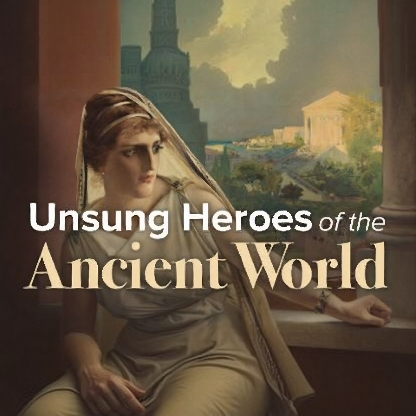
Unsung Heroes of the Ancient World
Original price was: $39.99.$7.99Current price is: $7.99.
Meet some of the most consequential yet under‑appreciated figures from across the ancient world—philosophers, warrior queens, inventors, con men, farmers, and more—in 24 biographical lectures that reconstruct lives usually left out of mainstream histories. Professor Emeritus Gregory Aldrete guides you through military leaders, engineers, athletes, rebels, female thinkers and patrons, fraudsters, and the everyday producers whose choices and labors shaped politics, culture, and society in antiquity.
Course Overview
Meet some of the most consequential yet under‑appreciated figures from across the ancient world—philosophers, warrior queens, inventors, con men, farmers, and more—in 24 biographical lectures that reconstruct lives usually left out of mainstream histories. Professor Emeritus Gregory Aldrete guides you through military leaders, engineers, athletes, rebels, female thinkers and patrons, fraudsters, and the everyday producers whose choices and labors shaped politics, culture, and society in antiquity.
Course Details
- Course No.: 30560
- Instructor: Professor Emeritus Gregory Aldrete
- Format: 24 lectures (~32–37 minutes each)
- Focus: detailed biographies and social context of lesser‑known ancient figures; use of primary sources (letters, inscriptions, guidebooks, legal cases, and literary texts) to reconstruct lives and assess broader historical impact
Video Lectures (organized)
01: Cimon of Athens: From Glory to Disgrace — 37 min
Profile of the Athenian general and politician who helped make Athens a naval power, his public projects and military successes, and the political reversals that led to his fall.
02: Polycrates of Samos: The Tale of a Tyrant — 32 min
The rise of Polycrates: how a successful tyrant transformed Samos into a commercial and naval power and the price of autocratic ambition.
03: Epaminondas of Thebes: Slayer of Spartans — 33 min
How Epaminondas reorganized Theban military and politics to break Spartan hegemony and reshape Greek balance of power in the 4th century B.C.
04: Ctesibius and Hero: Alexandrian Inventors — 32 min
The technological creativity of Ctesibius and Hero—pneumatics, pumps, water clocks, automata—and their practical and intellectual legacy.
05: Olympians: Ancient Athletic Champions — 33 min
Lives and reputations of celebrated athletes (Milo, Theagenes, Diagoras dynasty, Phayllus) and the social meaning of athletic fame in the ancient world.
06: Jugurtha of Numidia: African Freedom Fighter — 34 min
Jugurtha’s rise, resistance to Roman encroachment, guerrilla strategies and the wider political lessons of North African–Roman conflict.
07: Mithridates of Pontus: Rome’s Implacable Foe — 33 min
Mithridates’ expansion in Asia Minor, his wars with Rome, propaganda and cultic claims, and the long struggle between Rome and the Pontic kingdom.
08: Strabo and Pausanias: Describers of the World — 32 min
The role of ancient geographers and travel writers: methodology, audience, and how Strabo and Pausanias created indispensable guides to the classical world.
09: Clodia Metelli: Scandalous Woman of Rome? — 32 min
A close reading of the sources about Clodia’s public and private life, revealing gendered politics, scandal, and reputation in Republican Rome.
10: Sextus Pompey: He Could Have Been Emperor — 33 min
Sextus Pompey’s naval power, his control of the Mediterranean grain trade, and the near‑miss of imperial power in the chaotic post‑Caesar era.
11: Marcus Agrippa: Augustus’s Right‑Hand Man — 36 min
Agrippa’s military leadership, political partnership with Augustus, and his transformative public works that reshaped Rome’s urban fabric.
12: Turia: A Devoted Wife in Times of Crisis — 32 min
The extraordinary legal and civic actions of Turia—how an aristocratic Roman woman navigated law and politics to defend family and husband in crisis.
13: Vitruvius and Frontinus: Master Engineers — 35 min
Two technical minds: Vitruvius’s architectural theory and Frontinus’s practical administration of Rome’s aqueducts and water supply.
14: Mousa, Eumachia, and Plancia: Enterprising Women — 34 min
Biographies of powerful women—Mousa (slave to queen), Eumachia and Plancia Magna (Roman patrons)—showing female agency in patronage, religion, and power networks.
15: Pliny the Elder: 20,000 Things Worth Knowing — 34 min
Pliny’s life as officer and encyclopedist; the scope and method of The Natural History and its role as an ancient repository of knowledge.
16: Quintilian: The Eloquent Professor — 32 min
Quintilian’s approach to rhetoric and education, his pedagogical manual, and the cultural centrality of oratory in Roman civic life.
17: Galen the Physician: Medical Pioneer — 34 min
Galen’s medical practice, experimental methods, theories of anatomy and physiology, and his lasting influence on Western and Islamic medicine.
18: Eunus and Bulla: Rebels and Outlaws — 33 min
Slave revolts and banditry: Eunus’s charismatic leadership in the Sicilian slave revolt and Bulla’s career as a social bandit challenging Roman order.
19: Ardashir and Shapur: Stupendous Sassanians — 34 min
The foundation and expansion of the Sassanian Empire under Ardashir and Shapur, their military challenges to Rome, and imperial statecraft in late antiquity.
20: Zenobia and Artemisia: Warrior Queens — 34 min
Two royal women who led militarized polities—Zenobia’s Palmyra and Artemisia’s naval leadership—and the gendered dimensions of rulership and warfare.
21: Hypatia and Sosipatra: Female Philosophers — 33 min
Hypatia’s philosophical stature and tragic death in Alexandria and Sosipatra’s intellectual life—women philosophers’ place in late antique thought.
22: Percennius and Zenothemis: Ancient Con Men — 32 min
Profiles of charlatans and fraudsters—how false prophets, mutineers, and maritime scammers manipulated belief, law, and commerce for gain.
23: Alexander of Abonoteichus: The False Prophet — 33 min
A case study in cult leadership and deception: Alexander’s rise from quack doctor to influential oracle and the mechanisms of mass persuasion.
24: Farmers: Antiquity’s Greatest Unsung Heroes — 36 min
An argument for the centrality of yeoman farmers: agricultural techniques, labor burdens, rural economies, and how farming underpinned ancient society.
Related products