Skip to content
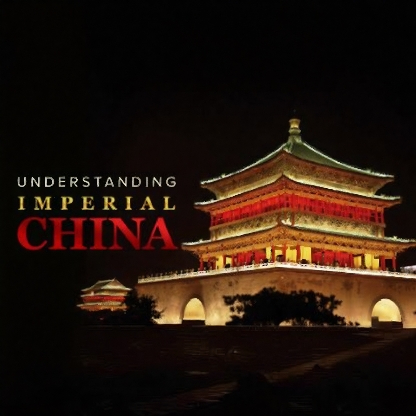
Understanding Imperial China: Dynasties, Life, and Culture
Original price was: $49.99.$9.99Current price is: $9.99.
ake an inside look at life in China’s splendorous empire through the eyes of poets, courtiers, emperors, scholars, travelers, and courtesans. Across 24 lectures, this course traces social life, cultural achievements, political institutions, and daily routines from early imperial times through the fall of the Manchu dynasty, using vivid portraits and primary artifacts to illuminate how imperial China lived and thought.
Understanding Imperial China: Dynasties, Life, and Culture
Course Overview
Take an inside look at life in China’s splendorous empire through the eyes of poets, courtiers, emperors, scholars, travelers, and courtesans. Across 24 lectures, this course traces social life, cultural achievements, political institutions, and daily routines from early imperial times through the fall of the Manchu dynasty, using vivid portraits and primary artifacts to illuminate how imperial China lived and thought.
Course Details
- Course No.: 3822
- Focus: imperial institutions, daily life, literature, economy, religion, technology, military, and cross‑cultural contacts
- Format: 24 recorded lectures (about 30–37 minutes each)
- Instructor perspective: social and cultural history centered on human experiences across ranks and regions
Video Lectures (organized)
01: Opium, Trade, and War in Imperial China — 31 min
Examine the cultural history of opium, its elite rituals, the British opium trade, the Opium Wars, and Chinese efforts to control the drug and its economic effects.
02: The First Emperor’s Terra-cotta Warriors — 31 min
Explore Qin dynasty daily life and governance through the creation and meaning of the Terra-cotta Army and the reign of Qin Shi Huangdi.
03: China’s Early Golden Age: The Han Dynasty — 30 min
Survey Han political institutions, territorial expansion, elite tomb culture, and the rise of a scholarly elite that shaped imperial administration.
04: Amazing Ban Clan: Historian, Soldier, Woman — 31 min
Follow the lives and contributions of Ban Gu, Ban Chao, and Ban Zhao—historian, general, and scholar-poet—illustrating elite intellectual and military roles.
05: China’s Buddhist Monks and Daoist Recluses — 32 min
Trace the arrival and spread of Buddhism, monastic life, Faxian’s travels, and Daoist practices, including reclusion and early Chinese poetic responses.
06: Cosmopolitan Chang’an: Tang Dynasty Capital — 30 min
Visit the structure, markets, neighborhoods, and multicultural life of Tang Chang’an, the medieval world’s greatest city, and factors behind its decline.
07: China’s Grand Canal: Lifeline of an Empire — 31 min
Chart the origins, engineering, maintenance, and political significance of the Grand Canal from the Sui onward and its role in imperial logistics.
08: Triumph and Tragedy in Tang Poetry — 30 min
Examine how poetry functioned in Tang aristocratic society through poets such as Wang Wei, Li Bai, and Du Fu, and poetry’s social and political resonance.
09: Life and Times of Song Dynasty Literati — 31 min
Meet Song literati like Su Shi and Zhu Xi; explore civil-service culture, literary life, Neo-Confucian thought, and the literati’s social roles.
10: A Day’s Journey Along the Qingming Scroll — 30 min
Read the Qingming Shanghetu as a sequential visual narrative of Song urban and rural life, technology, and social complexity.
11: Peasant Life on the Yellow River — 31 min
Investigate northern agrarian life: housing, diet, gender roles, taxation, local administration, and the environmental and social hazards peasants faced.
12: Rice, Silk, and Tea: South China’s Peasants — 30 min
Study wet‑rice agriculture, irrigation, tea cultivation, and silk production—economies where women played central productive roles.
13: Genghis Khan and the Rise of the Mongols — 32 min
Trace Temüjin’s rise to Genghis Khan, steppe social structures, nomadic warfare, and the Mongol transformation of Eurasian history.
14: The Mongols and Marco Polo in Xanadu — 30 min
Explore the Pax Mongolica’s East‑West exchanges via travelers such as Marco Polo, Giovanni de Montecorvino, and Rabban Bar Sauma.
15: Admiral Zheng He’s Treasure Fleet — 31 min
Sail with Zheng He’s Ming treasure voyages: ship technology, crew life, diplomatic missions, and the voyages’ political and cultural aims.
16: China’s Bound Feet, Brides, and Widows — 32 min
Examine gendered practices—foot binding, marriage rituals, bridal economy, widowhood ideals, and the contrasting world of courtesans.
17: Ming Dynasty Trade and Spanish Silver — 34 min
Analyze how New World silver and global trade networks reshaped Ming markets, urban culture, consumption, and social life (e.g., Manila trade).
18: The Great Wall and Military Life in China — 32 min
Study Ming military organization, fortification projects (including the Great Wall), soldierly culture, and the relationship between commercialization and military reform.
19: Qing Dynasty: Soul Stealers and Sedition — 31 min
Investigate social panic over sorcery, official anxieties about sedition, and how Qing imperial justice and moral governance responded to such crises.
20: Emperor Qianlong Hosts a British Ambassador — 31 min
Recreate the 1793 encounter at the summer palace: imperial ceremony, the logistics of imperial banquets, and the diplomatic framing of Sino‑European encounters.
21: The Taiping Rebellion and Its Cult Leader — 32 min
Follow the rise of Hong Xiuquan, the religiously inspired Taiping movement, its social roots, military campaigns, and its enormous human cost.
22: China’s Treaty Ports — 31 min
Examine the opening of treaty ports after 1842: hybrid Euro‑Asian urban cultures, foreign enclaves, labor migrations, and their economic and political effects.
23: Experiencing China’s Civil Service Exams — 31 min
Trace the education, study regimens, testing procedures, and social mobility produced by the imperial examination system and its long social significance.
24: China’s Last Dynasty: Fall of the Manchus — 37 min
Analyze the internal and external pressures that undermined Manchu rule, the collapse of the three pillars of imperial power, and the 1912 abdication.
Related products