Skip to content
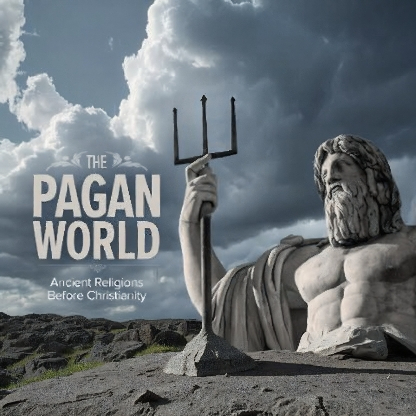
The Pagan World: Ancient Religions before Christianity
Original price was: $49.99.$9.99Current price is: $9.99.
Take a close, behind-the-scenes look at religion and life in the ancient Mediterranean world to see how early pagan religions helped shape the world as we know it today. In The Pagan World: Ancient Religions before Christianity (Course No. 2852), Professor Hans-Friedrich Mueller (Union College) brings the ancient polytheistic peoples, their gods and goddesses, public and private worship practices, and the central role of religion in everyday life to life across 24 lectures using artifacts, illustrations, and primary-source descriptions.
The Pagan World: Ancient Religions before Christianity
Overview
Take a close, behind-the-scenes look at religion and life in the ancient Mediterranean world to see how early pagan religions helped shape the world as we know it today. In The Pagan World: Ancient Religions before Christianity (Course No. 2852), Professor Hans-Friedrich Mueller (Union College) brings the ancient polytheistic peoples, their gods and goddesses, public and private worship practices, and the central role of religion in everyday life to life across 24 lectures using artifacts, illustrations, and primary-source descriptions.
Course Details
- Course No.: 2852
- Lecturer: Professor Hans-Friedrich Mueller (Union College, Schenectady, New York)
- Format: 24 lectures, each approximately 27–36 minutes
- Central themes: polytheism across the Mediterranean and beyond, household cults, sacrifice, divination, sanctuaries, mystery religions, philosophical critiques, Roman religion and politics, calendar and sacred days, and the transition to Christianity.
Lecture List
01: Early Pagan Religion in Mesopotamia — 35 min
Explore how Mesopotamians attempted to understand, worship, and cultivate supernatural forces. Examine the Enuma Elish and how its themes of power, gender, family, and cosmic order reflect human concerns and explain humanity’s place in the world.
02: The Rigveda and the Gods of Ancient India — 32 min
While many early Mediterranean religions faded, the religious currents of India persisted. Study the Rigveda—an ancient collection of Sanskrit hymns that remains foundational to Hindu tradition—and its riddles, paradoxes, and unsettled doctrines.
03: State Religion in Ancient Egypt — 30 min
Learn how the Egyptian Book of the Dead and pyramid inscriptions reveal Atum, the self-created god, and how the rise of political centers like Memphis and Karnak shaped theology and ritual in Egyptian state religion.
04: From Myth to Religion: The Olympian Deities — 32 min
Investigate how Greek myths formed the basis of religious practice. Consider puzzles such as the complex identity of Zeus: multiple “persons” of a single god or many distinct deities sharing the same name?
05: Household and Local Gods in Ancient Greece — 30 min
Discover how daily life in Athens was governed by household and local deities—protectors of the hearth, door, and marriage—who were central to domestic religious activities and responsibilities.
06: Feeding the Gods: Sacrificial Religion — 30 min
Examine animal sacrifice across cultures: the elements of a proper sacrificial ritual, its social and religious functions, and what gods were believed to require from offerings.
07: Prayers, Vows, Divination, and Omens — 27 min
Survey the many channels of communication between humans and gods—augury, haruspicy, omens, dreams, birds, and other signs—that guided private choices and state decisions such as warfare.
08: Delphi and Other Greek Sanctuaries — 27 min
Explore major sanctuaries like Delphi and the Sanctuary of Asklepios at Epidaurus and their multifaceted roles: religious, civic, medical, cultural, and athletic.
09: Cults and Mystery Religions — 29 min
Learn about public festivals that unified city-states and private mystery cults requiring initiation, which offered social benefits and religious promises, particularly appealing to women and outsiders.
10: Philosophical Critiques of Paganism — 32 min
Consider intellectual and religious critics—Pythagoreans, Orphics, Stoics, Epicureans—and how these movements related to mainstream religion and state power, including cases such as Socrates.
11: Greek Funerary Practices and the Afterlife — 29 min
Study Greek burial rites, offerings to the dead, and how funerary religion reinforced conservative social values and civic stability long after burial.
12: Egyptian Influences on Ancient Religion — 28 min
Trace Egyptian religious influences across the Mediterranean: beliefs about the soul, immortality, the afterlife’s geography, and why the living nourished the dead.
13: Ancient Roman Ancestor Worship — 31 min
Examine the cultus deorum and ancestor cults that the Romans credited for their success—how precise ritual obligations to gods and ancestors underpinned social cohesion and state strength.
14: Gods of the Roman Household — 29 min
Survey Roman domestic deities involved in daily life—from door hinges to marriage consummation—and learn how women’s religious roles reflected broader societal expectations.
15: Gods of the Roman State — 31 min
Discover how Rome incorporated conquered gods through interpretatio Romana, the ceremonial procedures for adopting foreign deities, and stories illustrating these processes.
16: Priests and Ceremonies in the Roman Republic — 34 min
Review the institutional roles—priestly collegia, pontiffs, Vestal Virgins—and how their ceremonies maintained the rituals thought necessary for Rome’s well-being and stability.
17: Religion, Politics, and War in Rome — 36 min
Understand divination’s practical importance to Roman politics and warfare—bird signs, chickens, Sybilline oracles—and the ritual constraints on political and military action.
18: Rome’s Reactions to Foreign Religions — 35 min
Study Rome’s varying responses to foreign cults—tolerance in some cases, suppression in others—through episodes like the Bacchanalia, seen as threats to social order.
19: The Roman Calendar and Sacred Days — 34 min
Learn how pontiffs regulated festivals, sacred days, and the calendar, and why calendar reform (notably Julius Caesar’s) became necessary to align civic and religious life.
20: Julius Caesar: A Turning Point in Roman Religion — 34 min
Explore Caesar’s religious-political career, his claims of divine ancestry, and how his deification after death set precedents for the imperial cult and transformed Roman religion.
21: Emperor Worship in Rome — 34 min
Examine the emergence of emperor worship under Octavius/Augustus and how the imperial cult reconfigured traditional polytheistic practice and political ideology.
22: Zoroastrians, Jews, and Christians — 31 min
Compare Zoroastrianism and Judaism with the emerging Christian movement: theological differences, social dynamics, and the Roman state’s initial accommodation and later tensions.
23: Popular Religions of Late Antiquity — 31 min
Investigate the religious plurality of late antiquity—pagan practices, Manichaeism, Isis worship—and why many in the population retained traditional religion even as Christianity rose.
24: The End of Paganism in the Roman Empire — 35 min
Analyze why, after centuries of state-sponsored pagan practice, the Roman Empire adopted Christianity: individual conversions, institutional change, political decisions, and cultural shifts.
Related products