Skip to content
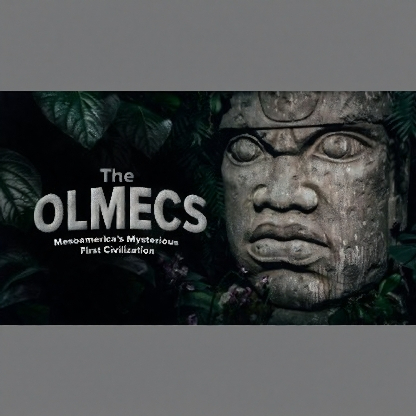
The Olmecs: Mesoamerica’s Mysterious First Civilization
Original price was: $19.99.$4.99Current price is: $4.99.
Course No. 30710 — Journey into ancient Mesoamerica to study the Olmecs (c. 1800–400 BCE), a formative civilization known for colossal stone heads, monumental centers (San Lorenzo, La Venta), distinctive iconography, early writing debates, and enduring influence across Mesoamerica.
The Olmecs: Mesoamerica’s Mysterious First Civilization
Overview
Course No. 30710 — Journey into ancient Mesoamerica to study the Olmecs (c. 1800–400 BCE), a formative civilization known for colossal stone heads, monumental centers (San Lorenzo, La Venta), distinctive iconography, early writing debates, and enduring influence across Mesoamerica.
Course Description
Using archaeological evidence and recent technological advances (LiDAR, DNA, field survey), this 12‑lecture course examines Olmec origins, major sites, political and economic organization, daily life, art and religion, calendrical and script traditions, and the question of whether the Olmecs functioned as a “Mother Culture” or one partner among several in a network of interacting societies. The course balances site‑based description (San Lorenzo, La Venta, Tres Zapotes) with thematic studies of iconography, social life, trade, and the legacy of Olmec and Epi‑Olmec developments for later Mesoamerican civilizations.
Instructor
Dr. Edwin Barnhart — Archaeologist; Director, Maya Exploration Center
Lecture List
- Evolving Olmec Origins Story
- Description: Introduces the Olmecs, outlines major questions about origins, art, and decline, and reviews how new field methods and LiDAR are reshaping interpretations.
- Duration: 31 min
- The Olmec Discovered
- Description: History of the Olmec discovery—early finds such as colossal heads—and how initial excavations and antiquarian interest defined the field.
- Duration: 31 min
- San Lorenzo
- Description: The first major Olmec city at its peak c. 1000 BCE: monumental heads, elite areas, agricultural base, recent DNA and paleoethnobotanical findings, and reasons for decline.
- Duration: 41 min
- Mesoamerican Mother Culture?
- Description: Examines the “Mother Culture” thesis versus a “Sister Cultures” model by comparing Olmec developments with contemporaries in Oaxaca and Soconusco.
- Duration: 33 min
- La Venta
- Description: La Venta as the central Middle Formative polity (900–500 BCE): pyramids, tombs, ritual landscape, long‑distance exchange, and ideological influence.
- Duration: 36 min
- Olmec Iconography and Religion
- Description: Survey of Olmec imagery (jaguar‑human motifs, were‑jaguar, rulers), and debates over shamanism, ancestor cults, and organized pantheons.
- Duration: 36 min
- Life as an Olmec
- Description: Settlement patterns and everyday life: elite palaces and common households, economy based on corn and rivers, clothing, hairstyles, and social organization.
- Duration: 38 min
- The Western Olmec
- Description: Western distributions in Guerrero and Morelos—cave art, hydraulic installations, and the debate whether western sites are local developments or Olmec outposts.
- Duration: 43 min
- Tres Zapotes and the Epi‑Olmecs
- Description: Transition at Tres Zapotes from classic Olmec to Epi‑Olmec phase: new political forms, material culture shifts, and continuity vs. transformation questions.
- Duration: 30 min
- Epi‑Olmec Script
- Description: The Isthmian (Epi‑Olmec) script: evidence, contested readings, implications for writing origins in Mesoamerica, and the limits of current decipherment.
- Duration: 38 min
- Olmec Calendars and Astronomy
- Description: Evidence for calendrical and astronomical knowledge (long‑count precursors), interpretation of celestial motifs, and how timekeeping influenced ritual and political life.
- Duration: 46 min
- The Olmec Legacy
- Description: Synthesis of Olmec ideological, artistic, and political contributions to subsequent Mesoamerican cultures; reassessing legacy beyond the simple “Mother Culture” model.
- Duration: 35 min
Related products