Skip to content
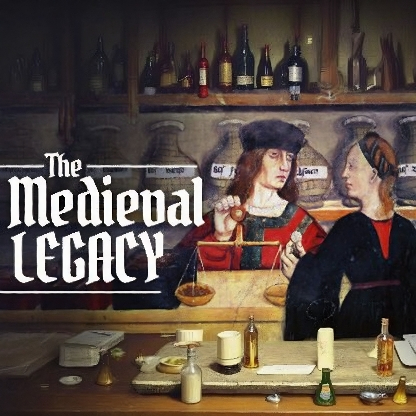
The Medieval Legacy
Original price was: $69.99.$14.99Current price is: $14.99.
Course No. 3923 — A 36‑lecture exploration of how the medieval era (roughly c. 500–1500 CE) shaped the modern world. This course examines medieval institutions, ideas, technologies, arts, and cultural movements—showing how representative government, universities, the scientific method, guilds, legal systems, notions of race, chivalry, medievalism, and many everyday practices have deep medieval roots.
The Medieval Legacy
Overview
Course No. 3923 — A 36‑lecture exploration of how the medieval era (roughly c. 500–1500 CE) shaped the modern world. This course examines medieval institutions, ideas, technologies, arts, and cultural movements—showing how representative government, universities, the scientific method, guilds, legal systems, notions of race, chivalry, medievalism, and many everyday practices have deep medieval roots.
Course Description
Though the Middle Ages ended centuries ago, its legacies continue to shape politics, law, religion, science, art, social practices, and popular culture. Professor Symes offers incisive perspectives on connections between medieval developments and present‑day institutions and mentalities. Topics include the medieval birth of the codex and record keeping, the rise of orthodoxy and heresy, the origins of anti‑Semitism, the ideology of holy war, chivalry and heraldry, the growth of towns and guilds, legal innovations including trial juries and common law, the rise of universities and early scientific method, money and accounting, medical and hospital practices, vernacular literature, medievalism in modern nationalism and popular culture, changing ideas about race, gender, and sexuality, the Black Death, and technological inventions (clocks, eyeglasses, maritime charts, firearms).
Instructor
Professor (course presenter)
Lecture List
- Discovering the Medieval Legacy — What “medieval” means, timeline issues, misconceptions, and an introduction to the course themes. (27 min)
- The Medieval Birth of the Book — Transition from scrolls to codices, parchment/vellum, and how portable books democratized reading. (27 min)
- Medieval Innovations in Record Keeping — Developments in legible scripts, musical notation, and techniques that preserved voices and events. (27 min)
- The Beginnings of Orthodoxy and Heresy — How Christian elites defined orthodoxy, codified doctrine, and suppressed dissent. (34 min)
- Anti‑Semitism’s Medieval Roots — How social, economic, and theological factors produced durable anti‑Jewish tropes and violence. (32 min)
- Holy War and Its Long Legacy — Origins and theory of divinely sanctioned warfare, the Crusades, and parallels to jihad. (32 min)
- The Cult of the Virgin Mary — Development of Marian doctrine, its cultural effects, and implications for women’s roles. (31 min)
- The Imaginative Power of Chivalry — The rise of knights and chivalric codes in epic and romance literature and their social functions. (35 min)
- The Legacy of Heraldry and Pedigree — Heraldic symbolism, coats of arms, and how pedigree became public identity and political capital. (29 min)
- “Town Air Makes You Free” — The economic revival of towns, charters, civic liberties, and new opportunities for social mobility. (29 min)
- Guilds and the Rise of Organized Labor — Trade guild structures, political roles, cultural patronage, and early forms of labor solidarity. (29 min)
- The Medieval Rise of the Rule of Law — Early law codes, common‑law developments, juries, and Magna Carta’s legal implications. (29 min)
- Medieval Government and Collective Rights — Councils, assemblies, the Norse Thing, and the emergence of representative practices. (31 min)
- Medieval Sovereignty and the State — How medieval monarchs and the papacy negotiated authority and the evolving idea of sovereignty. (32 min)
- The Medieval Roots of the King’s English — Linguistic consequences of Norman rule and the formation of Middle and modern English dialects. (27 min)
- Medieval Narratives of Nationalism — 19th‑century nationalist uses of medieval texts and the political instrumentalization of the past. (31 min)
- Medieval Narratives in Modern War — How medieval symbols and heroes were invoked in modern conflicts, especially World War I. (29 min)
- The University’s Medieval Origins — The rise of universities from cathedral and monastic schools and their role in intellectual life. (32 min)
- The Origins of the Scientific Method — Medieval thinkers (al‑Haytham, Grosseteste, Bacon, Ockham, Copernicus) and the roots of empirical inquiry. (33 min)
- Our Debts to the Medieval World of Money — Arabic numerals, accounting, letters of credit, and early financial instruments. (32 min)
- The Medieval Explosion of Documentation — The administrative and social consequences of paper, charters, and record keeping. (27 min)
- The Medieval Invention of Purgatory — Doctrines of sin, intercession, indulgences, and their role in late medieval piety and Reformation debates. (29 min)
- Medieval Evolutions in Hospitals and Prisons — The formation of charitable hospitals and the social functions of imprisonment. (31 min)
- Medieval Rhyme, Romance, and Sagas — Influence of Arabic rhyme, vernacular romances, and Norse sagas on European literature. (29 min)
- The Medieval Rise of Professional Authors — Patronage, monetization of writing, and authors such as Boccaccio, Chaucer, Christine de Pisan. (29 min)
- How Vernacular Bibles Transformed Faith — Translation, access to scripture, visual Bibles, and conflicts over lay reading. (29 min)
- Recovering Medieval Arts and Artists — Origins of oil painting, female contributors to manuscript illumination, and overlooked medieval artists. (32 min)
- The Medieval Artistic Imagination Persists — 19th‑century medievalism (Pre‑Raphaelites, Arts & Crafts, neo‑Gothic) and its transatlantic influence. (31 min)
- The Black Death’s Lasting Lessons — Origins, spread, ecological and social impacts of the plague and lessons for epidemic response. (30 min)
- The Medieval Invention of Race? — Shifts in late medieval thought about bodies and difference, and the racialization processes of the 14th–15th centuries. (33 min)
- Medievalism and Modern Racism — Connections between medievalist narratives, the slave trade’s racialization, and modern supremacist ideologies. (30 min)
- Rediscovering Medieval Sex and Gender — Complex medieval gender identities, sexual norms, and the Church’s responses to visionary women. (29 min)
- Medieval Games We Still Play — Origins of tennis, medieval football, chess, and playing cards and their cultural trajectories. (29 min)
- Medieval Revolutions in Dress and Dining — Textile trade, sumptuary symbolism, new tableware and dining customs that influenced later tastes. (33 min)
- Medieval Inventions That Changed the World — Mechanical clocks, eyeglasses, maritime charts, and gunpowder’s early military use. (33 min)
- Medievalism, Pop Culture, and the Present — Tolkien, Lewis, films, TV, gaming, and how medieval themes continue to define contemporary imagination. (35 min)
Learning Objectives
- Identify major medieval innovations—legal, political, technological, and cultural—and explain how they influenced later developments.
- Trace the institutional origins of representative government, universities, guilds, and legal practices found in the modern West.
- Analyze medieval sources and modern uses of the medieval past (medievalism), including nationalist and racist appropriations.
- Evaluate medieval contributions to the emergence of empirical and scientific methods, accounting systems, and urbanization.
- Appreciate continuities and transformations from medieval practices (art, literature, ritual, sport) to present‑day cultural forms.
Target Audience
Students and lifelong learners interested in medieval history, cultural history, history of ideas, art and literary reception, museum and heritage professionals, and anyone curious about how the medieval past shapes the present.
Related products



By Area