Skip to content
The Holy Land Revealed
Original price was: $54.99.$14.99Current price is: $14.99.
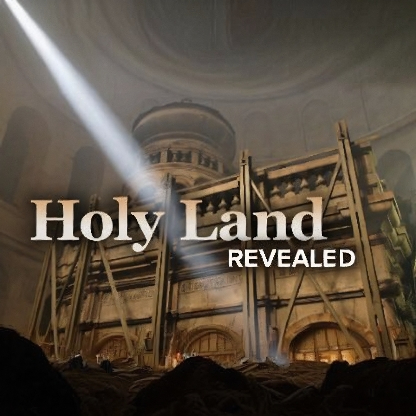
Course No. 6220 — Visit the birthplace of Judaism and Christianity through 36 lectures that combine on‑site archaeology and historical interpretation. Professor Jodi Magness (University of North Carolina at Chapel Hill) guides you through the material remains of the Canaanites, Israelites, Hellenistic rulers, Herod, Roman and Byzantine transformations, early Christianity and Islam, and the archaeological debates that illuminate (and sometimes complicate) the biblical record.
The Holy Land Revealed
Overview
Course No. 6220 — Visit the birthplace of Judaism and Christianity through 36 lectures that combine on‑site archaeology and historical interpretation. Professor Jodi Magness (University of North Carolina at Chapel Hill) guides you through the material remains of the Canaanites, Israelites, Hellenistic rulers, Herod, Roman and Byzantine transformations, early Christianity and Islam, and the archaeological debates that illuminate (and sometimes complicate) the biblical record.
Course Description
As the setting for defining events in Jewish and Christian history, the Holy Land is a key region for understanding antiquity. This course uses archaeological evidence—architecture, inscriptions, pottery, tombs, ritual installations, and settlement patterns—to explore questions raised by the Hebrew Bible and New Testament and to reconstruct everyday life in ancient Israel and its neighbors. Topics include the arrival of the Israelites, Jerusalem from David to Hadrian, water systems and fortifications, the Dead Sea Scrolls and Qumran, Herod’s building projects, synagogues and early churches, Jewish revolts and Roman responses, the rise of Christianity and pilgrimage, and the Islamic transformation of Jerusalem. The course concludes with a discussion of archaeological methods and how archaeologists reconstruct the past.
Instructor
Professor Jodi Magness — Archaeologist, University of North Carolina at Chapel Hill
Lecture List
- The Land of Canaan
- Description: What is the “Holy Land”? Distinguish archaeology from history and evaluate the Hebrew Bible as a historical source; introduction to the Canaanites.
- Duration: 31 min
- The Arrival of the Israelites
- Description: Archaeological evidence for Israelite settlement: Egyptian stela referring to Israel, Jericho’s walls, Philistine cultic remains.
- Duration: 32 min
- Jerusalem — An Introduction to the City
- Description: Topography and layout of Jerusalem; biblical overview from David to the Babylonian exile and evidence such as the Lachish siege.
- Duration: 29 min
- The Jerusalem of David and Solomon
- Description: Excavations in the City of David: a scribe’s house, development of Hebrew script, clay sealings, pottery, and victory stelae.
- Duration: 32 min
- Biblical Jerusalem’s Ancient Water Systems
- Description: The Gihon Spring and city waterworks—Warren’s Shaft, Siloam Channel, Hezekiah’s Tunnel—and their engineering and strategic roles.
- Duration: 31 min
- Samaria and the Northern Kingdom of Israel
- Description: The Omride dynasty’s sites: High Place at Dan, Samaria acropolis, and remains linked to Ahab and the northern kingdom.
- Duration: 28 min
- Fortifications and Cult Practices
- Description: City gates (Gezer), altars and cult installations, amulets, painted figures, and inscribed pottery from sites like Kuntillet Ajrud.
- Duration: 32 min
- Babylonian Exile and the Persian Restoration
- Description: Persian administration after 539 BCE, return from exile, roles of Ezra and Nehemiah, and early developments in Judaism.
- Duration: 32 min
- Alexander the Great and His Successors
- Description: Hellenistic conquest and cultural influence; archaeological indicators including destroyed towers and personal items at sites.
- Duration: 28 min
- The Hellenization of Palestine
- Description: Hellenistic influence on non-Jewish cities—Iraq el-Amir, Marisa, Tel Dor—and Hellenistic architectural styles in the region.
- Duration: 30 min
- The Maccabean Revolt
- Description: Antiochus IV, the Maccabean uprising (167–103 BCE), Hasmonean rule, and the religious and political consequences.
- Duration: 31 min
- The Hasmonean Kingdom
- Description: The reign of the Hasmoneans (Alexander Jannaeus, his heirs), internal civil wars, and neighboring Nabataean culture (Petra).
- Duration: 32 min
- Pharisees and Sadducees
- Description: Jewish sectarianism in the 2nd century BCE—social bases, beliefs, and likely contexts for Jesus’s debates.
- Duration: 32 min
- Discovery and Site of the Dead Sea Scrolls
- Description: Qumran site and caves: discovery of the Dead Sea Scrolls, layout of the settlement, scriptorium, and dining facilities.
- Duration: 30 min
- The Sectarian Settlement at Qumran
- Description: Qumran’s material culture: animal bones in vessels, water systems for ritual baths, and a large cemetery with >1,000 graves.
- Duration: 31 min
- The Dead Sea Scrolls and the Essenes
- Description: Theories linking Qumran with the Essenes, their apocalyptic beliefs, purity regulations, and relation to early Christianity.
- Duration: 32 min
- The Life of the Essenes
- Description: Everyday aspects of the Qumran community: latrines, hygiene, texts, Josephus’s descriptions, and archaeological correlates.
- Duration: 29 min
- From Roman Annexation to Herod the Great
- Description: Herod’s rise (40–4 BCE), his reign’s politics and court intrigues, and the historical context for New Testament narratives.
- Duration: 31 min
- Herod as Builder — Jerusalem’s Temple Mount
- Description: Herodian construction: Second Temple reconstruction, Solomon’s Stables, Robinson’s Arch, Western Wall, and Hulda Gates.
- Duration: 32 min
- Caesarea Maritima — Harbor and Showcase City
- Description: Herod’s Greco‑Roman cities: Caesarea’s harbor, hippodrome, aqueducts, public architecture, and its role in New Testament history.
- Duration: 30 min
- From Herod’s Last Years to Pontius Pilate
- Description: Herod’s palaces (Jericho, Herodium), his death, division of his kingdom, and the rule of Herod Antipas and Pontius Pilate.
- Duration: 31 min
- Galilee — Setting of Jesus’s Life and Ministry
- Description: Galilean towns (Sepphoris, Capernaum) and recent archaeological finds (possible Nazareth house) illuminating Jesus’ milieu.
- Duration: 32 min
- Synagogues in the Time of Jesus
- Description: Early synagogues as settings for teaching—examples from Masada, Gamla, and Migdal with their architectural and decorative features.
- Duration: 33 min
- Sites of the Trial and Final Hours of Jesus
- Description: Antonia Fortress, Church of the Sisters of Zion, successive fortification lines, burnt villas, and archaeology linked to Jesus’s final days and 70 CE destruction.
- Duration: 33 min
- Early Jewish Tombs in Jerusalem
- Description: Rock‑cut tombs and burial customs (Ketef Hinnom, Jason’s Tomb), development of funerary architecture, and related finds.
- Duration: 30 min
- Monumental Tombs in the Time of Jesus
- Description: Second Temple period burial practices, ossuaries, and prominent rock‑cut tombs around Jerusalem (Bene Hezir, Nicanor’s Tomb).
- Duration: 32 min
- The Burials of Jesus and James
- Description: Archaeological context for Gospel burial narratives and discussion of controversial finds (Talpiyot Tomb, James Ossuary).
- Duration: 34 min
- The First Jewish Revolt; Jerusalem Destroyed
- Description: The 66–70 CE revolt: rebel infighting, Roman siege tactics, Vespasian and Titus, and archaeological evidence of destruction.
- Duration: 31 min
- Masada — Herod’s Desert Palace and the Siege
- Description: Masada’s archaeology: Herodian fortress, Roman camps and siege works, and evidence for the siege of the rebels.
- Duration: 29 min
- Flavius Josephus and the Mass Suicide
- Description: Ramp remains at Masada, Josephus’s narrative, and debates over the mass suicide account and archaeological interpretations.
- Duration: 31 min
- The Second Jewish Revolt against the Romans
- Description: Bar‑Kokhba Revolt (132–136 CE): archaeological discoveries (Cave of Letters, Cave of Horror) and insights into rebel communities.
- Duration: 32 min
- Roman Jerusalem — Hadrian’s Aelia Capitolina
- Description: Hadrian’s rebuilding of Jerusalem as Aelia Capitolina: Damascus Gate, imperial statues, and new urban forums.
- Duration: 32 min
- Christian Emperors and Pilgrimage Sites
- Description: Constantine’s Christianization: major churches including the Church of the Holy Sepulcher and the Nea Church; origins of pilgrimage.
- Duration: 30 min
- Judaism and Synagogues under Christian Rule
- Description: Synagogue development in the Byzantine period—Capernaum, Hammath Tiberias, Beth Alpha—and their evolving decoration and role.
- Duration: 32 min
- Islam’s Transformation of Jerusalem
- Description: Early Islamic monuments—the Dome of the Rock and Al‑Aqsa Mosque—their archaeology, inscriptions, and religious significance.
- Duration: 32 min
- What and How Archaeology Reveals
- Description: Fieldwork methods: excavation strategy, artifact reconstruction, publication, and how archaeologists build narratives from material remains.
- Duration: 34 min
Learning Objectives
- Evaluate archaeological evidence relevant to biblical and post‑biblical history in the Holy Land.
- Reconstruct daily life, religious practice, and urban/topographic change from the Canaanite period through early Islamic rule.
- Understand major archaeological sites (Jerusalem, Qumran, Masada, Caesarea) and their contribution to historical debates.
- Explain methods and limitations of archaeology and how findings are interpreted, published, and contested.
- Relate archaeological data to texts (Hebrew Bible, New Testament, Josephus) with critical attention to source strengths and weaknesses.
Target Audience
Students and enthusiasts of biblical studies, Near Eastern archaeology, ancient history, religious studies, clergy preparing for pilgrimage, and travelers seeking a deeper, evidence‑based understanding of the Holy Land.
Related products