Skip to content
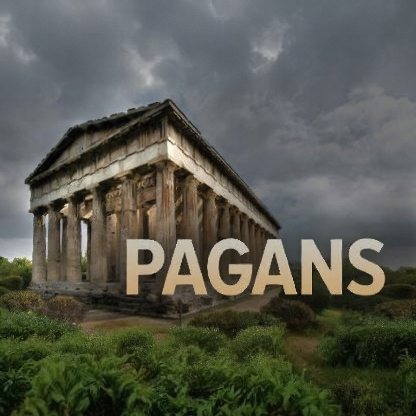
The Fall of the Pagans and the Origins of Medieval Christianity
Original price was: $49.99.$9.99Current price is: $9.99.
Course No. 3466 — A historically focused study of the interaction and conflicts among Judaism, paganism, and Christianity from the 1st through the 6th centuries, emphasizing key events, legal changes, and influential figures that transformed the Roman world into a Christian empire.
Overview
Course No. 3466 — A historically focused study of the interaction and conflicts among Judaism, paganism, and Christianity from the 1st through the 6th centuries, emphasizing key events, legal changes, and influential figures that transformed the Roman world into a Christian empire.
Course Description
Why did pagan Rome, long tolerant of diverse faiths, come into conflict with early Christians—and how did Christianity achieve dominance? Over 24 lectures, an award‑winning classical scholar examines pivotal episodes (Nero’s persecution of A.D. 64, Constantine’s victory at the Milvian Bridge, Theodosius I’s laws making Nicene Christianity the only legitimate religion, Justinian’s later policies) and introduces the people who shaped this era: emperors (Augustus to Justinian), missionaries and apologists (James, Paul, Clement, Origen), ascetics and monks (Anthony, Barsauma), and philosophical and medical thinkers (Plotinus, Galen). The course focuses on historical events and social/political processes while treating theological and philosophical material only as needed to clarify transitions.
Instructor
Award‑winning professor and classical scholar (course presenter)
Lecture List
- Religious Conflict in the Roman World
- Description: Introduces the course themes, central questions, and major scholarly approaches to Christianization of the Roman world.
- Duration: 32 min
- Gods and Their Cities in the Roman Empire
- Description: Survey of pagan worship across the empire—local cults, civic religion, and archaeological and literary evidence of polytheistic practice.
- Duration: 30 min
- The Roman Imperial Cult
- Description: How Augustus and his successors institutionalized emperor veneration (the imperial cult) and its political and religious implications.
- Duration: 31 min
- The Mystery Cults
- Description: Examination of mystery religions, initiation rites, and the debated role of these cults as cultural or spiritual bridges to Christianity.
- Duration: 30 min
- Platonism and Stoicism
- Description: The impact of major philosophical schools on Roman elite ethics and how philosophical categories later shaped Christian theology.
- Duration: 31 min
- Jews in the Roman Empire
- Description: The place of Judaism in the empire, Roman policies toward Jews, and contrasts between Jewish monotheism and later Christian claims.
- Duration: 30 min
- Christian Challenge — First Conversions
- Description: Early missionary activity and conversions; the roles of James, Paul, and the spread of Christian communities beyond Judea.
- Duration: 31 min
- Pagan Response — First Persecutions
- Description: Early Roman reactions to Christianity, from localized violence (Nero) to sporadic, avoidable legal measures by various emperors.
- Duration: 31 min
- Christian Bishops and Apostolic Churches
- Description: The development of episcopal structures, apostolic succession, and the formation of a recognized Christian canon and communal authority.
- Duration: 31 min
- Pagan Critics and Christian Apologists
- Description: Dialogues between pagan critics and Christian defenders; how apologetic literature raised Christianity’s intellectual profile.
- Duration: 31 min
- First Christian Theologians
- Description: The work of early theologians (e.g., Clement, Origen) who argued in classical terms and helped shape Christian doctrine and scripture.
- Duration: 30 min
- Imperial Crisis and Spiritual Crisis
- Description: The 3rd-century political and military crises and their debated influence on religious change and Christian growth.
- Duration: 32 min
- The Great Persecutions
- Description: Two empire-wide persecution phases; martyrdom’s perception in pagan and Christian communities and its effects on conversions.
- Duration: 32 min
- The Spirit of Late Paganism
- Description: How pagan spiritual life and philosophical schools (e.g., Plotinus, Neoplatonists) adapted during times of crisis and religious competition.
- Duration: 31 min
- Imperial Recovery under the Tetrarchs
- Description: Diocletian’s Tetrarchy, administrative and military reforms, and the renewed imperial stability that set the stage for Constantine.
- Duration: 33 min
- The Conversion of Constantine
- Description: Critical reassessment of Constantine’s conversion—motives, evidence, and the complex process by which he embraced and promoted Christianity.
- Duration: 32 min
- Constantine and the Bishops
- Description: Constantine’s institutional rapprochement with the Church—imperial patronage, councils, and the integration of bishops into imperial structures.
- Duration: 33 min
- Christianizing the Roman World
- Description: How Christian institutions, urban landscapes, pilgrimage, and missionary activity reshaped public life and imperial policy.
- Duration: 31 min
- The Birth of Christian Aesthetics and Letters
- Description: The appropriation and transformation of pagan artistic and literary forms into Christian modes of expression and visual culture.
- Duration: 31 min
- The Emperor Julian and the Pagan Reaction
- Description: Julian’s attempt to restore paganism, his reforms and rhetoric, and the limits of pagan revival under a single emperor.
- Duration: 32 min
- Struggle over Faith and Culture
- Description: The aftermath of Julian’s reign: contested religious futures, cultural struggles, and the consolidation of Christian influence.
- Duration: 31 min
- New Christian Warriors — Ascetics and Monks
- Description: Rise of asceticism and monasticism, their social roles, missionary impact, and how ascetics influenced conversion and social life.
- Duration: 31 min
- Turning Point — Theodosius I
- Description: Theodosius’s legislation against pagan practice, bans on sacrifice, and the declaration of Nicene Christianity as the empire’s official faith.
- Duration: 31 min
- Justinian and the Demise of Paganism
- Description: Justinian’s legal and ecclesiastical policies that completed the marginalization of pagan practices and legally defined Christian civilization.
- Duration: 35 min
Learning Objectives
- Trace the historical processes by which Christianity moved from a persecuted sect to the dominant religion of the Roman Empire.
- Identify key political, legal, social, and intellectual factors that undermined pagan institutions and supported Christian ascendancy.
- Analyze primary and secondary sources that document religious conflict, accommodation, and policy from the 1st to the 6th centuries.
- Understand the roles played by emperors, bishops, theologians, ascetics, and ordinary believers in shaping late antique religious life.
- Assess scholarly debates about conversion, persecution, and the transformation of imperial religion.
Target Audience
Undergraduate and graduate students of history, religious studies, classics, theology, and anyone interested in late antiquity, the history of Christianity, and the transformation of the Roman world.
Related products