Skip to content
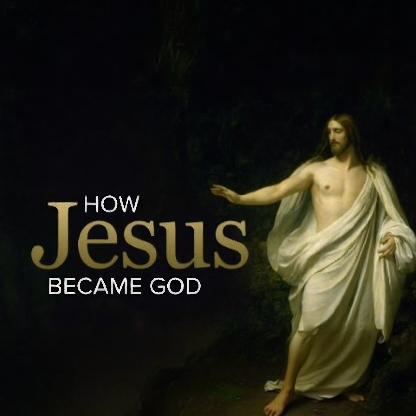
How Jesus Became God
Original price was: $39.99.$8.99Current price is: $8.99.
This 24-lecture course investigates the historical, textual, religious, and cultural processes by which early followers of Jesus came to conceive him as divine. Professor Ehrman examines Greco‑Roman, Jewish, and Christian backgrounds, the historical Jesus, resurrection claims and visionary experiences, competing early Christologies (adoptionist, docetic, Gnostic, proto‑orthodox), the development of doctrinal formulas, and the political and theological stakes culminating in Constantine and the Council of Nicaea.
Course Overview
This 24-lecture course investigates the historical, textual, religious, and cultural processes by which early followers of Jesus came to conceive him as divine. Professor Ehrman examines Greco‑Roman, Jewish, and Christian backgrounds, the historical Jesus, resurrection claims and visionary experiences, competing early Christologies (adoptionist, docetic, Gnostic, proto‑orthodox), the development of doctrinal formulas, and the political and theological stakes culminating in Constantine and the Council of Nicaea.
What you’ll learn
- The ancient world’s concepts of divine men and how Jewish and pagan models shaped early Christian thought
- How the historical Jesus was understood by his earliest followers and what they believed about his death and resurrection
- The variety of early Christian beliefs about Jesus’ status and the gradual movement toward viewing him as God
- Key debates (Arianism, modalism, Gnosticism) and the role of Constantine and Nicaea in defining orthodoxy
- The long-term consequences of Jesus’ divinization for theology, society, and interreligious relations
Video Lessons
01: Jesus — The Man Who Became God (33 min)
Survey the course’s central question; introduce scholarly views of the historical Jesus and the variety of early Christian perspectives on his identity.
02: Greco‑Roman Gods Who Became Human (32 min)
Examine ancient stories of gods becoming human and models of divine men in Greco‑Roman mythology and cult.
03: Humans as Gods in the Greco‑Roman World (32 min)
Explore cases of human exaltation and deification (e.g., Alexander), and how Roman and Egyptian practices blurred human/divine boundaries.
04: Gods Who Were Human in Ancient Judaism (31 min)
Survey Jewish traditions of divine beings taking human form and related texts that complicate simple monotheistic assumptions.
05: Ancient Jews Who Were Gods (27 min)
Consider Jewish notions of exalted humans—kings, the Son of Man, “second God” motifs—and personified divine attributes.
06: The Life and Teachings of Jesus (32 min)
Assess the Gospels as historical sources and outline Jesus’ message, ethical teaching, and apocalyptic outlook.
07: Did Jesus Think He Was God? (31 min)
Analyze Jesus’ self‑presentation in the context of first‑century Jewish messianic expectations and prophetic roles.
08: The Death of Jesus — Historical Certainties (31 min)
Review historically certain aspects of Jesus’ arrest, trial, crucifixion, and the political-religious setting of his execution.
09: Jesus’s Death — What Historians Can’t Know (31 min)
Distinguish plausible reconstructions from uncertain or theological embellishments in Gospel death narratives.
10: The Resurrection — What Historians Can’t Know (34 min)
Examine the limits of historical method regarding miracle claims and what historians can and cannot demonstrate about the resurrection.
11: What History Reveals about the Resurrection (32 min)
Investigate why disciples came to believe in Jesus’ resurrection, early testimony, and the meaning of resurrection beliefs for the first Christians.
12: The Disciples’ Visions of Jesus (30 min)
Discuss visionary experiences, psychological and religious frameworks for visions, and their role in shaping early Christology.
13: Jesus’s Exaltation — Earliest Christian Views (31 min)
Trace earliest creedal formulations and the “adoptionist” or exaltation motif: Jesus is appointed Son of God at resurrection/exaltation.
14: The Backward Movement of Christology (30 min)
Show how New Testament writings and early tradition progressively locate Jesus’ divine status earlier in his life, not only at exaltation.
15: Paul’s View — Christ’s Elevated Divinity (32 min)
Explore Pauline theology as a transitional stage: cosmic roles, exaltation language, and the idea of Christ’s preeminent status.
16: John’s View — The Word Made Human (31 min)
Analyze the Gospel of John’s high Christology: the preexistence of the Word (Logos) and identification of Jesus with the divine Word.
17: Was Christ Human? The Docetic View (29 min)
Examine docetism and Marcionite tendencies that denied Jesus’ true humanity and proposed radical distinctions between the God of Jesus and the God of Israel.
18: The Divided Christ of the Separationists (30 min)
Explore Gnostic and “separationist” Christologies in which a divine being temporarily inhabits or replaces a human Jesus.
19: Christ’s Dual Nature — Proto‑Orthodoxy (32 min)
Describe proto‑orthodox positions that affirmed both Jesus’ full humanity and his divine status—early steps toward the later doctrine of two natures.
20: The Birth of the Trinity (32 min)
Trace the conceptual development that led to the Trinity—God as Father, Son, and Holy Spirit—and examine early alternatives like modalism.
21: The Arian Controversy (31 min)
Study Arian theology (Christ as created/subordinate) versus the anti‑Arian positions and how this conflict polarized the church.
22: The Conversion of Constantine (32 min)
Assess Constantine’s conversion, imperial involvement in ecclesiastical affairs, and his motives for intervening in theological disputes.
23: The Council of Nicaea (31 min)
Reconstruct the 325 CE council, the theological stakes (Arius vs. Alexander), the Nicene formulation, and political dimensions of the settlement.
24: Once Jesus Became God (33 min)
Conclude with the historical consequences of Nicene orthodoxy: effects on paganism, Jewish‑Christian relations, ongoing theological debates, and the legacy of Jesus’ deification.
Related products



By Area