 Skip to content
History of Ancient Egypt
Original price was: $89.99.$19.99Current price is: $19.99.
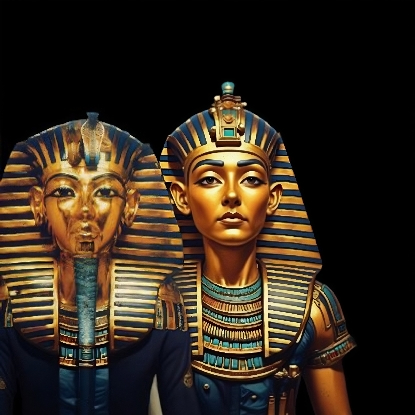
Ancient Egyptian civilization endured for some 3,000 years and remains both extraordinarily well-documented and deeply mysterious. In these 48 lectures, Egyptologist Professor Brier offers a chronological survey of Egyptian history, blending archaeological method, close readings of texts and artifacts, and vivid narrative.
Course Overview
Ancient Egyptian civilization endured for some 3,000 years and remains both extraordinarily well-documented and deeply mysterious. In these 48 lectures, Egyptologist Professor Brier offers a chronological survey of Egyptian history, blending archaeological method, close readings of texts and artifacts, and vivid narrative. The course traces Egypt’s rise to the first nation-state, the building and meaning of pyramids and obelisks, the apex of the New Kingdom (Dynasty XVIII), the age of Hatshepsut, Akhenaten, Tutankhamen, and Ramses, and the long processes of decline, foreign rule, and the Ptolemaic era. Along the way you encounter cultural details (medicine, magic, mummification, animal mummies), key discoveries in Egyptology (Rosetta Stone, Howard Carter’s excavation), and the human stories behind the monuments.
What you’ll learn
- How Egypt became the first long-lived nation-state and the political structures that sustained it
- Pyramid construction, monumental architecture, and funerary technology
- The religious, social, and intellectual frameworks of Egyptian life, including magic and medicine
- The major dynasties and turning points across 3,000 years, with close studies of key rulers and battles for power
- How Egyptology reconstructs the past from texts, mummies, artifacts, and modern experiments
Video Lessons
01: Introduction (32 min)
What makes ancient Egypt so compelling? How do historians and archaeologists know what they know? Course structure and expectations.
02: Prehistoric Egypt (31 min)
Define prehistoric divisions and the methodological challenges of reconstructing Egypt’s deep past.
03: Ancient Egyptian Thought (30 min)
Distinguish mythology, religion, and philosophy, and examine their roles in Egyptian life and worldview.
04: Napoleon and the Beginnings of Egyptology (30 min)
How Napoleon’s expedition (1798) catalyzed modern Egyptology and produced the Description de l’Égypte.
05: The Rosetta Stone, and Much More (30 min)
The Rosetta Stone’s role in decipherment, the four Egyptian scripts, and how hieroglyphic signs operate.
06: The First Nation in History (30 min)
How Narmer unified Upper and Lower Egypt and how the Narmer Palette documents the earliest nation-building.
07: The Rise of the Old Kingdom (30 min)
Formation of central institutions, royal burial practices, and the cultural patterns that define early pharaonic Egypt.
08: Sneferu, the Pyramid Builder (30 min)
Sneferu’s innovations that led to true pyramid construction and the artistic standards set by the Fourth Dynasty.
09: The Great Pyramid of Giza (30 min)
Technical reconstruction of pyramid building—from foundation leveling to capstone—and the discovery of the solar boat.
10: The End of the Old Kingdom (30 min)
Examine the political, social, and environmental factors behind the Old Kingdom’s collapse and the shift in religious practices.
11: The First Intermediate Period (30 min)
Reconstruction of a collapsed state: methods used by Egyptologists when documentary evidence is scarce.
12: The Middle Kingdom—Dynasty XI (30 min)
The reunification and resurgence under Dynasty XI and the foundations of the Middle Kingdom revival.
13: The Middle Kingdom—Dynasty XII (31 min)
Consolidation under Dynasty XII: pyramid building, literature, administration, and cultural renewal.
14: The Second Intermediate Period (30 min)
Hyksos intrusion, foreign rule, and the eventual expulsion by Theban forces leading to the New Kingdom.
15: Joseph in Egypt (30 min)
Examine the Biblical Joseph narrative in light of Egyptological evidence and what the archaeological record can (and cannot) say.
16: The Beginning of the New Kingdom — The Fabulous XVIIIth Dynasty (30 min)
Origins of the New Kingdom, creation of the Valley of the Kings, standing army, and the era’s defining features.
17: Queen Hatshepsut (30 min)
Life and reign of Hatshepsut, her achievements in building, trade, and why later rulers attempted to erase her memory.
18: Obelisks (30 min)
Quarrying, transport, erection, and religious meaning of obelisks—an engineering and ritual history.
19: Tuthmosis III — King at Last (30 min)
Tuthmosis III’s emergence after Hatshepsut’s death and his military campaigns that made him a great warrior-king.
20: The Fabulous XVIIIth Dynasty Rolls On (30 min)
Continued glory of Dynasty XVIII through successive pharaohs culminating in Amenhotep III.
21: Akhenaten the Heretic Pharaoh (30 min)
Akhenaten’s religious revolution, possible proto-monotheism, and the disruption of Egyptian institutions.
22: The Discovery of Tutankhamen’s Tomb (30 min)
Howard Carter’s 1922 excavation, the survival of the tomb’s contents, and the archaeological and cultural significance.
23: The Murder of Tutankhamen — A Theory (30 min)
Review forensic evidence and theories regarding Tutankhamen’s death and the political context at the end of Dynasty XVIII.
24: Medicine — The Necessary Art (30 min)
Medical papyri, clinical and magical approaches to health, and the reputation of Egyptian physicians.
25: The End of Dynasty XVIII (31 min)
Succession crises, short reigns, and the dynastic instability that closed out the eighteenth dynasty.
26: Mummification — How We Know What We Know (30 min)
The trade secrecy of embalming practices, surviving papyri clues, and the detective work used to reconstruct mummification.
27: What Mummies Tell Us (30 min)
Differences in mummification across periods and what mummies reveal about health, status, and chronology.
28: Making a Modern Mummy (30 min)
Professor Brier’s experimental mummification project to understand ancient techniques, tools, and materials.
29: Dynasty XIX Begins (30 min)
Instability after a string of childless pharaohs and the selection of Dynasty XIX’s rulers amid a need for stability.
30: Ramses the Great — The Early Years (30 min)
Ramses II’s ascension, military campaigns, monumental building, and the foundations of his legendary reputation.
31: Ramses the Great — The Later Years (31 min)
Examine the long twilight of Ramses II’s reign: changing priorities, physical ailments (arthritis), and dynastic planning for the afterlife.
32: The Exodus — Did It Happen? (30 min)
Assess how Egyptology can inform (or not) the biblical Exodus narrative and the historical evidence available.
33: The Decline of Dynasty XIX (30 min)
Signs of decline: shorter reigns, reduced building activity, and the structural weaknesses that emerged.
34: Dynasty XX — The Decline Continues (30 min)
Ramses III’s attempts at restoration, the raids of the Sea Peoples, and further political and economic weakening.
35: Ancient Egyptian Magic (31 min)
Survey of magical practices, spells, and their integration with religion, medicine, and daily life.
36: Dynasty XXI — Egypt Divided (31 min)
Fragmentation into competing centers (Thebes and the Delta) and the political realities of a divided Egypt.
37: Dynasty XXII — Egypt United (30 min)
Libyan-descended rulers attempt reunification and engage with the biblical kingdoms—cycles of unification and division.
38: Dynasty XXV — The Nubians Have Their Day (30 min)
The Kushite (Nubian) dynasty’s revival of Egyptian kingship and devotion to Amun; southern leaders restore unity.
39: Dynasty XXVI — The Saite Period (29 min)
A late native renaissance looking back to the Old Kingdom for legitimacy amid external threats from Assyria and Babylon.
40: Dynasty XXVII — The Persians (30 min)
Persian conquest and occupation, Herodotus’s varied accounts, and Egyptian responses to foreign domination.
41: Dynasties XXVIII–XXXI — The Beginning of the End (30 min)
Rapid dynastic turnover and the flight of the last native ruler, Nectanebo II, marking the end of native independence.
42: Alexander the Great (30 min)
Alexander’s conquest of Egypt, his acceptance as pharaoh, and the start of 300 years of Hellenistic influence.
43: The First Ptolemies (31 min)
Ptolemaic administration, taxation, and Hellenistic achievements like the Pharos Lighthouse and the Library of Alexandria.
44: The Middle Ptolemies — The Decline (30 min)
Political decadence, internal violence, popular resentment, and the slow erosion of Ptolemaic legitimacy.
45: Animal Mummies (30 min)
The boom in animal mummification during the Ptolemaic period: ritual practice, economic scale, and archaeological evidence.
46: Cleopatra’s Family (30 min)
The internecine violence of the Ptolemaic dynasty, Cleopatra’s family background, and Egypt’s intensifying interactions with Rome.
47: Cleopatra — The Last Ptolemy (31 min)
Reconstruct Cleopatra’s life, politics, and legacy from ancient records and consider the bias of victors in her portrayal.
48: The Grand Finale (31 min)
Summary of 3,000 years of Egyptian history, Egypt’s legacy in art and culture, images of Egypt in modern media, and avenues for further study.
Related products







By Area