Skip to content
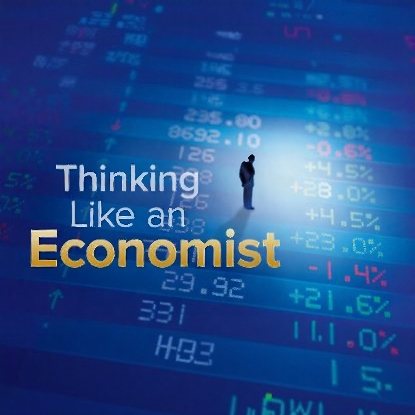
Thinking like an Economist
Original price was: $24.99.$5.90Current price is: $5.90.
Thinking like an Economist: A Guide to Rational Decision Making
Course Description
Learn how to make smarter economic decisions in your professional and personal life by using the same principles and analytical tools employed by top economists. Discover how incentives, risk, time, and behavior influence decision-making, and learn how to apply these insights to real-world choices.
What You’ll Learn in the Course
-
The fundamental tools and principles of economic thinking.
-
How to evaluate risk, incentives, and trade-offs.
-
Ways to apply rational decision-making to personal and professional challenges.
-
Insights from behavioral economics that explain why we sometimes act irrationally.
Lessons
01: The Economist’s Tool Kit – 6 Principles (30 min)
Introduction to six fundamental principles of human behavior accepted by nearly all economists.
02: The Economist’s Tool Kit – 3 Core Concepts (30 min)
Explore rational decision making, marginal analysis, and optimization as key economic tools.
03: The Myth of “True Value” (30 min)
Examine why rational individual choices often (but not always) lead to socially efficient outcomes.
04: Incentives and Optimal Choice (31 min)
Understand how incentives shape ownership, trade, and responsibilities through classic problems like the Prisoner’s Dilemma.
05: False Incentives, Real Harm (33 min)
Case studies on tragedies caused by misaligned incentives, including the Tragedy of the Commons and global climate change.
06: The Economics of Ignorance (30 min)
Explore the concept of an “optimal level of ignorance” and strategies to reduce uncertainty efficiently.
07: Playing the Odds – Reason in a Risky World (32 min)
Learn how people use information strategically, and how asymmetry can cause problems like adverse selection and financial crises.
08: The Economics of Information (30 min)
Study how expected value guides decisions under risk, and the trade-offs of safety and cost.
09: A Matter of Time – Predicting Future Values (31 min)
Analyze the role of time in economics, including nominal vs. real values and present vs. future value.
10: Think Again – Evaluating Risk in Purchasing (31 min)
Apply economic thinking to real-world purchases, such as deciding whether to buy extended warranties.
11: Behavioral Economics – What Are We Thinking? (32 min)
Discover how behavioral economics explains irrational decisions and strategies to overcome them.
12: Acting like an Economist (34 min)
Apply your toolkit to issues like crime, public health incentives, and traffic congestion.
Related products


By Area